
Abstract
AimThis study aimed to determine the level of knowledge of nursing students about the Human Papilloma Virus (HPV).MethodsThis descriptive type of research was conducted with 305 students studying at the Faculty of Health Sciences, Department of Nursing between May 2022 and September 2022. The study data were collected face-to-face by the researchers using a Descriptive Information Formand the HPV Knowledge Scale. In addition to numbers, percentages, means, and standard deviations, independent samples t-test, one-way ANOVA, simple regression analysis, and Least Significant Difference were used in the analysis of the data.ResultsIt was determined that the mean score of the HPV Knowledge Scale of the nursing students was 7.99 ± 7.24, and the mean scores of the sub-scales were 5.38±4.79 for the General HPV Knowledge, 0.51±0.95 for the Knowledge of HPV Vaccination Program. It was found that most of the students had knowledge about sexually transmitted disease, but this knowledge was insufficient.ConclusionThis study reveals that the knowledge levels of nursing students and other university students about HPV and infectious diseases are insufficient.
Keywords
Introduction
Human Papilloma Virus (HPV) is a DNA virus and has more than 100 different types. While some types of the virus cause benign lesions such as genital warts, other types can cause various cancers such as cervical and penile at a rate of 90%.1-2 According to GLOBOCAN 2020 world data, cervical cancer ranks fourth among the most common cancer types and first among gynecological cancer types.3 In Turkey, according to the Health Statistics Yearbook 2020, cervical cancer incidence is 4.3/100.000, and it is the ninth most common cancer in women and the third among gynecological cancer types [available at: sbsgm.saglik.gov.tr]. The fact that the risk of STIs increases in adolescents, such as polygamy and the decrease in the age of first sexual intercourse, highlights the importance of protection in the prevention of diseases caused by HPV.2 Protection from HPV infection can be possible by identifying risk groups and avoiding risky behaviors.1-2 Therefore, it is important to identify risk factors, raise awareness of individuals at risk, guide them to receive health services, and evaluate them for follow-up.4 The HPV vaccine is of great importance in prevention. However, Turkey is not included in the national vaccination calendar and is paid.1 As a period in which the foundations of a healthy life are laid, youth is a period in which the tendency towards risky behaviors increases and high-risk sexual behaviors can be experienced unconsciously.1 Nursing students are an important group both in terms of belonging to a young group and in terms of raising public awareness for the future as the health personnel of the future.5 For this purpose, the study was conducted to determine what nursing students know about HPV.
Materials and Methods
This descriptive type of research was conducted between May 2022 and June 2022. Ethics committee approval was obtained before conducting the study. The research was conducted following the principle of informed consent, the principle of respect for autonomy, the principle of confidentiality and protection of confidentiality, and the principles of the Declaration of Helsinki. No sample selection was made in the study. A total of 305 students studying at the Faculty of Health Sciences, Nursing Department of a university in Turkey, agreed to participate in the research. A descriptive information form and the HPV information scale were used to collect data. Descriptive Information Form consists of questions about the sociodemographic characteristics of the students, their education, and their knowledge about HPV.HPV Knowledge ScaleThe scale was developed in 2013 by Waller et al. It was developed by Demir and Özdemir (2019) and adapted to Turkish [available at: https://tez.yok.gov.tr]. The scale, which consists of a total of 33 items and four sub-dimensions, is answered as “Yes”, “No”, or “I don’t know”. Each correct answer on the scale is scored as one, while incorrect answers and “I don’t know” are scored as zero. The general HPV knowledge sub-dimension consists of items one to 16, and the total score that can be obtained varies between zero and 16. Knowledge about the current HPV vaccination program is measured by items 28, 29, 30, 31, 32, and 33, and the scores of this sub-scale range from 0 to 6. General HPV vaccination knowledge is measured by items 23, 24, 25, 26, and 27, and the total score ranges from 0 to 5. Another sub-scale, HPV screening test knowledge is measured by items 17, 18, 19, 20, 21, and 22, and the total score that can be obtained from the sub-scale varies between 0 and 6. High scores indicate high knowledge of the sub-scales.Ethical ApprovalThis study was approved by the Ethics Committee of Erzincan Binali Yıldırım University Rectorate Health and Sports Sciences (Date: 2022-06-14, Decision No: E-88012460-050.01.04-174623).Statistical AnalysisIn addition to numbers, percentages, means, and standard deviations, independent samples t-test, one-way ANOVA, simple regression analysis, and Least Significant Difference were used in the analysis of the data. The normality of the distribution of numerical variables was evaluated by Skewness and Kurtosis.Reporting GuidelinesThe study was reported in accordance with STROBE guidelines.
Results
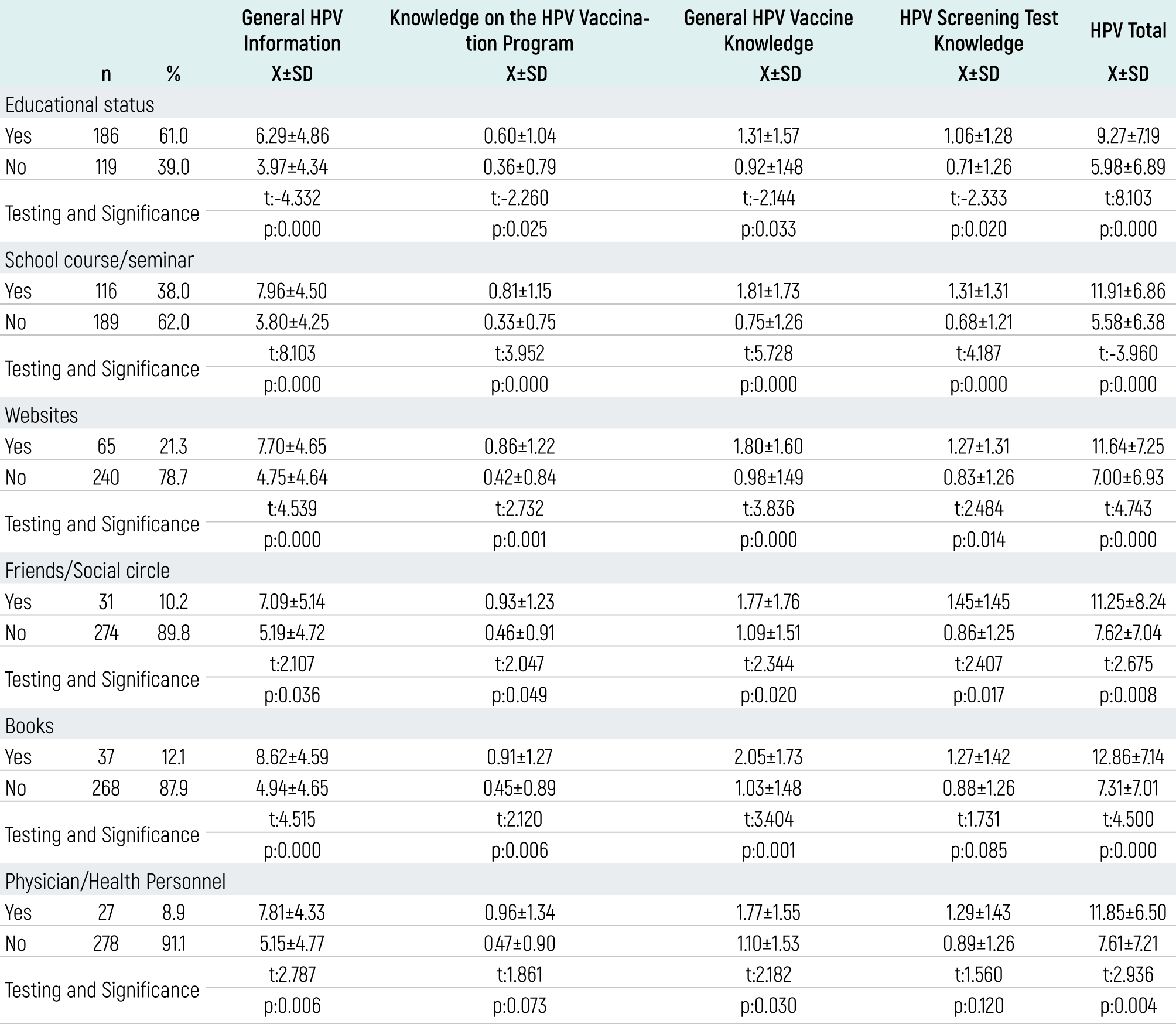
The majority of the students’ fathers were secondary school/high school graduates and civil servants, while their mothers were primary school graduates and housewives. It was found that most of the students had knowledge about sexually transmitted disease, but this knowledge was insufficient (Table 1). It was determined that the students needed education about sexually transmitted diseases, did not have the HPV vaccine, and did not have information about uterine cancer (Table 2).When the findings in Table 1 were examined, it was determined that there was a positive and moderately significant relationship between the age of the students and the total and all sub-scale scores of the scale. As seen in Table 1, the sub-scale score of general HPV knowledge varies significantly with gender (p<0.05). Females had higher mean scores. The knowledge about the HPV vaccination program and HPV screening test knowledge sub-scale scores changed significantly with the status of having a family history of cancer, and the mean scores of those who did not have a family history of cancer were higher (p<0.05).General HPV knowledge, General HPV Vaccine Knowledge sub-scale, and total scale scores change significantly with the need for training about sexually transmitted diseases (p<0.05).The total scale score and all sub-scales except the HPV screening test knowledge sub-scale changed significantly with the knowledge about uterine cancer, and the mean scores of those with related knowledge were higher (p<0.05).The general HPV knowledge sub-scale and HPV total scale score changed significantly with the status of HPV vaccination, and the mean scores of those who received the vaccine were higher (p<0.05).Table 3 shows that 61% of the students received training on HPV, and the majority of them received this training in their courses at the university. It was found that the mean scores of those who received training were higher. It was found that the mean score of the HPV Knowledge Scale of the students was 7.99±7.24, and the mean scores of the sub-scales were 5.38±4.79 for the General HPV Knowledge, 0.51±0.95 for the Knowledge of HPV Vaccination Program, 1.16±1.54 for the General HPV Vaccination Knowledge, and 0.92±1.28 for the HPV Screening Test Knowledge, respectively.
Discussion
In this study, it was found that the HPV vaccine knowledge, HPV knowledge, HPV vaccination program, HPV screening test, and general HPV knowledge score averages of the students were low as shown in Table 1. It was found that the majority of the students had knowledge about STIs and this knowledge was insufficient, they did not get the HPV vaccine, they needed training about STIs, and they did not have information about uterine cancer. In studies conducted with nursing students, it was determined that most of the students heard about HPV and HPV vaccines, but their knowledge was not sufficient 5-6 and most of the students heard about STIs but their knowledge was not sufficient.7 In some studies, it was found that the level of HPV knowledge of the students was low,8-9 and partially sufficient, and the knowledge level of health students was higher than that of other students.9 When the studies carried out abroad are examined, it was found that the majority of students studying in the health sciences departments of a university in South Africa had heard about HPV and its vaccine,10 and in the study in Brazil, 98% of nursing students had heard about the HPV vaccine, but their knowledge level was insufficient.11 We can say that the knowledge level of young adults about HPV, HPV vaccine and STD is insufficient.In the study, the HPV knowledge of female students was found to be higher than that of males. In other studies, the scores of female participants were found to be higher.7,12-13 The findings are similar toeach other, and it is thought that this may be due to the fact that HPV is generally associated with cervical cancer.In this study, as the grade level of nursing students increases, their level of knowledge about HPV and sexually transmitted diseases also increases (Table 1). In studies conducted on nursing students and university students, it was found that the level of knowledge about HPV increased as the grade level increased.7,14 It can be stated that the results of the study were influenced by the fact that nursing students took obstetrics, gynecology, and sexual health courses in their 3rd year at the university. Those who do not have a family history of cancer have higher knowledge of the HPV vaccination program and HPV screening test. In the study conducted on midwifery students, the level of knowledge of students with a family history of cancer was found to be higher.8 The reason for the difference between the two studies is thought to be due to the large number of students without a history of cancer in our study, and it is recommended to conduct comparative studies with groups with and without family cancer.In our study, general HPV, HPV vaccine knowledge, HPV Vaccination Program and total scale score averages of those who have knowledge about uterine cancer were found to be high. Other studies have also found a relationship between HPV and cervical cancer.12,15 In line with these results, we can conclude that those who have knowledge about uterine cancer also have knowledge about the issues affecting cancer.In the study, it was found that those who needed training about sexually transmitted diseases had higher General HPV Knowledge, General HPV Vaccine Knowledge sub-scale, and total scale score averages, the majority of the students received training about HPV, the majority received this training in the courses given at the university, and the mean scores of those who received training were higher. When the studies on nursing students are examined, it was determined that the majority of nursing students received information about HPV,6 and HPV vaccine from health personnel and lecturers who took their classes.5 In the study conducted on young adults, it was found that the participants heard about the HPV vaccine from the internet and from the health personnel.13 According to an international study on students studying at the health sciences departments of a university, the majority of students (67%) were found to receive information about HPV from healthcare professionals.10 The findings of the study support our research and it is revealed that nursing students get information from their courses and healthcare professionals (common grounds with health personnel in the practice areas of the courses), and as a group that wants to get information, they want to get it from healthcare professionals.
Limitations
This study is limited by its single-center design and inclusion of only nursing students, which may restrict the generalizability of the findings.
Conclusion
Nursing students’ knowledge levels of HPV, HPV vaccine, vaccination program, and screening test were low. In line with the results, it is recommended that nursing students be members of a profession that has an active role in the protection of health, so that new studies should be carried out to increase the knowledge level and awareness of nursing students and to investigate the HPV virus knowledge levels of the students.
Declarations
Ethics Declarations
The authors declare that all procedures performed in this study were conducted in accordance with institutional, national, and international ethical standards.
Informed Consent
Written informed consent was obtained from all participants prior to participation in the study.
Data Availability
The data supporting the findings of this study are available from the corresponding author upon reasonable request.
Conflict of Interest
The authors declare no conflict of interest.
Funding
None.
Author Contributions (CRediT Taxonomy)
Conceptualization: S.K.T., D.G.
Methodology: S.K.T., D.G.
Investigation: S.K.T., D.G.
Formal analysis: S.K.T.
Writing - original draft: S.K.T.
Writing - review & editing: S.K.T., D.G.
Supervision: D.G.
Abbreviations
ANOVA: Analysis of Variance
HPV: Human Papillomavirus
SD: Standard Deviation
SPSS: Statistical Package for the Social Sciences
STIs: Sexually Transmitted Infections
References
- Çevik E, Coşkun A. HPV enfeksiyonuna güncel yaklaşım ve ebenin rolü (current approach to HPV infection and the role of the midwife). Kadın Sağlığı Hemşireliği Derg. 2021;7(3):215-229.
- Akalın A. Human papillomavirus (HPV) enfeksiyonu ve HPV aşısında güncel yaklaşımlar (current approaches in human papillomavirus [HPV] infection and HPV vaccine). Androloji Bülteni. 2022;24:133-139.
- Sung H, Ferlay J, Siegel RL, et al. Global cancer statistics 2020: GLOBOCAN estimates of incidence and mortality worldwide for 36 cancers in 185 countries. CA Cancer J Clin. 2021;71(3):209-249.
- Çolak M, Kartal Demir M. Investigation of the frequency, genotype distribution and probable risk factors of human papillomavirus (HPV) among women attending a family health center. Gevher Nesibe J Med Health Sci. 2021;6(11):12-19.
- Başar F, Çiçek S, Yeşildere Sağlam H. Hemşirelik bölümü öğrencilerinin human papilloma virüsü ve aşısına yönelik bilgi düzeyleri (knowledge level of nursing department students on human papilloma virus and vaccine). OPUS Uluslararası Toplum Araştırmaları Derg. 2019;10(7):14-15.
- Cangöl E, Sögüt S, Kahyaoğlu Süt H, Küçükkaya B. Hemşirelik bölümü öğrencilerinin HPV aşısına yönelik bilgi ve tutumları (knowledge and attitudes of nursing department students towards HPV vaccine). J Hum Sci. 2019;16(1):1-12.
- Şensoy E. Hemşirelik öğrencilerinin cinsel yolla bulaşan hastalıklara ilişkin bilgi düzeyleri (knowledge levels of nursing students on sexually transmitted diseases). İnönü Üniv Sağ Hizmetleri MYO Derg. 2021;9(1):150-166.
- Genç Koyucu R. Ebelik öğrencilerinin human papilloma virüs ile ilgili bilgi durumlarının analizi: tanımlayıcı anket çalışması (analysis of midwifery students’ knowledge about human papilloma virus: a descriptive survey study). Androloji Bülteni. 2022;24:118-126.
- Özdemir K, Şahin S, Ünsal A. Üniversitede öğrenim gören kız öğrencilerin HPV bilgi düzeyinin incelenmesi (Sakarya, Türkiye) (examining the HPV knowledge level of female students studying at the university [Sakarya, Türkiye]). Androloji Bülteni. 2021;45:97-104.
- Amukugo HJ, Rungayi BR, Karera A. Awareness, knowledge, attitude and practices regarding human papilloma virus among female students at the University of Namibia. Int J Healthc. 2018;4:51-57.
- Hino P, Freitas NC, Onofre PSC, Souza KL, Santos OJ. Knowledge of undergraduate nursing students about human papillomavirus vaccine. Rev Rene. 2016;17:586-592.
- Aksoy H, Uyan DD, Cankurtaran M. Tıp fakültesi öğrencilerinin servikal kanser hakkında bilgi düzeyleri ve human papilloma virus aşısına karşı tutumları (knowledge levels of medical school students about cervical cancer and their attitudes towards human papilloma virus vaccine). J Turk Fam Phys. 2021;12(2):66-75. doi:10.15511/tjtfp.21.00266
- Yılmaz B, Hat B, Yürekli Y, Oskay Ü. Genç erişkinlerin human papilloma virüs (HPV) ve HPV aşısına ilişkin bilgi ve görüşleri: kesitsel bir çalışma (knowledge and opinions of young adults on human papilloma virus [HPV] and HPV vaccine: a cross-sectional study). Kocaeli Univ Saglik Bilim Derg. 2021;7:138-148.
- Unutkan A, Yangın HB. Üniversite öğrencilerinin human papilloma virüs aşısına ilişkin bilgi ve görüşlerinin değerlendirilmesi (evaluation of university students’ knowledge and opinions about the human papilloma virus vaccine). TAF Prev Med Bull. 2016;15:151-158.
- Görkem Ü, Toğrul C, İnal H, et al. Üniversite hastanesinde çalışan yardımcı sağlık personelinin human papilloma virüs ve aşısı hakkında bilgi düzeyleri ve tutumları (knowledge levels and attitudes of allied health personnel working in a university hospital about human papilloma virus and its vaccine). Den Biyol Derg. 2015;72:303-310. doi:10.5505/turkhijyen.2015.35556
Tables
Table 1. Distribution of HPV knowledge scale and sub-dimensions mean scores according to the sociodemographic characteristics of the participants
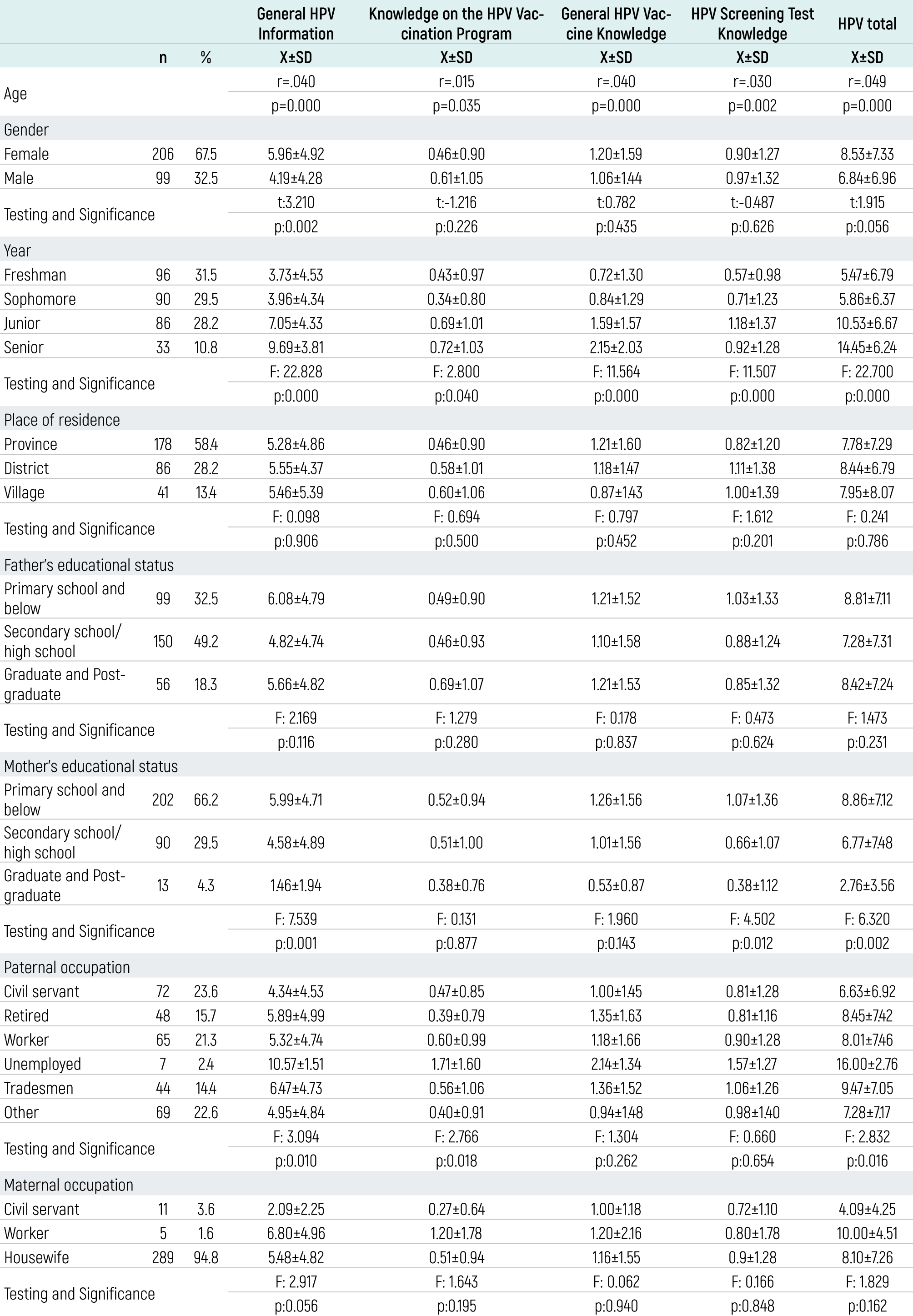
Table 2. Distribution of HPV knowledge scale and sub-dimensions mean scores according to other characteristics of participants
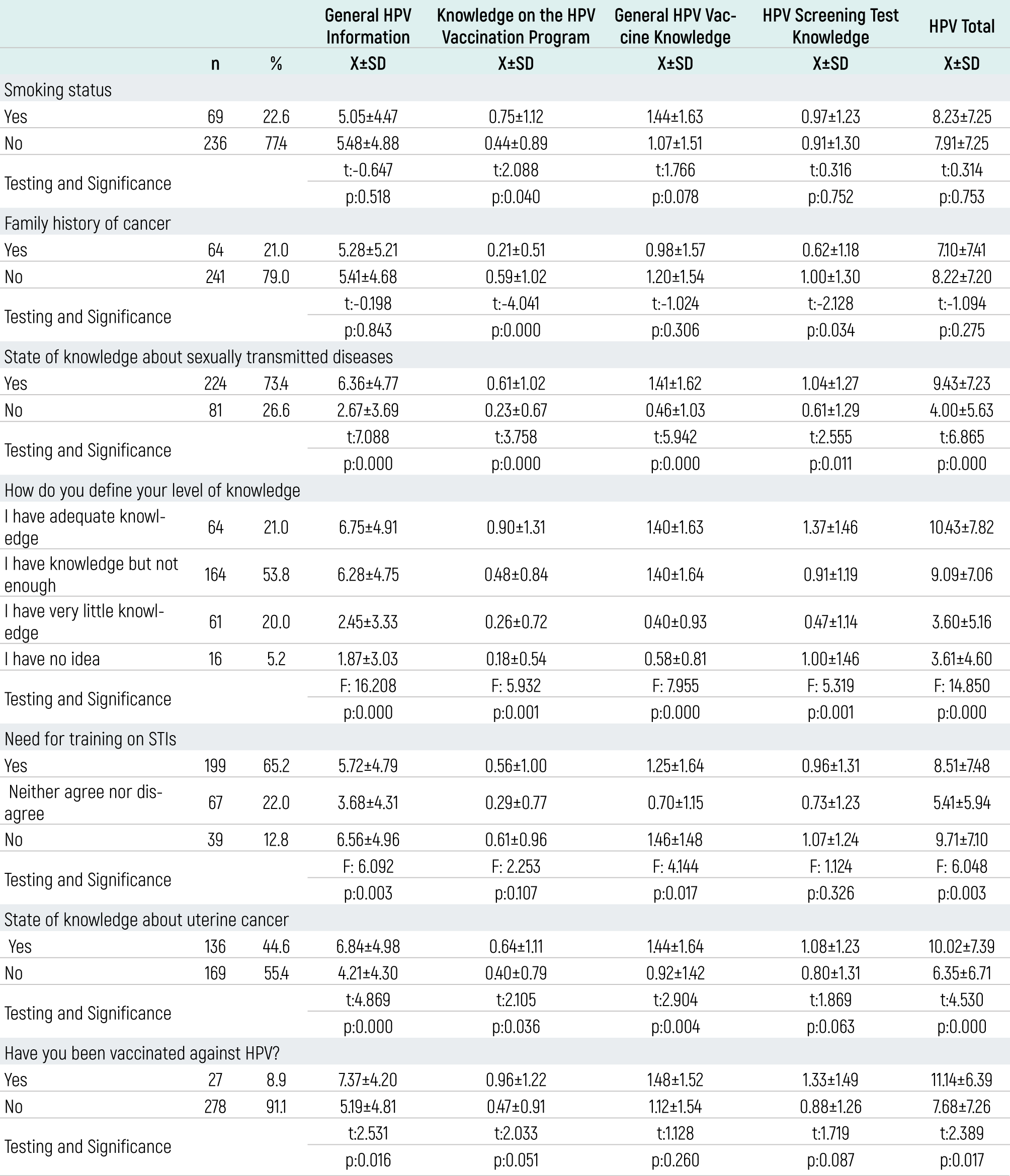
Table 3. Distribution of mean scores of HPV knowledge scale and sub-scales according to the status of knowledge about cervical cancer
Additional Information
Publisher’s Note
Bayrakol MP remains neutral with regard to jurisdictional and institutional claims.
Rights and Permissions

This work is licensed under a Creative Commons Attribution-NonCommercial 4.0 International License (CC BY-NC 4.0). To view a copy of the license, visit https://creativecommons.org/licenses/by-nc/4.0/
About This Article
How to Cite This Article
Sevinç Köse Tuncer, Demet Güneş. Determination of nursing students’ level of knowledge about human papilloma virus. Eu Clin Anal Med 2026;11(2):20-25. doi:10.4328/ECAM.10048
- Received:
- 02.02.2023
- Accepted:
- 19.04.2023
- Published Online:
- 30.04.2023
- Printed:
- 01.05.2023