
Abstract
AimAgeism is the reflection in the behaviors of a mature person’s attitudes; he develops without considering any variable. Old age, like the other stages of life, is an inevitable condition applicable to all human beings. This cross-sectional and comparative study aims to assess the attitudes of the students from two universities located in two different parts of Turkey towards old age, and to determine the relevant factors.MethodsIn the current study planned to be comparative and cross-sectional, students attending universities in the provinces of Yozgat and Kastamonu constituted the universe. The study has been completed, without any sampling method, with the participation of all the students reachable. It was completed between March 2012 and April 2012, before the end of the academic year. Socio-demographic features forms and ageism attitude scale (AAS) have been used to collect data. For statistical analyses, use was made of means, standard deviations, medians, maximum and minimum values, percentages, one way Anova test and independent t-test.ResultsIt has been found in the study that the median of the students’ total AAS scores was 72.29 (min=37-max=96), the mean of the sub-dimension “limiting the life of the aged” was 30.16 and the sub-dimension of negative ageism was 19.17. It has been determined that the mean age of the students was 20.77±2.59 (N=349) and that the mean age of the female students was lower than that of the male students. According to the findings from the study, the age and number of siblings have not been found correlated to scale score.ConclusionIt has been found that the attitude scores of the participating students were positive. We used the AAS to see how their attitudes towards elderly people changed depending on their experiences. The AAS scale showed that older students and those with grandparent role models had better attitudes towards older adults.
Keywords
Introduction
Approximately 10% of the Turkish population is 65 years and over. In our time, average life expectancy, regardless of gender, is 70 years and above.1 Accordingly, a stagnating social structure can be said to be developing in Turkey. Old age is regarded as a weakening process in all the activities of life, in productivity.2
In our time, the elderly individuals in most societies are exposed to ageism, which generally results from negative attitudes of the other groups in the society have towards the elderly individuals and aging. Ageism is a multi-dimensional term which covers behaviors and actions reflecting different attitudes and prejudice, exhibited to an individual because of that person’s age per se.3
Granting that in the future the proportion of the aged population will further increase, and that they will be regarded as a burden on the society, the attitudes of the society towards ageism should be assessed now. The studies on university students' attitudes towards the aged have revealed that the students having favorable communication with their grandparents have more positive attitudes towards the elderly.4-5
In the study by Scott et al. on high school students, however, it has been determined that the students who come together with their grandparents at least once a week have more positive attitudes towards the aging process.6 While respect to the elderly, compliance with their orders and advice, and standing to protect them is a traditional and invariable expectation, the status and respectability of the elderly in a society are changing.
The increase in urbanization, migrations, and industrialization, financial difficulties, introduction of women to the labor force, transition from the structure of extended family to the structure of nuclear family, and the swift changes in social life have resulted in major changes in family structures especially in big cities.7
This study has been conducted with a view to determining the attitudes, as well as the influencing factors, towards old age of university students comprising, in parallel to changing social structure, almost the most active group of the society.
Materials and Methods
The current study, which aims to determine the attitudes of university students towards the discrimination of the elderly and the factors influencing these factors, has been done descriptively. The students from 2 different universities located in Yozgat and Kastamonu comprise the universe of the study. Questionnaires have been administered to 349 students- 110 female and 239 male. The study was completed with 349 students in total, for various reasons such as being absent from school on the day the questionnaires were administered, or their refusal to participation in the study.
Data has been collected through semi-structured questionnaires and the Ageism Attitude Scale (AAS). Semi-structured questionnaires forms have been prepared in the light of the data obtained from the relevant literature.3 The preliminary application of the questionnaire forms has been done on 50 voluntary students from the Bozok University Health College.
A questionnaire is a form to be used for collecting data regarding the demographic features of individuals. These forms are intended to question the students’ age, sex, the place where they have spent most of their lives, their status of siblings, their year at university, presence or absence of an elderly individual in need of care in their family, presence or absence of individuals in their environment aged 65 and above, presence of elderly people in the family and if the answer is yes, where that person lives, the type of dwelling if they are living together with an elderly person, presence or absence of a room in the dwelling exclusively used by the elderly person.
Ageism attitude scale has been used to determine the students’ attitude towards ageism. This scale consisting of 23 items in total enables it to determine whether or not the students’ attitude towards ageism is positive. It is a scale of Likert type graded through 0-5 points. The response to the scale is the total of the points assigned to each item. If the student totally agrees with the item related with the positive attitude towards ageism, 5 is assigned to this item. Similarly if the student agrees, he gets 4 points; undecided 3 points; disagree 2 points; definitely disagree 1 point.
As for the sentences of negative attitude towards ageism, the scoring system is diametrically opposite to the one given above. In other words, if the student agrees entirely, this is 1 point. Correspondingly, agrees 2 points, undecided 3 points; disagree 4 points; definitely disagree 5 points. Maximum total score can get from the scale is 115 points, while the minimum is 23. The highest score indicates that an individual student has positive attitude whereas the lowest indicates that he has negative attitude towards ageism. In the scale ageism is studied in 3 dimensions as restricting the life of the elderly (9 items), positive discrimination against the elderly (8 items), and negative discrimination against the elderly (6 items).
The Cronbach alpha reliability coefficient of the scale has been determined to be 0.80.3 However, in the current study it has been determined to be 0.58. Written consent for the study was obtained from relevant institution. Data collection forms were administered to the participating students in 2 state universities in Yozgat and Kastamonu between January 1st and April 1st 2012. The administration of the questionnaire was started when the students had a break and with the verbal consent of the teacher in charge, the first 5-10 minutes of the class time was allocated to the application of the questionnaires.
Care was taken to make sure that the students filled out the forms individually, and this application took approximately 20 minutes. The participants have not been given any award (extra marks, money or anything) in return for their participation. Prior to the application of the questionnaires, students’ written informed consents were obtained.
Using Statistical Package for Social Sciences (SPSS) for Windows, the data collected through questionnaires were transferred by the researchers to computer. Normality controls for continuous measurements were tested through Shapiro-Wilk test, and it was determined that they had a normal distribution. For the analyses of the data use was made of means, standard deviation, median, minimum and maximum values, percentages, oneway Anova test and independent t test. In the study the students’ socio-economic features were independent variables, and Ageism Attitude Scale (AAS) was dependent variable.
Results
It was discovered in the study that 66.8% of the students were in their first year of education, 14.9% the second year, 14.6% the third year, and 3.7% the fourth year students. Of the students, 53.3% were aged 20-21 years, and 50.4% were living in the provincial center. As for their sexes, 31.5% were male and 68.5% female. Of the participants, 44.1% responded that they had 3-4 siblings (Table 1).
It was determined that 23.5% of the participants had elderly individuals in need of care in their environment and 62.8% had elderly individuals in their environment. Nearly half (45.1%) of the students who stated that there were elderly individuals in their relatives, 61.8% stated the elderly individuals lived with their spouses in the dwellings of their own, 20.7% lived together with their immediate relatives, and 12.2% alone and together with the students’ parents.
It was detected that the elderly individuals living with the relatives of 21.6% of the students had a chronic disease, and the elderly individuals living with the relatives of 178 of the students were in need of care. The examination of the types of the dwellings shared jointly by the elderly individuals and the students’ parents has revealed that 44% of those elderly people live in a detached house, heated with firewood or coal stoves, while 32% live in shanty houses. Forty-five percent who have said that there are elderly individuals living with their parents have stated that there is an extra room exclusively for that individual (Table 1).Results related with the mean score the students get from AAS and its subdimensionsProximity of the AAS mean scores to 115 indicates that the student has a positive attitude towards ageism, whereas a mean of AAS score close to 23 indicates that the student has negative attitudes towards ageism. In the study, the median of the students’ AAS total score was 72.29 with a minimum of 37 and a maximum of 96. These findings signify that the students have positive attitude towards ageism (Table 2).
In the study it was determined that the means of the sub-dimension of the sections “Restricting the Elderly’s Life”, “Positive Discrimination against the Elderly”, and “Negative Discrimination against the Elderly” were 22.96, 30.16, and 19.17, respectively. These findings demonstrate that the students have positive attitudes towards the sub-dimension of the AAS (Table 2).Findings regarding the relationship between the means of the students’ AAS scores and the factors thought to influence the students’ attitudeIt has been determined that the means of the AAS scores increases as the level of the class the student attends increases. While the mean of the first year students’ AAS score is 71.94, that of the 3rd and 4th year is 72.45. Statistical assessments have revealed that the difference between the means of the students’ AAS scores in relation to the class they attend is significant (P > 0.05) (Table 3).
When the mean of the students’ AAS scores is studied in relation to their ages, it is seen that as the students’ age increases, the mean of their AAS scores diminishes. The mean of the AAS scores of the students aged 19 years and below is 73.28, in comparison with 71.72 for the students aged 22 years and above. In statistical analyses, the difference between the means of AAS scores of the students in relation to their ages was found statistically insignificant (P > 0.05) (Table 3).
When the effect of the gender on the mean of the students’ AAS scores was studied, it was found that the female students’ AAS mean score (71.30) was lower than that of the male students, the difference being statistically insignificant (P > 0.05). It has been determined that as the number of the students’ siblings rises the mean of their AAS scores also rises. Statistically insignificant as it is, while the mean of AAS scores of the students with 1-2 siblings is 71.38, that of the students with 5 or more siblings goes up to 73.06 (P > 0.05) (Table 3).
While the mean of AAS scores of the students who have stated that the place where they lived the longest was a province is 72.99, that of the students who said they have lived in towns and villages the longest were found to be 72.99, the difference being statistically insignificant (P > 0.05) (Table 3).
In this study it has been ascertained that the mean of AAS scores of the students with an elderly individual in need of care in their environment are similar to that of the students with no elderly person in need of care in their environment (72.36). It has also been found that the mean of AAS scores of the students with an elderly individual in their environment (72.78) is greater than that of their counterparts without any counterparts in their environment (71.46). Nevertheless, the difference has been found statistically insignificant (P > 0.05) (Table 3).
The mean of the AAS scores of the students who said the elderly person among the relatives was living in his own dwelling with his spouse was 74.77, that of the students who said the elderly person lived together with the respective student’s parents was 70.36, and finally that of the students who said the elderly person lived in a care and rehabilitation center was 69.73, the difference being statistically insignificant (p > 0.05) (Table 3).
While the mean of AAS scores of the students who said that the elderly person in their family had a chronic disease was 72.17, that of their counterparts with an elderly person with no chronic disease was 71.32. It has been found that the students who have stated that the elderly person among their relatives requires care (71.82) and those who have stated that the elderly person does not require care (71.44) had similar mean of AAS scores though the difference between them has not been found statistically significant (P > 0.05) (Table 3).
Discussion
Granted that the population of our country is increasing progressively, it can be assumed that the young will regard the elderly individuals as a burden, and their attitude towards elderly discrimination will be even more negative. Therefore, it has been deemed important to determine the attitude towards ageism of the young people, who comprise a great majority of our population.
Finding from this study demonstrates that the students have relatively positive attitudes towards ageism. Again the data obtained indicates that the students have positive attitude towards the sub-dimensions of the AAS (Table 2). In this study, it has been ascertained that the mean of the AAS scores of the university students in Yozgat and Kastamonu is 72.29 (minimum 37 and maximum 96), which indicates that the university students living in different cities have positive attitudes towards ageism (Table 2).
This positive attitude is thought to have resulted from the still ongoing effects of the concepts in Turkish culture related with old age and from such concepts as respect for the elderly, listening to and complying with what they say, standing to protect the elderly, which were traditional and invariable expectations.
There is a multitude of studies indicating that university students have positive attitude to elderly individuals. In the current study, the students’ attitudes towards elderly individuals were assessed using a scale.8-9 Our findings from the current study are consistent with the findings from other studies indicating that the students have positive attitudes towards the elderly individuals.
On the other hand, although the scales related with the attitudes towards the elderly have been used also in other similar studies intended to determine the attitudes of university students’ attitudes towards elderly individuals, the results have turned out to be negative.4,10
In the studies in which Moyle, and Reuben et al., have studied the attitudes of nursing students and medical students, respectively, towards elderly individuals, it has been found that the students have had negative attitudes towards the elderly, as is clear from their comments on the elderly (“The elderly cannot keep pace with changes”; “The elderly are continually ill; “The elderly are angry”).11-12
In addition, it is also quite important that the factors affecting the students’ attitude towards ageism be determined. Therefore, in the current study not only the students’ attitude towards ageism but also the factors thought to affect such behaviors have been examined.In our study, it has been determined that as the levels of the class the students attend rise, their mean AAS scores also rise. However, when their mean AAS scores are studied in relation to their ages, it has been determined that their scores diminish as their ages rise. The assessment of their attitude towards ageism revealed no difference (p > 0.05) (Table 3).
In the studies on medical students by Hughes et al. and Wilkinson et al., the 4th year students’ attitudes towards elderly individuals have been found more favorable than those of their first-year counterparts,13-14 which stands in total contrast to the result from our study. However, it is an important finding in our study that the students’ score of ageism diminish or become more unfavorable as their age and the level of class they attend rise. A possible interpretation of this result may be that students acquire negative attitudes towards old age for reasons such as their increasing responsibility during their university education and thereafter, and the hardship they suffer in business and life conditions. In the study by Scott et al. on junior and senior high school students also, it has been found that the senior high school students’ attitudes towards aging process have been found more unfavorable than those of the junior high school students,6 which is also consistent with our finding.
In the current study, another factor thought to influence the students’ attitudes towards ageism is sex. In some western studies on ageism, it has been reported that male students displayed a more positive attitude towards ageism than their female counterparts have.15-16 In Scandinavian countries, however, it has been reported that men had even more negative attitudes towards old age.17 In the studies done to determine university students' attitude towards elderly individuals and aging, it has been reported that female students’ attitudes towards the elderly are more favorable than those of male students. This finding is inconsistent with the findings from our study.18-19
This result may suggest that there have occurred changes in the roles of girl students in the traditional family structure of Turkish society, and Turkish women have been stripped of their care-giving role. The result may also be a sign of the change in the roles of girls in Turkish society such as giving care, rendering service, and meeting the needs of the elderly. It is noted in the literature that women attach more importance to their physical appearances.20 In addition, it is stressed that the aging of the woman's body increases the level of anxiety, leading to their acquisition of negative attitudes towards the aging process.10,21 It has been ascertained in the study by Mc Conatta et al. on Turkish students attending a university in the USA that female students have a more negative attitude towards elderly individuals than do male students.22 Still in another study on Turkish students in a university in Finland by Bacanli et al., it has been found that the female students’ attitudes towards aging are more negative than those of the male students.23 The findings from such studies bear resemblance to those from our study.
It has been found that as the number of siblings rises, the AAS score also rises (P > 0.05) (Table 3). Studies in the literature on the association of the number of siblings with the attitudes towards ageism are scarce. In the study by Vefikuluçay (2011), a positive correlation has been found between the number of siblings and the attitude towards the elderly. By contrast, in the current study, it is the students with 3 or fewer siblings who have a high mean AAS score. In this study, the association of the increasing number of siblings with more positive attitudes towards ageism may be a sign of a traditional Turkish family structure in which intra-familial relations and sharing are in profusion.
The mean AAS score of the students who have said they have spent most of their lives in the provincial center has been found to be lower than that of the students who have spent most of their life in rural areas. However, the difference between the students’ mean AAS score based on the place where they have lived longest was found statistically insignificant (p > 0.05) (Table 3). This is thought to have resulted from the adoption and sustenance of an individualized lifestyle in big cities.
In the current study, it has been found out that the mean AAS score of the students with elderly people in need of care in their environment (72.06) and those without (72.36) are similar. While the students who have elderly people in their environment have a mean SAA score of 72.78, those without elderly people had a mean SAA score of 71.46. However, the difference in the distribution of the AAS scores of the students, whether the elderly individual in their environment require care or not, has been found statistically insignificant (p > 0.05) (Table 3).
It is underlined in the literature that qualified communication with elderly individuals plays a crucial role in the formation of attitudes towards old age. In addition, it has been determined that people emotionally close to elderly individuals have had less negative attitudes towards old age.18,23-24 The studies on university students’ attitudes towards the elderly have revealed that students who have a good rapport with their grandparents have more favorable attitudes towards the elderly.5,22 Our results are consistent with such previous studies.
The mean AAS score of the students who have stated that the elderly individual among their relatives lives in his own dwelling with his spouse is more favorable by nearly 5 points than the mean score of not only those with elderly individuals living with their parents but also of those with elderly people living in a nursing home or rehabilitation center. The difference between the dwelling place of the elderly individual among the students’ relatives and their mean AAS score has been found statistically insignificant (p > 0.05) (Table 3). The elderly individuals living alone in a separate place with or without a spouse may have resulted not only from his belief that it would contribute to his independence but also from the assumption that young people ignore an existing problem. The attitude of an individual towards the elderly is influenced by his family, socio-economic status, and the society in whose culture he lives.
Evers, Ploeg, and Kaasalainen (2011) and Holroyd et al. (2009) have reported that students who spend more time with elderly individuals have more positive attitudes. The same study revealed also that young people, despite having positive ideas, are unwilling to work together with the elderly in the same job since they find them monotonous and slow.25-26
In the current study, it is striking that as the period of time during which students live together with the elderly individual rises, their attitudes towards ageism become relatively negative. This result, together with the change in the family structure, in particular, may give rise to discrimination against dependent individuals, like the handicapped or the elderly. In addition, economic and social problems can make it difficult to satisfy the needs of the elderly to be cared for. In an individualized lifestyle, students who share the same dwelling with the elderly individual may think that the elderly people's responsibilities are heavy.
The mean AAS score of the students with the elderly individual having a chronic disease among their relatives, though similar to others, has been found insignificant (p > 0.05) (Table 3). That the students having a family member in this study with chronic disease are more favorable by a marginal difference suggests that the needs of the elderly might have increased owing to their disease, and therefore the time spent together might have been a positive contribution. In our time, in parallel with the change in the traditional family structure, the attitudes towards the elderly may be affected negatively, and thus young people may be unwilling to assume responsibility and regard the elderly individual as a burden.
Conclusion
With progress in health care, an increase has been observed in the number of handicapped and the needy elderly. Chronic diseases rising in parallel to advancing age, while detracting from their comfort, cause their dependence on others to increase.
In conclusion, although the same scale has been used on the participating university students, similar results have been obtained from different groups of students. The attitude of the individuals spending more time with elderly individuals is more favorable.
The experience of the elderly increasing in parallel to their advancing age should be brought to the fore, and more programs of better quality should be made to keep them busy. The programs with educational content capable of raising awareness of changing socio-economic circumstances should be made. With the support of digital platforms and civil society organizations, it should be underlined that the elderly, too, have rights as much as every individual does.
Declarations
Animal and Human Rights Statement
All procedures performed in this study were in accordance with the ethical standards of the institutional and/or national research committee and with the 1964 Helsinki Declaration and its later amendments.
Informed Consent
Informed consent was obtained from all participants.
Conflict of Interest
The authors declare no conflicts of interest.
Funding
None.
References
- Turkey Statistical Yearbook 2011. Turkish Statistical Institute.
- Çilingiroğlu N, Demirel S. Old age and ageism. Turk J Geriatr. 2004;7(4):225-230.
- Vefikuluçay Yılmaz D, Terzioğlu F. Development and psychometric evaluation of ageism attitude scale among university students. Turk J Geriatr. 2011;14(3):259-268.
- Aday RH, Sims CR, Evans E. Youth’s attitudes toward the elderly: the impact of intergenerational partners. J Gerontol. 1991;10:372-384. doi:10.1177/073346489101000310
- Shannon J, Voogt BA, Mickus M, Santiago O, Herman SE. Attitudes, experiences, and interest in geriatrics of first-year allopathic and osteopathic medical students. J Am Geriatr Soc. 2008;56(2):339-344. doi:10.1111/j.1532-5415.2007.01541.x
- Scott T, Minichiella V, Browning C. Secondary school students’ knowledge of and attitudes towards older people: does an education intervention program make a difference? Ageing Soc. 1998;18:167-183. doi:10.1017/s0144686x98006874
- Imamoğlu EO, Imamoğlu V. Life situations and attitudes of the Turkish elderly toward institutional living within a cross-cultural perspective. J Gerontol. 1992;47:102-108.
- Edwards MJJ, Aldous IR. Attitudes to and knowledge about elderly people: a comparative analysis of students of medicine, English, and computer science and their teachers. Med Educ. 1996;30(3):221-225. doi:10.1111/j.1365-2923.1996.tb00746.x
- Ehrlich AR, Burton W, Greenberg D. Positive attitudes of first-year medical students toward older persons. J Am Geriatr Soc. 2003;51(5):627-635.
- McConatha JT, Schnell F, Volkwein K, Riley L, Leach E. Attitudes toward aging: a comparative analysis of young adults from the United States and Germany. Int J Aging Hum Dev. 2003;51(3):206-217. doi:10.2190/k8q8-5549-0y4k-ugg0
- Moyle W. Nursing students’ perceptions of older people: continuing society’s myths. Aust J Adv Nurs. 2003;20(4):15-21.
- Reuben DB, Fullerton JT, Tschann JM. Attitudes of beginning medical students toward older persons: a five-campus study. J Am Geriatr Soc. 1995;43(2):1430-1436. doi:10.1111/j.1532-5415.1995.tb06626.x
- Hughes NJ, Soiza RL, Chua M, et al. Medical student attitudes toward older people and willingness to consider a career in geriatric medicine. J Am Geriatr Soc. 2008;56(2):334-338. doi:10.1111/j.1532-5415.2007.01552.x
- Wilkinson TJ, Gower S, Sainsbury R. The earlier, the better: the effect of early community contact on the attitudes of medical students to older people. Med Educ. 2002;36(6):540-542. doi:10.1046/j.1365-2923.2002.01226.x
- Hweidi I, Al-Hassan M. Jordanian nurses’ attitudes towards older patients in the acute setting. Int Nurs Rev. 2005;52:225-232. doi:10.1111/j.1466-7657.2005.00434.x
- Hweidi IM, Al-Obesiat SM. Jordanian nursing students’ attitudes toward the elderly. Nurse Educ Today. 2006;26(1):23-30. doi:10.1016/j.nedt.2005.06.003
- Söderhamn O, Lindencrona C, Gustavsson SM. Attitudes toward older people among nursing students and registered nurses in Sweden. Nurse Educ Today. 2001;21:225-229. doi:10.1054/nedt.2000.0546
- Aykan H, Wolf DA. Traditionality, modernity, and household composition. Res Aging. 2000;22:395-421. doi:10.1177/0164027500224004
- Deary IJ, Smith R, Mitchell C. Geriatric medicine: does teaching alter medical students’ attitudes to elderly people? Med Educ. 1993;27(3):399-405. doi:10.1111/j.1365-2923.1993.tb00292.x
- Huebner DM, Fredrickson BL. Gender differences in memory perspectives: evidence for self-objectification in women. Sex Roles. 1999;41:459-467. doi:10.1023/a:1018831001880
- Thomas T, Hallebone E. Adolescents’ attitudes towards older people and their relationships with grandparents. Lincoln Pap Gerontol. 1996;30.
- McConatha JT, Hayta V, Rieser-Danner L, McConatha D, Polat TS. Turkish and US attitudes toward aging. Educ Gerontol. 2004;30(3):169-183. doi:10.1080/03601270490272106
- Bacanlı H, Ahodas M, Best DM. Stereotypes of old adults in Turkey and Finland. In: Bouvy A, van de Vijver FJR, eds. Journeys Into Cross-Cultural Psychology. Netherlands: Swets & Zeitlinger; 1994:307-319.
- Baiyewu O, Bella AF, Adeyemi JD, et al. Attitudes to aging among different groups in Nigeria. Int J Aging Hum Dev. 1997;44(4):283-292. doi:10.2190/ef2a-xful-dx07-n2l3
- Evers C, Ploeg J, Kaasalainen S. Case study of the attitudes and values of nursing students toward caring for older adults. J Nurs Educ. 2011;50(7):404-409. doi:10.3928/01484834-20110429-03
- Holroyd A, Dahlke S, Fehr C, Jung P, Hunter A. Attitudes toward aging: implications for a caring profession. J Nurs Educ. 2009;48(7):374-380. doi:10.3928/01484834-20090615-04
Tables
Table 1. Students characteristics of distribution

Table 2. Distribution of AAS and the average score of the students from the subdimensions
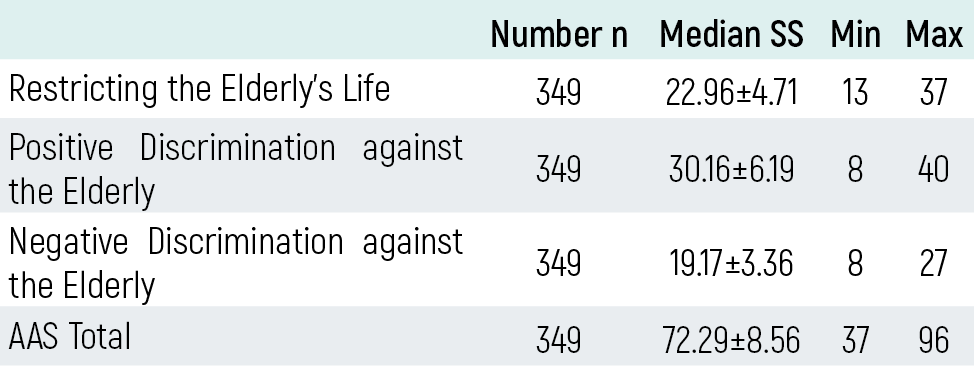
Table 3. Sociodemographic characteristics of students’ score means distribution of AAS
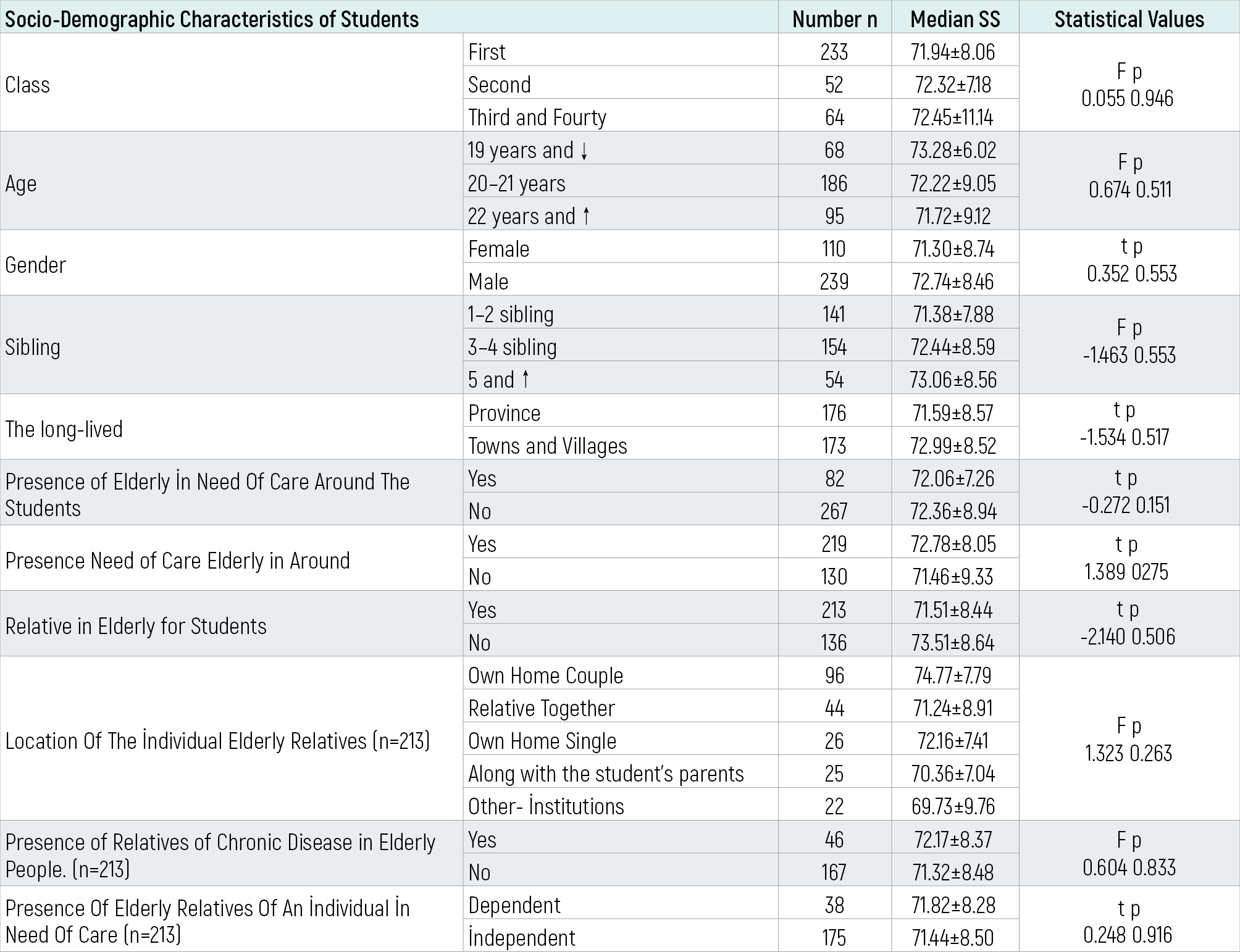
F= Oneway Anova Testi t= Independent t Testi
Additional Information
Publisher’s Note
Bayrakol MP remains neutral with regard to jurisdictional and institutional claims.
Rights and Permissions

This work is licensed under a Creative Commons Attribution-NonCommercial 4.0 International License (CC BY-NC 4.0). To view a copy of the license, visit https://creativecommons.org/licenses/by-nc/4.0/
About This Article
How to Cite This Article
Ayşegül Koç, Rasime Yıldırım, Maşide Gürcü, Duygu Vefik Uluçay. Assessing young university students’ behaviour regarding age discrimination. Eu Clin Anal Med 2026;1(3):44-49. doi:10.4328/ECAM.11
- Received:
- 24.04.2013
- Accepted:
- 26.09.2013
- Published Online:
- 26.09.2013
- Printed:
- 26.09.2013