Protective effect of B.clasuii on sepsis
Protective effect of B.clausii on sepsis
Authors
Abstract
AimSepsis is a clinical problem that still has high mortality and morbidity despite advances in supportive care in intensive care. The study’s aim was to investigate the protective effect of Bacillus clausii, an important probiotic with a strengthening effect on the gastrointestinal barrier, on septicemia.
MethodsTwenty-four rats were divided into three randomized and double-blind groups, as Group 1 (control group, n=8), Group 2 (sepsis group, n=8), and Group 3 (sepsis+probiotic group, n=8). Lipopolysaccharide extracted from serotypes (0111:B4) of Escherichia coli (E.coli ) was injected intraperitoneally to all group for sepsis model at a dose of 15 mg/kg and rats were sacrificed at 48 hours. Serum oxidant and antioxidant parameters were measured.
ResultsThe C-Reactive Protein (CRP) value of Group 1 was significantly lower than Group 2[CI:(-44.16)-(-28.52), p=0.000], whereas the CRP values of Group 3 were significantly lower than Group 2[CI:(7.4)-(34.7), p=0.005]. MDA values were found to be significant between Groups 1 and 2, CI:(-0.3)-(-0.7), p=0.045. The thiol values of Group 2 were significantly lower than Group 1[CI:(9)-(366), p=0.041], whereas the thiol (SH) values of Group 3 were significantly higher than those of Group 2[CI:(-659)-(-98), p=0.016].
ConclusionB. clausii is one of a group of probiotics that is inexpensive and effective. Sepsis is still a high-risk clinical problem. Our study showed that B. clausii has a protective effect against sepsis.
Keywords
Introduction
Sepsis is a clinical problem that still has high mortality and morbidity despite advances in supportive care in intensive care.1 More than 1 million pediatric and neonatal cases are reported worldwide every year, according to the United States’ health data.2,3 Recently, in a multicenter study involving more than 14,000 patients in more than 1200 intensive care units, 51% of the patients were infected and 71% were using antibiotics on the day of the survey. In the study, antibiotics were shown to cause gastrointestinal microbial flora loss and potential increase of pathogens, which lead to resistance against standard antibiotic drugs.4 Recent randomized double-blind studies have shown that probiotics use in patients with sepsis reduces infection rates.5,6 These studies suggest that the deterioration of the intestinal barrier in septic patients is one of the most important factors for clinical aggravation and mortality and that probiotics probably have protective effects for this barrier.7 Lactobacillus rhamnosus GG (LGG) and Bifidobacterium longum (BL) are some of the most studied probiotics on this topic.8 Some studies that have combined these two probiotics have shown that they are protective against septicemia that is related to hospital-associated pneumonia, diarrhea, postoperative infection, and ventilator-induced pneumonia.9 The aim of this study was to investigate the protective effect of Bacillus clausii, an important probiotic that has a strengthening effect on gastrointestinal barrier, on septicemia.
Materials and Methods
AnimalsAll experiments were performed in accordance with the principles and guidelines of Adnan Menderes University Animal Ethical Committee’s approval (HADYEK 64583101/2017/134). 24 male rats, four to six months old (350-400g), were obtained from the Experimental Animal Center of Adnan Menderes University (ADU).
Experimental DesignTwenty-four rats were randomized into three groups. Rats were fed with standard food and water for 10 days. Group 1 (control group, n=8): After 10 days blood was taken and the rats were sacrificed for biochemical examination. Group 2 (sepsis group, n=8): The rats were given lipopolysaccharide extracted from serotypes (0111: B4) of E. coli via intraperitoneal injection at a dose of 15 mg/kg. After two days the rats were sacrificed via high dose intraperitoneal injection of pentothal sodium and blood samples were drawn for biochemical examination. Group 3 (sepsis+probiotic group, n=8): Rats in this group were additionally given 1x10⁻⁷ CFU/day B. clausii daily for 10 days via gastric tube. Subsequently, as in the experimental sepsis model, 1x10-13 E. coli was applied intraperitoneally. After two days the rats were sacrificed via high dose intraperitoneal injection of pentothal sodium and blood samples were drawn for biochemical examination.
Experimental Sepsis ModelLipopolysaccharide extracted from serotypes (0111:B4) of E. coli was injected intraperitoneally at a dose of 15 mg/kg and rats were sacrificed at two days.
Oxidant and Antioxidant Parameters In BloodBlood AnalysesBlood was taken from each rat’s heart via tube with no anticoagulant centrifuged at 1000g for 10 min. The supernatants were collected and kept at -80°C for ELISA and other analysis. Determination of Endothelial Nitric Oxide Synthase (eNOS) eNOS levels in serum samples were determined by CUSABIO Rat eNOS rat ELISA kit (Wuhan Hi-tech Medical Devices Park, Building B11, Gaoxin Road, Donghu Hi-Tech Development Area, Wuhan, Hubei Province 430206, China). Results were automatically calculated at 450nm using an ELISA microplate reader (DAR 800, Diagnostic Automation, and CA 91302, USA). According to the kit content, the sensitivity of the test was 3.99µIU/mL, the detection range was 15.6-1000µIU/mL, and the repeatability of the test was intra-assay CV<8% and inter-assay CV<10%.
Determination of C-Reactive Protein (CRP)CRP levels in serum samples were determined by the Sunred Rat ELISA kit (Catalog No. 201-11-0054, SunRed Biological Technology, No.128 Lane 628, Jufengyuan Road, Baoshan District, Shanghai, PRC). Results were automatically calculated at 450nm using an ELISA microplate reader (DAR 800, Diagnostic Automation, CA 91302, USA). According to the kit content, the sensitivity of the test was 3.145ng/ml, the detection range was 5-900ng/ml, and the repeatability of the test was intra-assay CV<9% and inter-assay CV<12%.
Determination of Glutathione Peroxidase-1 (GPX-1)GPX-1 levels in serum samples were determined by the Elabscience ELISA kit (Elabscience Biotechnology Co., Ltd., Guandong Science and Technology Park, WuHan, PRC). Results were automatically calculated at 450nm using an ELISA microplate reader (DAR 800, Diagnostic Automation, CA 91302, USA). According to the kit content, the sensitivity of the test was 18.75pg/ml, the detection range was 31.25-2000 pg/ml, and the repeatability of the test was intra-assay CV<10% and inter-assay CV<12%.
Determination of Paraoxanase 1 (PON-1)PON-1 levels in serum samples were determined by the Elabscience ELISA kit (Elabscience Biotechnology Co., Ltd., Guandong Science and Technology Park, WuHan, PRC). Results were automatically calculated at 450nm using an ELISA microplate reader (DAR 800, Diagnostic Automation, CA 91302, USA). According to the kit content, the sensitivity of the test was 0.1ng/ml, the detection range was 0.16-10ng/ml, and the repeatability of the test was intra-assay CV<10% and inter-assay CV<12%.
Determination of Total Thiol (SH)Total thiol levels in serum samples were determined by the real assay colorimetric (Mega Tıp Sanayi ve Tic. Ltd., Turkey). Results were automatically calculated at 405nm using an ELISA microplate reader (DAR 800, Diagnostic Automation, CA 91302, USA). The results were calculated and expressed as umol/L.
Determination of Malonyldialdehyde (MDA)Serum MDA levels were measured spectrophotometrically by Ohkowa’s method, which is based on the principle that the lipid peroxidation product, MDA, reacts with thiobarbituric acid (TBA) to form a colored complex that gives maximum absorbance at 532nm.10 3.3’ Tetraethoxypropane was used as standard. The results were given as mmol / L.
Data Presentation and StatisticsDescriptive statistics and homogeneity tests were performed. According to the Shapiro-Wilk analysis, logarithmic transformation was performed on the normal non-scattering data and the data were not normally dispersed. The Mann-Whitney U test was used for determining the differences between the groups. All the data were processed in SPSS and p<0.05 was accepted as statistically significant.
Results
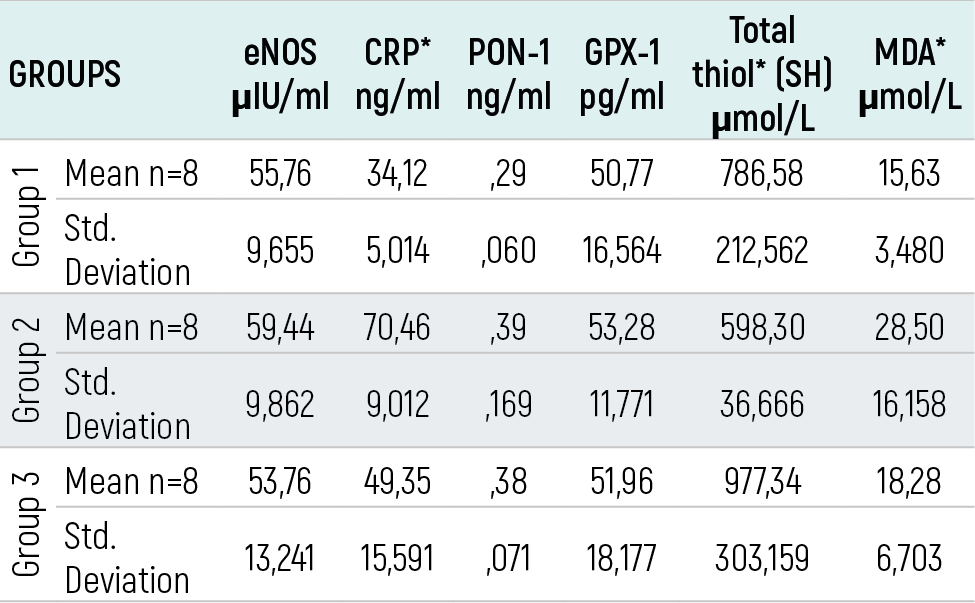
Mean values of eNOS were found to be 55.46±9.6 µIU/mL, 59.44±9.8 µIU/ mL, and 53.76±13.8 µIU/mL, respectively in the three groups, but there was no statistical significance between these groups[CI:(-14.1)-(6.7) for Groups 1 and 2, p=0.463; CI:(-6.8)-(18.2), p=0.348 for Groups 2 and 3]. When the CRP values obtained from the groups were examined, the mean value of Group 1 was 34.1±5ng/ml. Group 2 was 70.4±9ng/ml and Group 3 was 49.3±15ng/ml. The value of Group 1 was significantly lower than Group 2[CI:(-44.1)-(-28.5), p=0.000], and the CRP values of Group 3 were also significantly lower than Group 2[CI: (7.4)-(34.7), p=0.005]. Rising GPX-1 values in Group 2 (53.2±17 pg/ml) when compared to Group 1 (50.7±11 pg/ml), returned to values close to Group 1 in Group 3 (51.9±18pg/ml), but there was no statistical significance. MDA values were found to be 28.5±6 umol/L and 18.2±16 mmol / L in Groups 2 and 3, respectively[CI:(-3.6)-(24.1), p=0.121], while they were 15.6±3 mmol / L in Group 1[for Groups 1 and 2, CI: (-0.3)-(-0.7), p=0.045]. The thiol measured 786.58±212 µmol/L in Group 1, 589 ± 36 µmol/L in Group 2, and 977.34 ± 303 µmol/L in Group 3. The thiol values of Group 2 were significantly lower than Group 1[CI:(9)-(366), p=0.041], whereas the values of Group 3 were significantly higher than those of Group 2[CI: (-659)-(-98), p=0.016]. PON-1 values were found to be 0.29±0.06ng/ml, 0.28±0.16ng/ ml, and 0.39±0.07ng/ml,, respectively, but no statistically significant difference was found between groups (Table 1, Figure 1, Figure 2 and Figure 3).
Discussion
Today, sepsis is a public health problem that still has a high mortality rate. Research continues to find alternative treatments for septicemia in patients who have been hospitalized in long-term and intensive care units and have antibiotic resistance. Although vaccination may be thought of as one of the methods that strengthens the host system, this has not been shown to be successful.11 The use of probiotics, which are living microorganisms beneficial to the host system when taken via the gastrointestinal system, are another alternative treatment method.12 There are studies showing that probiotics are useful in many cases with sepsis, pancreatitis, pneumonia, and especially in neonatal necrotizing enterocolitis and short bowel syndrome.13,14,15 Haro et al. (16 reported that at the time of their study, anti-inflammatory markers against sepsis were higher in rats fed Lactobacillus carierii and that the sepsis-related probiotics were significantly protective. In a study by Wang et al.17 in rats fed with Lactobacillus plantarum and Lactobacillus acidophilus, bacterial translocation decreased and thus sepsis risk decreased. Another study
by Guney-Varal I et al.18 with Bifidobacterium animals also reported positive effects of probiotics on sepsis. Until now, studies of many popular probiotics’ effects on sepsis have been reported positively, but studies on Bacillus clausii and sepsis are very limited in the literature. In a literature review, no studies were found except for the study of 244 newborns by Tewani et al.19 which reported that B. clausii does not have any significant benefit on sepsis. Most of the studies report that B. clausii has no effect on mortality in neonatal patients, so we decided to work on this issue. We planned this study because there has not been a study of the effects of B. clausii on rats with sepsis.
CRP is a rising marker protein in stress, chronic inflammation, and sepsis20 suggesting that the reduction in the treatment group is significant for the prophylactic protective effect of B. clausii. In our study, while CRP increased significantly in the group with sepsis, it decreased in the group given prophylactic B. clausii. Rabha et al.21 treated rats with an agent called Kaempferol in their study of experimental sepsis. MDA and eNOS levels in the sepsis group were found to be low in the treatment groups and the agent was effective in the treatment. In our study, markers with oxidative stress markers increased in the sepsis group, but decreased in the group with probiotic, indicating positive B. clausii effect on sepsis. Thiol is an important antioxidant marker.22 It was found higher in the sepsis group than in the control group and it was lower in the sepsis group than the probiotic group. Our study showed that there is a protective effect of B. clausii from sepsis. In conclusion, sepsis is still a high-risk clinical problem, and prevention of bacterial translocation by probiotics is significantly reducing this mortality. B. clausii is one of these probiotics which is inexpensive and effective. We recommend further randomized, prospective clinical trials for the investigation of efficacy.
Declarations
Animal and Human Rights Statement
All animal experiments were performed in accordance with institutional guidelines and approved by the Adnan Menderes University Animal Ethics Committee (HADYEK 64583101/2017/134).
Informed Consent
Not applicable.
Conflict of Interest
The authors declare no conflicts of interest.
Funding
None.
Scientific Responsibility Statement
The authors are responsible for the study conception and design, data collection, analysis and interpretation of data, drafting of the manuscript, and approval of the final version of the manuscript.
References
-
Khailova L, Frank DN, Dominguez JA, Wischmeyer PE. Probiotic administration reduces mortality and improves intestinal epithelial homeostasis in experimental sepsis. Anesthesiology. 2013;119(1):166-177. doi:10.1097/aln.0b013e318291c2fc
-
Wynn JL, Scumpia PO, Delano MJ, et al. Increased mortality and altered immunity in neonatal sepsis produced by generalized peritonitis. Shock. 2007;28:675-683. doi:10.1097/shk.0b013e3180556d09
-
Lukacs SL, Schoendorf KC, Schuchat A. Trends in sepsis-related neonatal mortality in the United States, 1985-1998. Pediatr Infect Dis J. 2004;23:599-603. doi:10.1097/01.inf.0000131633.74921.90
-
Vincent JL, Rello J, Marshall J, et al. International study of the prevalence and outcomes of infection in intensive care units. JAMA. 2009;302(21):2323-2329. doi:10.1001/jama.2009.1754
-
Barraud D, Blard C, Hein F, et al. Probiotics in the critically ill patient: a double-blind, randomized, placebo-controlled trial. Intensive Care Med. 2010;36:1540-1547. doi:10.1007/s00134-010-1927-0
-
Jain PK, McNaught CE, Anderson AD, MacFie J, Mitchell CJ. Influence of synbiotic containing Lactobacillus acidophilus La5, Bifidobacterium lactis Bb 12, Streptococcus thermophilus, Lactobacillus bulgaricus, and oligofructose on gut barrier function and sepsis in critically ill patients: a randomized controlled trial. Clin Nutr. 2004;23:467-475. doi:10.1016/j.clnu.2003.12.002
-
Gerritsen J, Timmerman HM, Fuentes S, et al. Correlation between protection against sepsis by probiotic therapy and stimulation of a novel bacterial phylotype. Appl Environ Microbiol. 2011;77(21):7749-7756. doi:10.1128/aem.05428-11
-
Bausserman M, Michail S. The use of Lactobacillus GG in irritable bowel syndrome in children: a double-blind randomized control trial. J Pediatr. 2005;147:197-201. doi:10.1016/j.jpeds.2005.05.015
-
Drouault-Holowacz S, Bieuvelet S, Burckel A, Cazaubiel M, Dray X, Marteau P. A double-blind randomized controlled trial of a probiotic combination in 100 patients with irritable bowel syndrome. Gastroenterol Clin Biol. 2008;32:147-152. doi:10.1016/j.gcb.2007.06.001
-
Ohkawa H, Ohishi N, Yagi K. Assay for lipid peroxides in animal tissues by thiobarbituric acid reaction. Anal Biochem. 1979;95:351-358. doi:10.1016/0003-2697(79)90738-3
-
Matsumoto T, Ishikawa H, Tateda K, Yaeshima T, Ishibashi N, Yamaguchi K. Oral administration of Bifidobacterium longum prevents gut-derived Pseudomonas aeruginosa sepsis in mice. J Appl Microbiol. 2008;104(3):672-680. doi:10.1111/j.1365-2672.2007.03593.x
-
Patel RM, Underwood MA. Probiotics and necrotizing enterocolitis. Semin Pediatr Surg. 2018;27(1):39-46. doi:10.1053/j.sempedsurg.2017.11.008
-
Frost BL, Modi BP, Jaksic T, Caplan MS. New medical and surgical insights into neonatal necrotizing enterocolitis: a review. JAMA Pediatr. 2017;171(1):83-88. doi:10.1001/jamapediatrics.2016.2708
-
Niño DF, Sodhi CP, Hackam DJ. Necrotizing enterocolitis: new insights into pathogenesis and mechanisms. Nat Rev Gastroenterol Hepatol. 2016;13(10):590-600. doi:10.1038/nrgastro.2016.119
-
Warner BB, Deych E, Zhou Y, et al. Gut bacteria dysbiosis and necrotising enterocolitis in very low birthweight infants: a prospective case-control study. Lancet. 2016;387(10031):1928-1936. doi:10.1016/s0140-6736(16)00081-7
-
Haro CWa, Mónaco ME, Medina M. Lactobacillus casei beneficially modulates immunocoagulative response in an endotoxemia model. Blood Coagul Fibrinolysis. 2018;29(1):104-110. doi:10.1097/mbc.0000000000000684
-
Wang B, Chen J, Wang S, Zhao X, Lu G, Tang X. Lactobacillus plantarum L9 but not Lactobacillus acidophilus LA reduces tumour necrosis factor-induced bacterial translocation in Caco-2 cells. Benef Microbes. 2017;8(3):497-505. doi:10.3920/bm2016.0019
-
Guney-Varal I, Koksal N, Ozkan H, Bagci O, Doğan P. The effect of early administration of combined multi-strain and multi-species probiotics on gastrointestinal morbidities and mortality in preterm infants: a randomized controlled trial in a tertiary care unit. Turk J Pediatr. 2017;59(1):13-19.
-
Tewari VV, Dubey SK, Gupta G. Bacillus clausii for prevention of late-onset sepsis in preterm infants: a randomized controlled trial. J Trop Pediatr. 2015;61(5):377-385. doi:10.1093/tropej/fmv050
-
Nazaretyan VV, Lukach VN, Kulikov AV. Predictors of unfavorable outcome in patients with abdominal sepsis. Anesteziol Reanimatol. 2017;61:209-215.
-
Rabha DJ, Singh TU, Rungsung S, et al. Kaempferol attenuates acute lung injury in caecal ligation and puncture model of sepsis in mice. Exp Lung Res. 2018;44(2):63-78. doi:10.1080/01902148.2017.1420271
-
Qian J, Fang J, Zhu Q, et al. Serum protein thiol levels in patients with hospital-acquired acute kidney injury. Kidney Blood Press Res. 2015;40(6):623-629. doi:10.1159/000368538
Figures
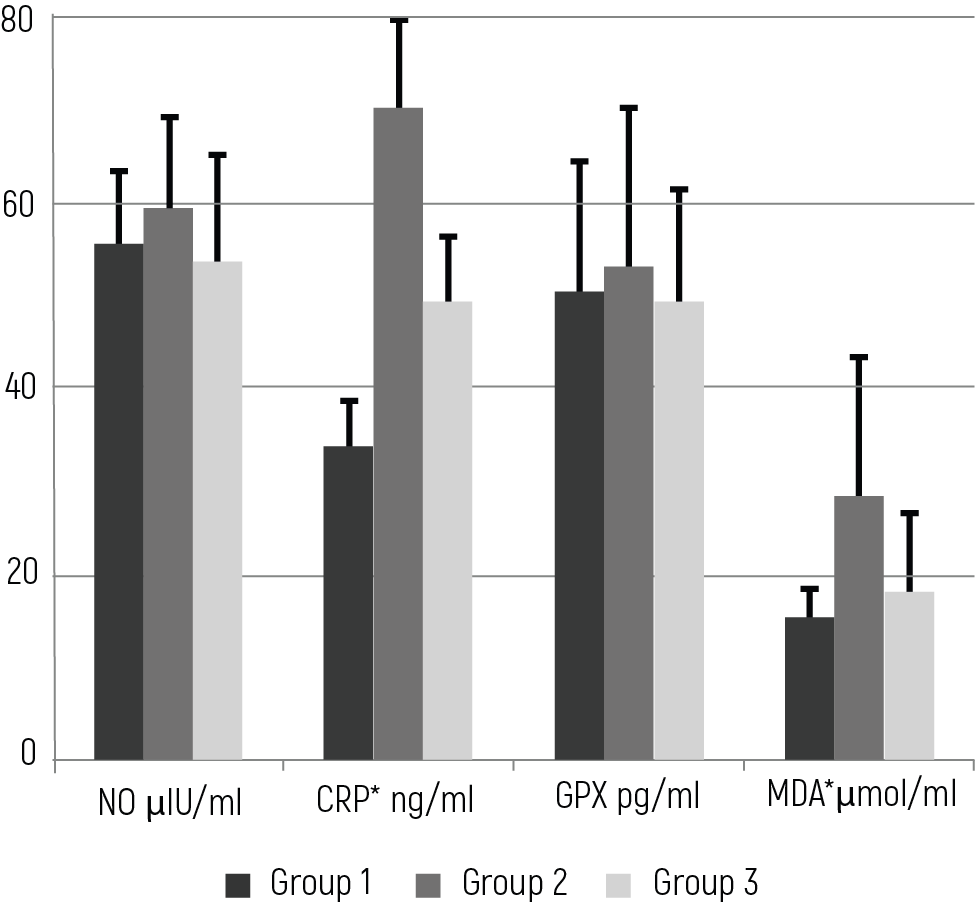
Figure 1. eNOS, CRP, GPX-1, MDA changes in groups. * p<0.05
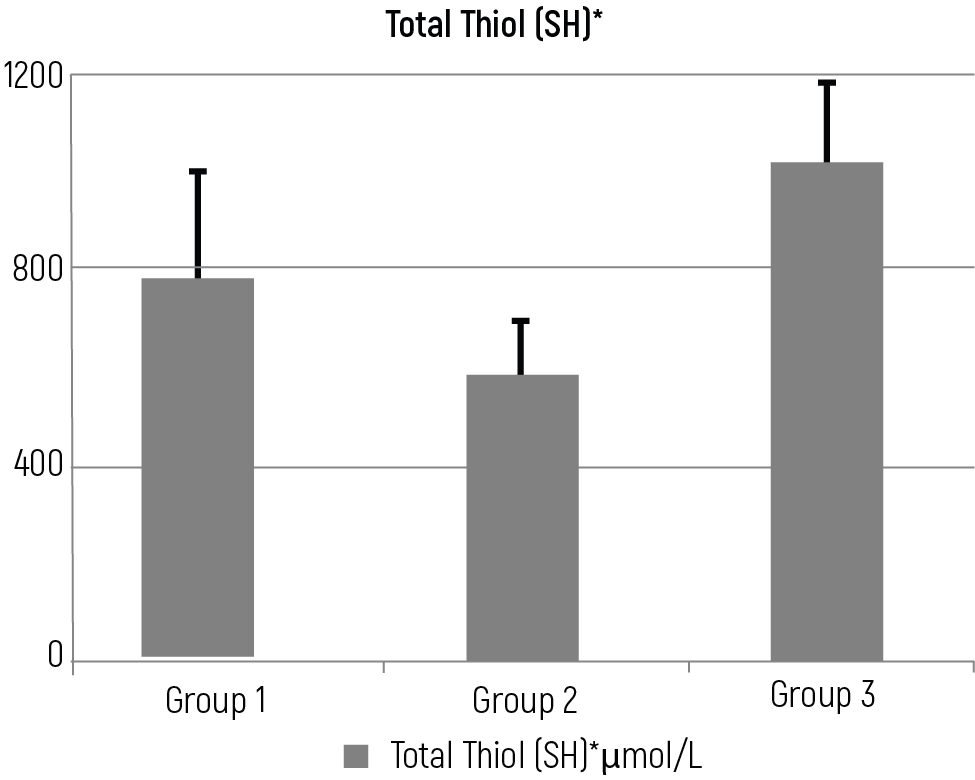
Figure 2. Total thiol (SH) µmol/l changes in groups.* p<0.05
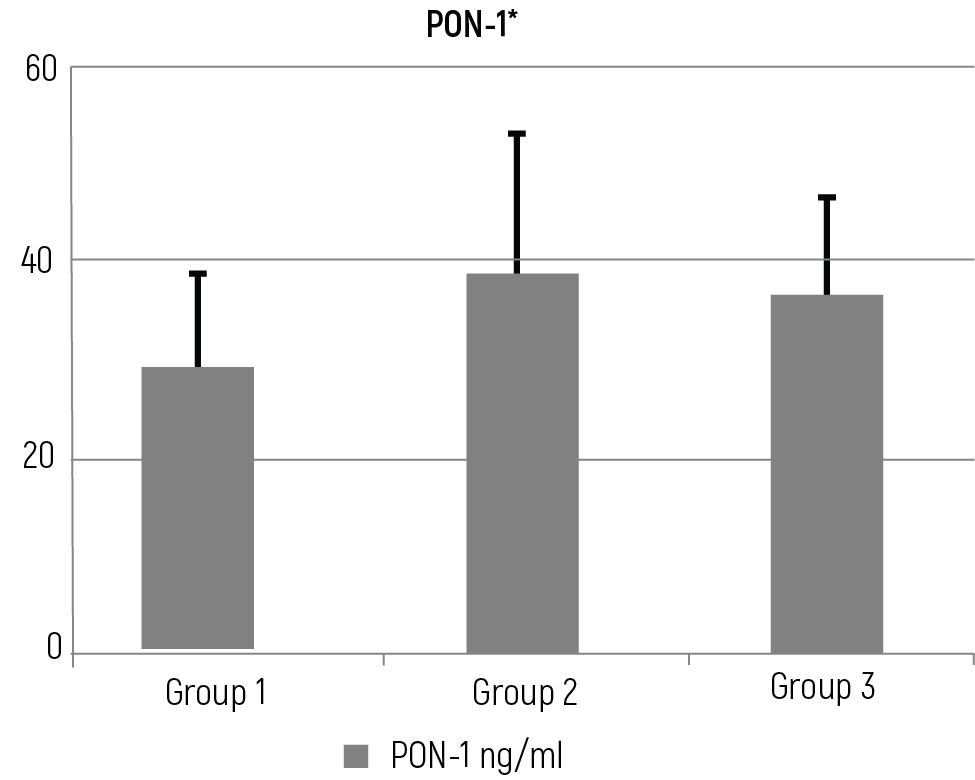
Figure 3. PON-1 ng/ml changes in groups.* p>0.05
Tables
Table 1. Blood values of oxidants and antioxidants
Additional Information
Publisher’s Note
Bayrakol MP remains neutral with regard to jurisdictional and institutional claims.
Rights and Permissions

This work is licensed under a Creative Commons Attribution-NonCommercial 4.0 International License (CC BY-NC 4.0). To view a copy of the license, visit https://creativecommons.org/licenses/by-nc/4.0/
About This Article
How to Cite This Article
Kamil Varlık Erel, Eyüp Murat Yılmaz. Protective effect of B.clasuii on sepsis. Eu Clin Anal Med 2018;6(2):18-21. doi:10.4328/ECAM.127
- Received:
- March 15, 2018
- Accepted:
- March 24, 2018
- Published Online:
- March 26, 2018
- Printed:
- May 1, 2018