
Abstract
AimAtmospheric pressure, air temperature, humidity, or sudden meteorological changes alter COVID-19 patientadmissions. In the present study, we aimed to investigate the seasonal distribution of COVID-19 disease and itsrelationship with meteorological changes in our province, where the continental climate is dominant.MethodsThis is a retrospective study. Patients who presented to our hospital’s pandemic outpatient clinic were enrolled. Patients’ time of presentation, the number of presentations and hospital outcomeswere recorded. Daily meteorological data pertaining to the study period including air temperature, atmosphericpressure, humidity rate, amount of precipitation, and wind speed were obtained from the Directorate of Meteorology and recorded.ResultsDuring the 112-day study period, 11,898 patients presented to the pandemic outpatient clinic, and 2568PCR (+) cases were detected. A total of 30 patients died during the study period. There was a significant positivecorrelation between the number of presentations and the mean temperature, humidity rate (p<0.05 for both).
On the days free of restrictions, on the other hand, there was a significant negative correlation between the
number of presentations and the mean temperature. There was a significant positive correlation between thenumber of positive cases and the humidity rate both during the entire study period and on days when restrictions were not in effect (p<0.05 for both).ConclusionWe found a positive correlation between the number of presentations and the mean temperature,humidity rate; there was also a positive correlation between the number of positive cases and the humidityrate. Although the number of presentations was reduced on the days when the national restrictions were not ineffect, we concluded that the restrictions did not affect the relationship between the number of patients andthe meteorological parameters. Interactions between air pollution and meteorological factors may play a rolein the transmission and pathogenesis of COVID-19, and multi-center prospective studies may provide a betterinsight into such interactions.
Keywords
Introduction
The SARS-CoV-2 pandemic has been designated by the World HealthOrganization (WHO) as Coronavirus Disease 2019 (COVID-19). In 2002,the SARS-CoV outbreak was first reported in China, and then spreadrapidly worldwide, reaching a mortality rate of approximately 11%.1 In 2012, MERS-CoV first emerged in Saudi Arabia from where it spreadto other countries, reaching a mortality rate of 37%.2-3 SARS CoV-2causing COVID-19 disease also belongs to the coronavirus family; it isan enveloped RNA virus that causes severe respiratory insufficiency.COVID-19 has spread to many countries of the world, with the first casein Turkey reported on 11 March 2020 (available at: https://covid19.saglik.gov.tr/). Coronaviruses are generally not very resistant to externalenvironmental factors. Their survival time is usually dependent onvarious factors such as ambient humidity and temperature, theamount of organic material in which they are excreted, and the textureof the surface they contaminate.2-3 Retrospective studies haveshown that severe acute respiratory syndrome (SARS), which emergedin Guangdong in 2003, gradually waned with warming air and endedby July.2 Similarly, air temperature and its variations have beenshown to modify the SARS pandemic.3 In a study reported fromKorea, it was found that the risk of influenza was markedly increasedby low day temperature and relative humidity; additionally, a positivecorrelation was shown for the daily temperature range.4 In addition,studies have linked air temperature and daily temperature fluctuationsto death from respiratory diseases.5-6 Similarly, another studydemonstrated that absolute humidity showed a significant correlationto influenza viral survival and transmission rates.7 Although there area number of studies on COVID-19 disease and meteorological factors, there are only a few studies from Turkey.8-10 Atmospheric pressure,temperature, humidity, or sudden weather changes alter COVID-19patient presentations.11 Some studies have reported that the spreadof COVID-19 was slowed as temperature and humidity increased.8-10 In the present study, we aimed to investigate the seasonal distributionof COVID-19 cases and their relationship with meteorological changesin the city of Ankara located in the Central Anatolian Region where thecontinental climate is the dominant climate.
Materials and Methods
This is a retrospective study. It was approved by the local ethics committee. Our hospital has been serving as a pandemic hospital since 21 March 2020, accepting only patients with a preliminary or final diagnosis of COVID-19 in addition to emergencies presenting to the emergency department. The study enrolled patients who presented to Keçiören Training and Research Hospital Pandemic Outpatient Clinic between 21.03.2020 and 1.07.2020. Patients with combined positivity in the nasopharyngeal and oropharyngeal swab samples were considered COVID-19 positive. The time of presentation, the number of presentations and the hospital outcomes of the patients were retrospectively reviewed and recorded from the hospital automation system and the medical records.
Seasonal and monthly distributions were analyzed. Daily meteorological data pertaining to the study period, including air temperature in centigrade, atmospheric pressure in millibars, humidity rate in percentage, amount of precipitation in millimeters, and wind speed in m/sec, were obtained from the Ankara Directorate of Meteorology and recorded. Time periods with and without curfew restriction were analyzed under different groups. Patients with missing data were excluded.Statistical AnalysisAll data that were obtained and recorded in the study form during the study period were analyzed using IBM SPSS 20.0 (Chicago, IL, USA) statistical software. The Kolmogorov-Smirnov test was used to evaluate the normality of the distribution of discrete and continuous numerical variables. Descriptive statistics included the median value (IQR 25-75) for discrete and continuous numerical variables, and the number of cases and percentages (%) for categorical variables. The categorical variables were compared with the Chi-square test, and the continuous variables with Student’s t-test or the Mann-Whitney U test. Spearman’s correlation test was used to test correlations between continuous variables. Statistical significance was set at p<0.05 for all statistical analyses.
Results
During the study period of 112 days, a total of 11,898 patients presented to the pandemic outpatient clinic, and 2568 PCR (+) cases were diagnosed. Thirty patients died during the study period. Restrictions were in effect for a total of 21 days during the study period. The median number of presentations was 62 (IQR 50-65); the median number of positive cases was 15 (IQR 11-18) during the days of restriction. On the days free of restrictions, the median number of presentations was 110 (IQR 84-141), and the median number of positive cases was 24 (IQR 1631). Table 1 presents the meteorological data in the entire study period.Analysis of the correlation coefficients and their level of significance for the correlations between the number of presentations to the pandemic outpatient clinic and the meteorological data during the entire study period showed a significant positive correlation between the number of presentations and the mean temperature and humidity rate (r=0.221, p=0.019; r=0.198, p=0.037, respectively).
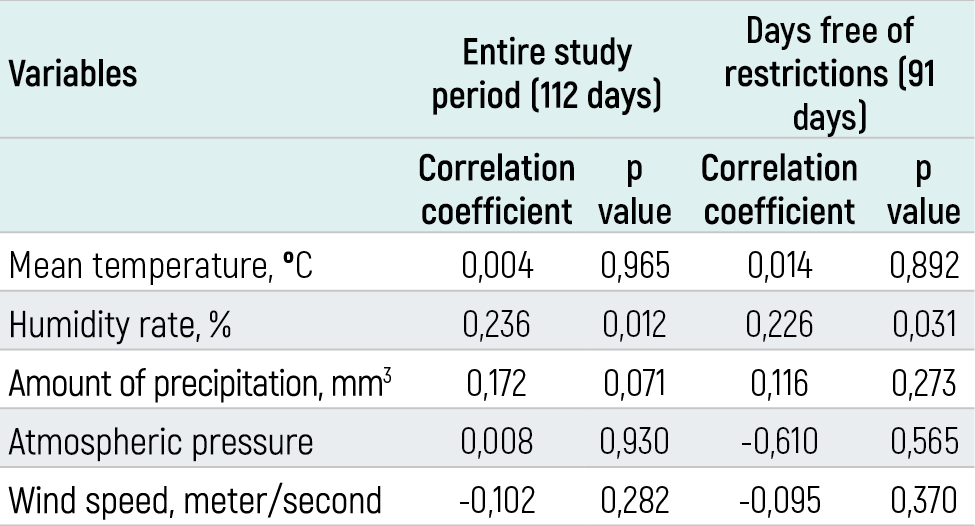
On the days free of restrictions, there was a significant positive correlation between the number of presentations and the mean temperature (r=0.305, p=0.003) (Table 2).Analysis of the correlation coefficients and their level of significance for the correlations between the number of positive cases and
meteorological data during the entire study period and on the days free of restrictions showed a significant positive correlation between the number of positive cases and the humidity rate during both times(r=0.236, p=0.012; r=0.226, p=0.031, respectively) (Table 3).
Discussion
In the present study, in which we evaluated the relationship between COVID 19 presentations and meteorological parameters in Ankara, a city in the Central Anatolia region where the terrestrial climate is the dominant climate, we reached two conclusions. Firstly, there was a positive correlation between the number of presentations and the mean temperature and humidity rate. Secondly, when we compared the correlation between the number of positive cases and meteorological parameters, we found a positive correlation between the number of positive cases and the humidity rate. Although the number of presentations decreased during the days when the restrictions were in effect, we concluded that the restrictions did not affect the correlation between the number of patients and meteorological parameters.The SARS-CoV-2 pandemic was designated by the World Health Organization as Coronavirus Disease 2019 (COVID-19). The COVID-19 pandemic started in China in late 2019; it has then spread around the globe and had a significant impact on every aspect of life. Meteorological parameters are among the important factors affecting the course of contagious diseases.4-5 Several studies have suggested that climate change may have contributed to the emergence and spread of various contagious diseases including SARS and COVID-19.12 For instance, some studies linked sharp changes in ambient temperature to an increased SARS risk.3 It has been shown that influenza is generally more easily transmitted in cold and/or dry weather.13 Low temperatures and low ultraviolet (UV) indices were correlated with increased influenza virus activity in Northern Europe between 2010 and 2018.14 In addition to human-to-human transmission, meteorological parameters are believed to be effective for the survival ability, transmission, and spread range of the viruses.9,15 Zhu and Xie analyzed the correlation between air temperature and COVID-19 infection in China, noting that the mean temperature and the number of COVID-19 cases had a positive linear association when the air temperature was below 3° C.16 Similarly, Tosepu et al. analyzed the relationship between weather conditions and COVID-19 pandemic and showed that mean temperature (°C) was correlated with COVID-19 spread.17
Biqing Chen investigated the effect of four meteorological parameters (air temperature, relative humidity, wind speed, and visibility) on COVID-19 infection; they reported that the parameters of the preceding 14 days were correlated to the number of cases.11 We also showed that the number of hospital admissions was correlated to the mean temperature and humidity rate. In addition, we found that the number of PCR positive cases was only correlated to the humidity rate. In a systematic review that examined the effects of air temperature and humidity on the COVID-19 pandemic, it was reported that COVID-19 spread may be affected by climatic variables such as temperature and humidity, which may indicate that the SARS-CoV-2 virus may spread more slowly in warm and moist climates.18 Bu et al. concluded that air temperatures ranging between 13 0C and 19 0C and humidity rates ranging between 50% and 80% are suitable for SARS-CoV-2 ’s survival and spread.19
In addition to meteorological factors, social factors play a role in the coronavirus pandemic. As in many countries, our country has imposed restrictions on population movement, especially in the first months of the pandemic, to slow down the spread of COVID 19 and to prevent overloading of health systems. Although the number of presentations to our hospital and the number of positive cases were reduced during the period of restrictions, we showed that the restrictions did not affect the relationship between the number of cases and the meteorological parameters.
Limitations
Our study is a retrospective study. Data from a single hospital from a single city were used. In the first months of the pandemic, people arriving from various countries were quarantined. Since almost all of the first COVID-19 cases in Turkey were of foreign origin during the onset of the pandemic, these cases may have changed the case numbers in a given city. The results may show variability by regional geographic, climatic, and seasonal changes.
Conclusion
Meteorological factors may play a role in the transmission and pathogenesis of COVID-19. We showed a correlation between the number of presentations, the number of positive cases, and the mean temperature and humidity. Interactions between air pollution and meteorological factors may play a role in the transmission and pathogenesis of COVID-19, and such interactions can be better understood with multi-center prospective studies.
Declarations
Animal and Human Rights Statement
No animal experiments were conducted in this study. All procedures involving human participants were performed in accordance with institutional and national ethical standards and the Declaration of Helsinki.
Informed Consent
Due to the retrospective nature of the study, informed consent was waived.
Data Availability
The data supporting the findings of this study are available from the corresponding author upon reasonable request.
Conflict of Interest
The authors declare no conflict of interest.
Funding
None.
Abbreviations
COVID-19: Coronavirus Disease 2019
IQR: Interquartile range
MERS-CoV: Middle East Respiratory Syndrome Coronavirus
PCR: Polymerase chain reaction
RNA: Ribonucleic acid
SARS-CoV: Severe acute respiratory syndrome coronavirus
SARS-CoV-2: Severe acute respiratory syndrome coronavirus 2
SPSS: Statistical Package for the Social Sciences
UV: Ultraviolet
WHO: World Health Organization
References
- Lai CC, Wang CY, Wang YH, Hsueh SC, Ko WC, Hsueh PR. Global epidemiology of coronavirus disease 2019 (COVID-19): disease incidence, daily cumulative index, mortality, and their association with country healthcare resources and economic status. Int J Antimicrob Agents. 2020;55(4):105946.Agents. 2020;55(4):105946. doi:10.1016/j.ijantimicag.2020.105946
- Wallis P, Nerlich B. Disease metaphors in new epidemics: the UK media framing of the 2003 SARS epidemic. Soc Sci Med. 2005;60(11):2629-2639. doi:10.1016/j.socscimed.2004.11.031
- Tan J, Mu L, Huang J, Yu S, Chen B, Yin J. An initial investigation of the association between the SARS outbreak and weather: with the view of the environmental temperature and its variation. J Epidemiol Community Health. 2005;59(3):186-192. doi:10.1136/jech.2004.020180
- Park JE, Son WS, Ryu Y, Choi SB, Kwon O, Ahn I. Effects of temperature, humidity, and diurnal temperature range on influenza incidence in a temperate region. Influenza Other Respir Viruses. 2020;14(1):11-18. doi:10.1111/irv.12682
- Pinheiro SL, Saldiva PH, Schwartz J, Zanobetti A. Isolated and synergistic effects of PM10 and average temperature on cardiovascular and respiratory mortality. Rev Saude Publica. 2014;48(6):881-888. doi:10.1590/s0034-8910.2014048005218
- Luo B, Liu J, Fei G, et al. Impact of probable interaction of low temperature and ambient fine particulate matter on the function of rats alveolar macrophages. Environ Toxicol Pharmacol. 2017;49:172-178. doi:10.1016/j.etap.2016.12.011
- Metz JA, Finn A. Influenza and humidity: why a bit more damp may be good for you! J Infect. 2015;71(suppl 1):S54-S58. doi:10.1016/j.jinf.2015.04.013
- Oliveiros B, Caramelo L, Ferreira NC, Caramelo F. Role of temperature and humidity in the modulation of the doubling time of COVID-19 cases. medRxiv. 2020. doi:10.1101/2020.03.05.20031872
- Şahin M. Impact of weather on COVID-19 pandemic in Turkey. Sci Total Environ. 2020;728:138810. doi:10.1016/j.scitotenv.2020.138810
- Ince N, Gulhan PY, Balbay EG, Ozturk CE, Onmez A. The role of meteorological parameters in COVID-19 infection. Konuralp Med J. 2020;12(3):394-399.
- Chen B, Liang H, Yuan X, et al. Roles of meteorological conditions in COVID-19 transmission on a worldwide scale. medRxiv. 2020. doi:10.1101/2020.03.16.20037168
- Lofgren E, Fefferman NH, Naumov YN, Gorski J, Naumova EN. Influenza seasonality: underlying causes and modeling theories. J Virol. 2007;81(11):5429-5436. doi:10.1128/jvi.01680-06
- Xu Z, Hu W, Williams G, Clements AC, Kan H, Tong S. Air pollution, temperature and pediatric influenza in Brisbane, Australia. Environ Int. 2013;59:384-388. doi:10.1016/j.envint.2013.06.022
- Ianevski A, Zusinaite E, Shtaida N, et al. Low temperature and low UV indexes correlated with peaks of influenza virus activity in Northern Europe during 2010-2018. Viruses. 2019;11(3):207. doi:10.3390/v11030207
- Chan KH, Peiris JS, Lam SY, Poon LL, Yuen KY, Seto WH. The effects of temperature and relative humidity on the viability of the SARS coronavirus. Adv Virol. 2011;2011:734690. doi:10.1155/2011/734690
- Xie J, Zhu Y. Association between ambient temperature and COVID-19 infection in 122 cities from China. Sci Total Environ. 2020;724:138201. doi:10.1016/j.scitotenv.2020.138201
- Tosepu R, Gunawan J, Effendy DS, et al. Correlation between weather and COVID-19 pandemic in Jakarta, Indonesia. Sci Total Environ. 2020;725:138436. doi:10.1016/j.scitotenv.2020.138436
- Mecenas P, Bastos RTDRM, Vallinoto ACR, Normando D. Effects of temperature and humidity on the spread of COVID-19: a systematic review. PLoS One. 2020;15(9):e0238339. doi:10.1371/journal.pone.0238339
- Bu J, Peng DD, Xiao H, et al. Analysis of meteorological conditions and prediction of epidemic trend of 2019-nCoV infection in 2020. medRxiv. 2020. doi:10.1101/2020.02.13.20022715
Tables
Table 1. Meteorological data measured during the entire study period
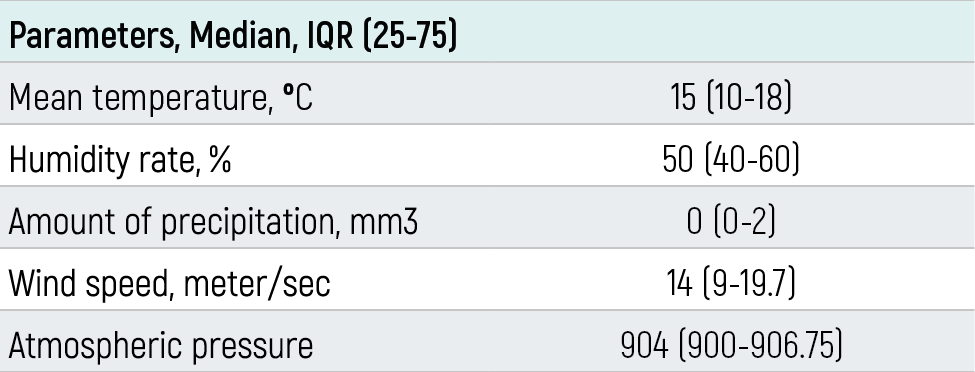
Table 2. Correlation coefficients between the number of presentations to the pandemic clinic and the meteorological data during the entire study period and on the days free of restrictions
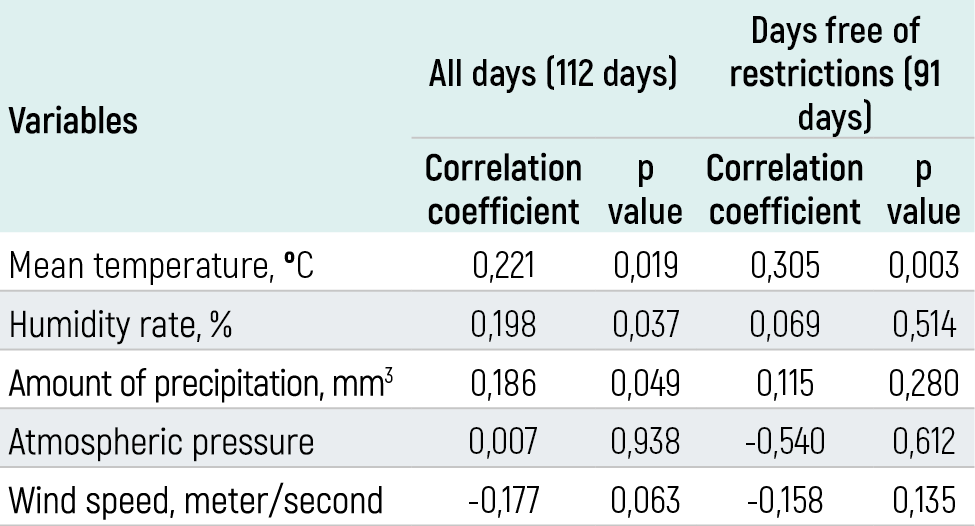
Table 3. Correlation coefficients between the number of positive cases and the meteorological data during the entire study period and on the days free of restrictions
Additional Information
Publisher’s Note
Bayrakol MP remains neutral with regard to jurisdictional and institutional claims.
Rights and Permissions

This work is licensed under a Creative Commons Attribution-NonCommercial 4.0 International License (CC BY-NC 4.0). To view a copy of the license, visit https://creativecommons.org/licenses/by-nc/4.0/
About This Article
How to Cite This Article
Emine Emektar, Filiz Koç, Hüseyin Uzunosmanoğlu, Seda Dağar, Emine Fırat Göktaş. Determination the effect of meteorological changes in presentationsto a pandemic hospital. Eu Clin Anal Med 2026;10(2):5-8. doi:10.4328/ECAM.10029
- Received:
- 02.04.2021
- Accepted:
- 24.05.2021
- Published Online:
- 31.05.2021
- Printed:
- 01.05.2022