The effect of home exercises given to school-aged children during the COVID-19 pandemic process on sports motivation
Why children keep doing sports during the COVID-19 pandemic process?
Authors
Abstract
AimThis study aimed to investigate the effect of home exercises given to secondary and high school students during the pandemic process on sports motivation.
MethodsThis study was conducted on 117 (n:61 female, n:56 male) people aged 11-15 years. The children given online via the EBA home exercises program in the study were reached at Kangal Mehmet Salih Şirin, Sivas Selçuk, Sivas Durdulu, Gürün 80. Yıl Boarding District Secondary School and Kangal Koç Anatolian High School. Individuals were evaluated with Sport Motivation Scale at the pre-post exercise program.
ResultsRegarding the scores between females and males, no statistically significant difference was found between the female and males in terms of age, sex, BMI, education status, medical history, career, habits, socioeconomic status and comorbidity values. In the comparative analysis, improvement in the points of all parameters in females was significantly lower than in males. There was a statistically significant difference between females and males in terms of identified regulation, which is a subscale of external stimulation. Also, the change in the level of external and identified regulation after exercises in males was statistically better than in females.
ConclusionAs a result of the study, home exercises are useful for increasing sport motivation during the COVID-19 pandemic, especially in males than in females. The findings of these data can be used in models in the future.
Keywords
Introduction
It was stated that the majority of individuals infected with COVID-19 (Coronavirus Disease 2019) had a mild form of the disease, but a certain group experienced a severe form of the disease, which resulted in death. It has been understood that the situation of contracting the COVID-19 virus, which affects the world, differs in different cultures in different geographies.1,2
The post-acute sequelae of the COVID-19 virus among school-aged children are described as cardiorespiratory, sensory, neurological system and mental health including concentration disturbance, depression, and anxiety. The most common symptoms of COVID-19 in children were reported to be sleep disturbance, fatigue, myalgia, arthralgia, congested nose, cough, disturbing smell, and chest pain connected with a weakened immune system.1 We aimed to strengthen the immune systems with increasing activity of school-age children. Following mild-moderate exercise, the activity of NK (natural killer) cells increases in the acute period, neutrophil functions are stimulated, and macrophage functions, T and B lymphocyte cell counts and activities increase.3 Considering the age groups and health conditions, diabetes mellitus, which occurs as a result of heart system disorders, blood pressure disorder and hormonal imbalance, causes the disease process to be heavy as age progresses and before being COVID-19 infected.4 Based on these data obtained as a result of the research, it is understood that the interpretation that people with cardiac problems can have a more severe disease than those who do not have it. In their studies, scientists observed an increase in myocarditis formation and CRP (C-reactive protein) rate in COVID-19 infected individuals. It has been stated that cardiac troponin level is high, especially in COVID-19 infected patients, resulting in death, and this level did not increase in patients who did not die.5 If we evaluate the human metabolism as a whole, it is understood that when the spike protein, which is not recognized by the metabolism from the outside, enters the system, the cells begin to respond to it, and the overworked immune system begins to overwork. The virus, which also manifests itself in the heart structure, causes the oxygen in the blood not to be adequately delivered to the tissues being efficient in the circulatory system, and it has been concluded that serious metabolic problems occur in individuals who begin to experience respiratory distress, resulting in death.6 It is known that many countries in different parts of the world have closed schools. It is understood that the students were affected by the closure and this new situation. Since not all students have the same opportunities, international education organizations have recommended that countries take measures against disadvantaged individuals.7 It has been understood that if precautions are not taken, students who do not have the necessary opportunities will be negatively affected in terms of education and lead a sedentary life. In our country, by taking many new measures in this regard, free tablet distribution to students, educational places where they can teach life lessons, and internet infrastructure have been created.8 Motivation is the behaviour of people and effort to achieve a specific goal with their own desires. Intrinsic motivation is the fact that an individual who performs an activity or a job finds the activity interesting or takes pleasure from the activity itself. However, the situation that expresses an intermediary between the individual’s job and satisfaction from this job is an extrinsic motivation. In intrinsic motivation, satisfaction stems from the job itself, whereas in extrinsic motivation, satisfaction is through an external medium such as material and verbal rewards (praise). The lateral and ventromedial nuclei of the hypothalamus, which are located along the medial forebrain bundle are reward centres. Secondary reward centres, are septum, amygdala, basal ganglia, and basal tegmentum of the mesencephalon. We know that aerobic exercises increase the cell proliferation and bilateral volume of the hippocampus connected with hippocampal-dependent learning and memory tasks.9 Dopamine is released into the nucleus accumbens following exposure to rewarding stimuli, so we aim to stimulate the nucleus accumbens for doing action for the inherent pleasure and satisfaction, having connectedness easily with others and well-being.
The main purpose of the study is to investigate the effect of home exercises given to secondary and high school students on sports motivation during the COVID-19 pandemic.
Materials and Methods
DesignThis experimental study with children, who are secondary and high school sedentary healthy students aged between 11 and 15 years, was conducted at the Department of Sport Education, Faculty of Sport Science, Inonu University between July 2021 and September 2021. This study was executed within the scope of the Etwinning Project and Sporsivas Project using the EBA (Education Informatic Network). The children given online via the EBA home exercises program in the study were reached at Kangal Mehmet Salih Şirin, Sivas Selçuk, Sivas Durdulu, Gürün 80. Yıl Boarding District Secondary School and Kangal Koç Anatolian High School. The experimental group of children, aged 11-15 years, was introduced online exercise program via EBA and was evaluated with Sport Motivation Scale before and after the exercise program. The informed consent was obtained from children’s families before the investigation.
Ethical ConsiderationsThe pre-post-experimental protocol was approved based on the ethical standards of the Declaration of Helsinki. The required permission and consent were obtained for this study from the Malatya Clinical Research Ethics Committee (Approval number=2021/22-60, Approval date= 29/06/2021). Individuals who have received informed consent from families to participate in the study and met the inclusion criteria were selected by randomized sampling method from the relevant phase. Twelve volunteers were not recruited because they cannot adapt to the online exercise program.
Data Collection ToolsThe Sports Motivation Scale was used to determine what motives the athletesexperience. On the scale, there were statements about why people participate in sports and why they continue to do sports. The Motivation Scale in Sports consists of 28 items. The scale is Likert type and is evaluated between 1 (not at all), 4 (moderately agreeable), and 7 (totally agreeable). The scale consists of three sub-dimensions; intrinsic motivation, extrinsic motivation, and unmotivated. Intrinsic motivation is in itself; It is divided into two intrinsic motivation to know and achieve (2, 4, 8, 12, 15, 20, 23 and 27) and intrinsic motivation to experience stimuli (1, 13, 18 and 25). Extrinsic motivation is within itself; external regulation (6, 10, 16 and 22), identification (7, 11, 17 and 24) and introjection (9, 14, 21 and 26). The unmotivated (3, 5, 19, and 28) subscale is one-dimensional. The averages of the scores obtained from the related items were used in the evaluation of the subscales.10,11 Before participation in the present study, informed consent was obtained from the families of the study participants. Individuals, aged 11-15 years were included in the online exercises program. Children with neurological or orthopaedic diseases were not included in the study. An online exercise plan was applied to the participants between the ages of 11-15 according to the characteristics of the developmental period and also was monitored visually. In this study, a total of 2.5 to 3 hours of exercise in a week with aerobic capacity and intelligence games between 1-1,5 hours for 2 days for their cognitive development were applied to our students 3 days a week. Exercise materials were created from waste materials (water bottles, sticks, bags, etc.) to increase the creativity of our students and to help them exercise. Online exercise training was given for 10 weeks, 3 days a week, 40-50 min a day and changes in the Sports motivation questionnaire were recorded before and after exercise. Basic warm-up exercises include jogging (3 min), stretching for all extremities (10 sec), and stepping (3 min) (Table 1).
Results
The evaluation of 117 healthy individuals, comprising 61 females and 56 males with a mean age of 13.89 ± 10.70 years (range, 11-15 years) was carried out. There was no statistically significant difference in the average value of age, sex, BMI, education status, medical history, career, habits, socioeconomic status and comorbidity values between females and males (p>0.05). Table 2 presents the score of the sport motivation scale before the exercise program for females and males. There was no difference between the groups in a subgroup of external and internal motivation and motivation except for stimulation before the home exercises program (p> 0.05). There was a statistically significant difference between females and males in terms of identified regulation, which is a subscale of external stimulation (p<0.05) (Table 3). The change in the level of external and identified regulation after exercises among males was
statistically better than the results of the female (p<0.05) (Table 3). There were increases in the scores in the internal and external motivation subgroups of women, and a decrease in the score in the motivation parameter was observed. However, these changes were not statistically significant. We think that this is related to the fact that men think that they will socialize more easily and gain prestige with the relative change in their bodies after exercise. Women can socialize more easily in different ways compared to men.
Discussion
This study investigated the effect of home exercises given to secondary and high school students within the scope of the Etwinning and Sporsivas Projects during the pandemic process on Sports Motivation. The results demonstrated that an online home exercise program is a more effective sport motivation method for children aged 11-15 years. To the best of our knowledge, this is the first study to investigate the effects of online home exercises program on children in secondary and high school during the COVID-19 pandemic process. It has been understood that the measures taken are determined by the states as information about the COVID-19 virus comes in. In the best-known evaluation of the virus, the situations that pose the highest risk of transmission are specified. It was announced that the most basic of these is a situation of speaking without a mask and not following the necessary cleaning rules without following the social distance rules in the closed area. It is known that many precautions are taken to avoid crowds and to avoid excessive human contact. It is known that one of these measures is the transition of schools to online education by interrupting face-to-face education.12 It is known that doing exercise within a certain plan is beneficial for bodily metabolism. It is understood that a positive structure is formed in terms of mental as well as physical development. International health organizations have explained the importance of exercising more than 2.5 hours per week. It has been stated that it is important for the exercise to be aerobic to increase heart endurance and to use oxygen better in the tissues. It has been understood that the prepared exercises should have characteristics according to the individuals and it is important to diversify them accordingly. It has been stated that the importance of exercises that can be done at home, especially during the pandemic period, is better understood.13Our aim in this study is to examine the effect of home exercises given to secondary school students within the scope of the eTwinning and Sporsivas project during the pandemic process on motivation in sports. Liu et al investigated behavioural problems among school-aged children (range 7-12 years) in home quarantine in China. They evaluated these problems using with Strengths and Difficulties Questionnaire. Behavioural problems included hyperactivity-inattention, externalizing problems, inability to make personal contact, and psychological problems (anxiety). They found that the school-age children, who regularly engaged in moderate or high intensity (walking, running, jumping, one leg hopping) physical activity more than 2 days a week, 60 min per day in home quarantine, were less to have hyperactivityinattention. Also, the National Health Commission of the People’s Republic of China recommend that children have at least 60 min of light or moderate density physical activity during the COVID-19 epidemic process.14 We observed likely that home exercises online given to secondary school students during the pandemic process increased especially extrinsic motivation. Tulchin-Francis et al researched the effects of COVID-19 on physical activity in US children. They said that daily moderate and vigorous indoor/outdoor activity, which is likely to be 12.000 steps, is vital but COVID-19 cause restriction on social and recreational activity, and the closure of the school. The benefits of regular activity provide not only physical fitness, but also improves mental health, and reduction in depression and anxiety.15 In this study, we both ensured the active participation of children in physical activities during the quarantine period and played a positive role in the development of children’s sports motivation with home exercises. Sheehan et al studied the interrelations of mental health and motivation among 38 elite students athletes using the Profile of Mood StatesBrief, the 16-item Quick Inventory of Depressive Symptomatology, State-Trait Anxiety, Pittsburgh Sleep Quality Index, and motivation was evaluated with the 18-item Sport Motivation, 33-items Perceived motivational climate in sport a satisfaction scale. Although there are well-established, self-satisfaction benefits of intrinsic motivation over extrinsic motivation, this study appears to be extrinsic motivation typical among competitive athletes because of the simultaneous based on challenge and competition/winning impuls.16 In this study, we found a similar conclusion that home exercise has a positive improving effect on external motivation than intrinsic motivation.
Limitations
A limitation of the current study was that the mental health and psychological effects of the COVID-quarantine process on children were not evaluated. In this regard, the impressions of families on their children are subjective. Also, the home exercise protocol was not designed individually. The evaluation scale can be detailed in future studies.
Conclusion
This study found that home exercises are useful for increasing sport motivation, especially among male than female students. Also, we found the answer to the ‘Why do you do sports? ‘ and ‘Why do you keep doing sports?’ questions. It can be applied in addition to face-to-face lessons for successful physical and mental development.
Declarations
Animal and Human Rights Statement
All procedures performed in this study involving human participants were conducted in accordance with the ethical standards of the institutional and national research committee and with the Declaration of Helsinki and its later amendments.
Informed Consent
Written informed consent was obtained from the parents or legal guardians of all participants before enrollment.
Data Availability
The data supporting the findings of this study are available from the corresponding author upon reasonable request.
Conflict of Interest
The authors declare no conflict of interest.
Funding
None.
Scientific Responsibility Statement
The authors declare that they are responsible for the scientific content of the article, including study design, data collection, analysis and interpretation, manuscript preparation, and approval of the final version of the manuscript.
Abbreviations
BMI: Body Mass Index
COVID-19: Coronavirus Disease 2019
CRP: C-reactive protein
EBA: Education Informatics Network
EM: External Motivation
IM: Internal Motivation
NK: Natural Killer
SD: Standard Deviation
SPSS: Statistical Package for the Social Sciences
References
-
Zimmermann P, Pittet LF, Curtis N. How common is long COVID in children and adolescents? Pediatr Infect Dis J. 2021;40(12):e482. doi:10.1097/inf.0000000000003328
-
Margaritis I, Houdart S, El Ouadrhiri Y, Bigard X, Vuillemin A, Duche P. How to deal with COVID-19 epidemic-related lockdown physical inactivity and sedentary increase in youth? Adaptation of ANSES’ benchmarks. Arch Public Health. 2020;78:52. doi:10.1186/s13690-020-00432-z
-
Costa Rosa LF. Exercise as a time-conditioning effector in chronic disease: a complementary treatment strategy. Evid Based Complement Alternat Med. 2004;1:63-70. doi:10.1093/ecam/neh018
-
Chilazi M, Duffy EY, Thakkar A, Michos ED. COVID-19 and cardiovascular disease: what we know in 2021. Curr Atheroscler Rep. 2021;23(7):1-12. doi:10.1007/s11883-021-00935-2
-
Hemphill NM, Kuan MTY, Harris KC. Reduced physical activity during COVID-19 pandemic in children with congenital heart disease. Can J Cardiol. 2020;36:1130-1134. doi:10.1016/j.cjca.2020.04.038
-
Polat C. COVID-19 pandemisi: genel bir bakış [COVID-19 pandemic: an overview]. ANKEM Derg. 2020;34(1):25.
-
Çokuğraş H, Önal P. SARS-CoV-2 infection in children. Turk Pediatri Ars. 2020;55(2):95-102.
-
Kurt ME. COVID-19 (coronavirus disease) ile kişisel koruyucu önlemleri yeniden düşünmek [Rethinking personal protective measures with COVID-19]. J Biotechnol Strateg Health Res. 2020;4(2):72-77. doi:10.34084/bshr.728856
-
Chaddock L, Erickson KI, Prakash RS, Kim JS, Voss MW, VanPatter M, et al. A neuroimaging investigation of the association between aerobic fitness, hippocampal volume, and memory performance in preadolescent children. Brain Res. 2010;1358:172-183. doi:10.1016/j.brainres.2010.08.049
-
Öcal K, Sakallı D. Sporda güdülenme ölçeği-II’nin Türkçe uyarlaması: geçerlik ve güvenirlik çalışması [Turkish adaptation of Sports Motivation Scale-II: validity and reliability study]. Int J Sport Exerc Train Sci. 2018;4(1):39-48. doi:10.18826/useeabd.327789
-
Kazak Z. Sporda güdülenme ölçeğinin Türk sporcuları için güvenirlik ve geçerlik çalışması [Reliability and validity study of motivation in sports scale for Turkish athletes]. Hacettepe Univ Spor Bilim Derg. 2004;15(4):191-206.
-
Xiang M, Zhang Z, Kuwahara K. Impact of the COVID-19 pandemic on children’s and adolescents’ lifestyle behavior larger than expected. Prog Cardiovasc Dis. 2020;63:531-532. doi:10.1016/j.pcad.2020.04.013
-
Chagas EFB, Biteli P, Candeloro BM, Rodrigues MA, Rodrigues PH. Physical exercise and COVID-19: a summary of the recommendations. AIMS Bioeng. 2020;7(4):236-241.
-
Liu Q, Zhou Y, Xie X, Xue Q, Zhu K, Wan Z, et al. The prevalence of behavioral problems among school-aged children in home quarantine during the COVID-19 pandemic in China. J Affect Disord. 2021;279:412-416. doi:10.1016/j.jad.2020.10.008
-
Tulchin-Francis K, Stevens W Jr, Gu X, Zhang T, Roberts H, Keller J, et al. The impact of the coronavirus disease 2019 pandemic on physical activity in US children. J Sport Health Sci. 2021;10(3):323-332. doi:10.1016/j.jshs.2021.02.005
-
Sheehan RB, Herring MP, Campbell MP. Longitudinal relations of mental health and motivation among elite student-athletes across a condensed season: plausible influence of academic and athletic schedule. Psychol Sport Exerc. 2018;37:146-152. doi:10.1016/j.psychsport.2018.03.005
Figures
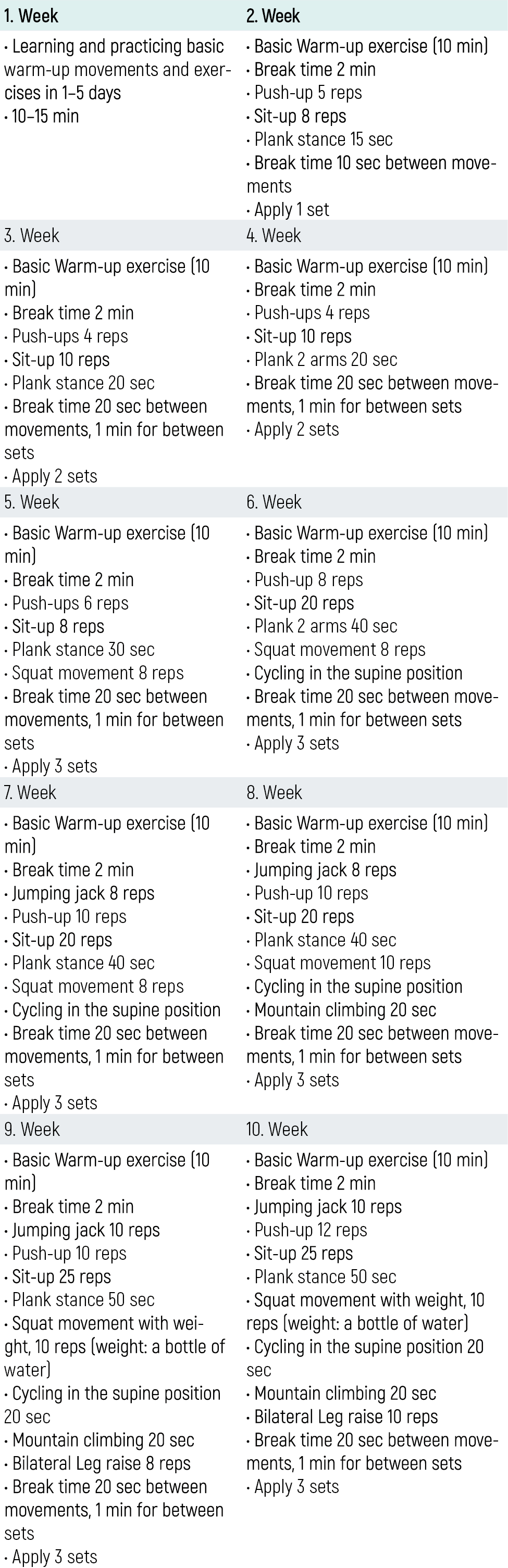
Figure 1
Tables
Table 1. The home exercise program during pandemic process
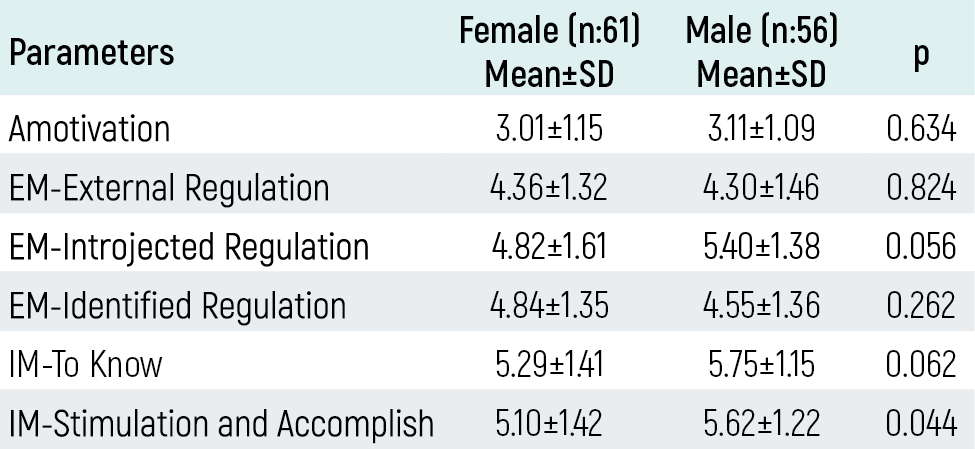
Table 2. The score of sport motivation scale before exercises program in females and males
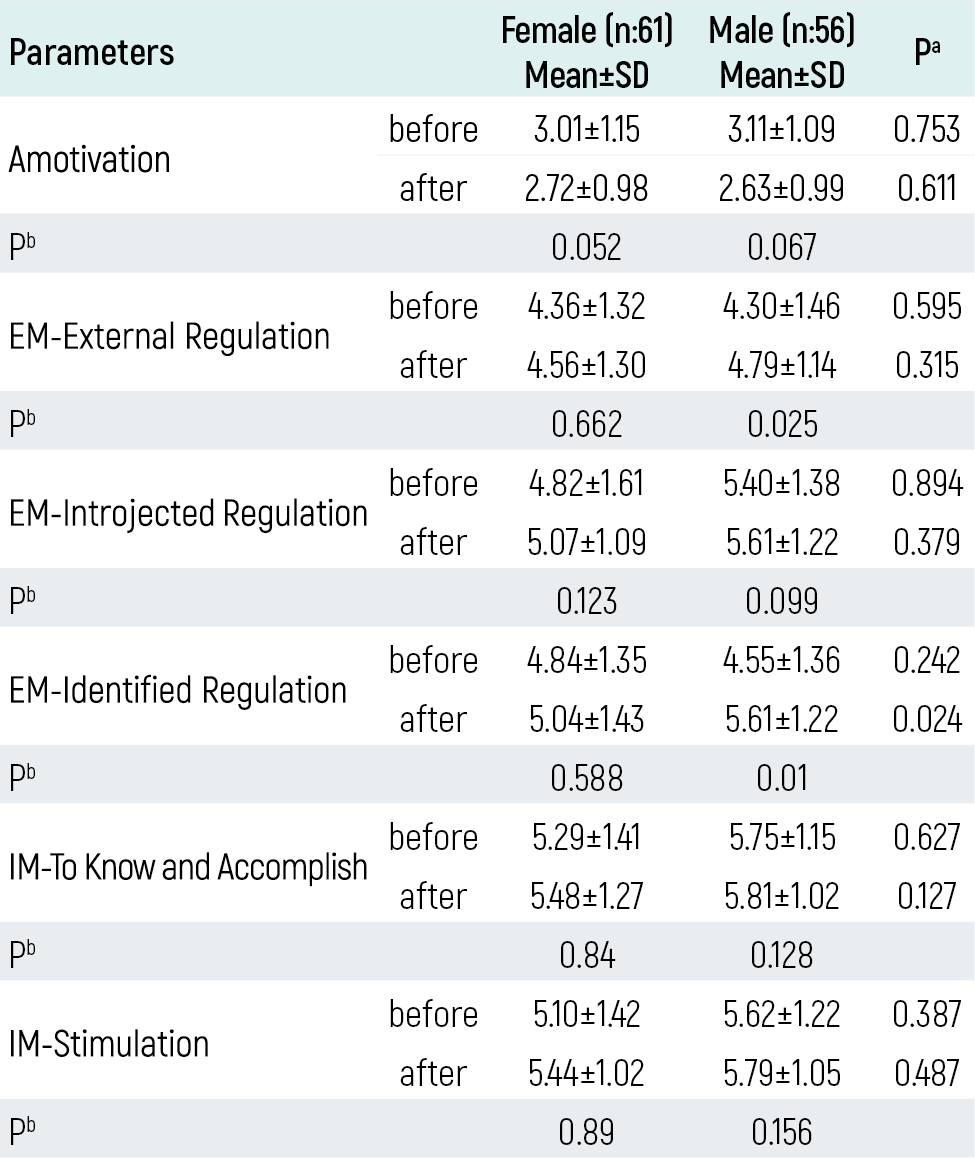
*EM: External Motivation, IM: Internal Motivation, **Independent Sample T-Test, data were presented as Mean±SD, *p<0.05, SD: Standard Deviation
Additional Information
Publisher’s Note
Bayrakol MP remains neutral with regard to jurisdictional and institutional claims.
Rights and Permissions

This work is licensed under a Creative Commons Attribution-NonCommercial 4.0 International License (CC BY-NC 4.0). To view a copy of the license, visit https://creativecommons.org/licenses/by-nc/4.0/
About This Article
How to Cite This Article
Kayhan Söğüt, Elisa Calisgan, Betül Akyol, Yılmaz Yıldırım, Mehmet Göğremiş. The effect of home exercises given to school-aged children during the COVID-19 pandemic process on sports motivation. Eu Clin Anal Med 2022;10(3):22-26. doi:10.4328/ECAM.10037
- Received:
- September 12, 2012
- Accepted:
- October 26, 2022
- Published Online:
- October 26, 2022
- Printed:
- September 1, 2022