The effects of parental attitudes on the behavior of 48–69-month-old children: a comparison between typically developing children and children with special needs
Authors
Abstract
Aim This study aimed to investigate the effects of parental attitudes on the social and behavioral development of typically developing children and children with special needs aged 48–69 months. Additionally, it sought to compare parenting styles between both groups and examine their predictive role in social skills and behavioral problems.
Methods The study utilized a quantitative, relational survey model. The sample consisted of 302 children (151 typically developing, 151 with special needs) and their parents. Data were collected using the Parental Attitude Scale, the Preschool and Kindergarten Behavior Scale, and a Sociodemographic Form. The data were analyzed using independent samples t-tests, Pearson correlation analysis, and multiple regression analysis.
Results No significant differences were found between the groups in democratic, authoritarian, and permissive parenting styles (p >0.05). However, parents of children with special needs exhibited significantly higher overprotective parenting scores (p<0.05). Typically developing children scored significantly higher in total social skills as well as across all subdimensions, including social cooperation, social interaction, and social independence (p<0.05), whereas no significant differences were observed in behavioral problems (p > .05). Regression analyses revealed that democratic parenting positively predicted social skills behaviors, whereas authoritarian parenting negatively predicted them. Additionally, authoritarian and overprotective parenting styles positively predicted behavioral problems (p <0.05).
Conclusion The findings highlight the significant role of parenting styles in shaping children’s social and behavioral development. Overprotective parenting was particularly prevalent among parents of children with special needs. These results emphasize the importance of positive parenting strategies in promoting social competence and minimizing behavioral issues. Future research should explore additional contextual factors influencing parenting and child development.
Keywords
Introduction
Parents play a fundamental role in shaping their children’s behavior through various attitudes and actions they exhibit during child- rearing. As the primary educators, parents significantly influence their children’s cognitive, social, and emotional development, 1. In this context, they provide guidance and support that foster their children’s growth and adaptation to societal norms. Moreover, parental attitudes and relationships with their children are crucial in the socialization process, facilitating the internalization of societal values and roles 2. Although parents are not the only factor in a child’s socialization, they remain the most influential. Parental behaviors and habits shape children’s responses to their environment and interactions. Consequently, the attitudes displayed by parents play a decisive role in determining children’s behavioral patterns, 3.
A permissive parenting style is characterized by an accepting and positive approach to children’s desires and actions. Such parents tend to avoid harsh punishments and, in some cases, may even neglect their children’s misbehavior in the name of tolerance, 4.
In contrast to permissive parenting, overprotective parenting involves excessive control and attention, often leading to increased dependency, anxiety, and emotional distress in children. This parenting style can hinder cognitive and physical development, preventing children from cultivating independent thinking and self-confidence, 5. Additionally, children raised in overprotective environments are more likely to experience social withdrawal and shyness-related issues, 6,7.
The preschool period is a critical stage in a child’s development, characterized by rapid and multidimensional learning. During this period, children may exhibit various undesirable behaviors, many of which are considered natural outcomes of developmental processes 8. Given the dynamic nature of early childhood development, children are prone to demonstrating various behavioral patterns, including some that may appear developmentally typical but are often misperceived as problematic 9.
Behavioral problems observed in preschool-aged children can serve as early indicators of future difficulties or may directly lead to the emergence of long-term behavioral issues. When a child’s internal conflicts manifest externally due to psychological or physiological factors, behavioral problems may arise. These problems can hinder the acquisition of new skills, contribute to social exclusion, and result in behaviors that deviate from social norms, 10.
Parental attitudes significantly influence children’s development, behavior, and the emergence of behavioral problems, 2. Importantly, the impact of parental attitudes is not limited to typically developing children but extends to children with special needs. Therefore, understanding how parenting styles affect both typically developing children and those with special needs is essential.
This study aims to evaluate the effects of parental attitudes on the behaviors of typically developing children and children with special needs aged 48–69 months, providing insights into the broader implications of parenting on early childhood behavioral development.
Materials and Methods
Research DesignThis study investigates the effects of parental attitudes on the behaviors of typically developing children and children with special needs aged 48–69 months. Based on the research objective, the study was conducted using the relational survey model, a quantitative research approach. This model is commonly employed in studies that assess relationships between two or more variables and aim to determine the general characteristics of a given phenomenon, 11.
Population and SampleThe study population consists of 48–69-month-old children with special needs and typically developing children residing in Esenyurt, Istanbul. The sample group was selected using a purposive sampling method, including only children whose parents voluntarily agreed to participate in the study. The final sample comprised 302 children, with 151 children with special needs and 151 typically developing children.
Data Collection Tools Sociodemographic FormThe Sociodemographic Form was developed by the researcher based
on a review of relevant literature and expert opinions. It was reviewed by two experts in early childhood development for content validity before its use.
Parental Attitude Scale To assess parental attitudes, the Parental Attitude Scale was utilized by 12. This scale is designed to evaluate the attitudes of parents toward their children aged 2–6 years. The self-report scale consists of four sub-dimensions and 46 items, each rated on a 5-point Likert scale (1–5). The internal consistency coefficients of the original scale were .83 for the democratic parenting dimension, .76 for the authoritarian dimension, .75 for the overprotective dimension, and .74 for the permissive parenting dimension, 12. For this study, the reliability coefficients were recalculated as .97, .93, .89, and .83, respectively.
Preschool and Kindergarten Behavior ScaleTo evaluate children’s social skills and behavioral problems, the Preschool and Kindergarten Behavior Scale was employed by 13. This scale consists of two main subscales: the Problem Behavior Scale and the Social Skills Scale. The Problem Behavior Scale comprises 42 items and includes two factors: expression of problems and learning difficulties. The Social Skills Scale consists of 34 items and measures three factors: social cooperation, social interaction, and social independence. The scale is designed to assess typical, general, and habitual social competencies and behavioral issues in young children, particularly within home and school environments. By evaluating behavioral, social, emotional, and developmental difficulties, the scale provides valuable insights into children’s adaptive behaviors. The items are rated using a 4-point Likert scale (0–3), allowing for an objective assessment of children’s observed behaviors, strengths, and problem areas.
Ethical ApprovalThe study was approved by the Ethics Committee of Istanbul Gelisim University Non-Interventional Clinical Research (Date: 2024-06-14, No: 2025/09).
Statistical AnalysisThe data obtained during the research process were analyzed using SPSS-25 statistical software. Initially, frequency and percentage distributions were calculated to summarize the demographic characteristics of the participating children. Subsequently, the normality assumption for the data on parental attitudes and children’s behaviors was examined separately for typically developing children and children with special needs aged 48–69 months.
To assess normality, skewness and kurtosis values were analyzed, as this is one of the most commonly used methods for evaluating data distribution. Skewness and kurtosis values falling within the range of -2 to +2 indicate that the data are normally distributed, 6. According to Table 2, the skewness and kurtosis values indicate that the research data meet the assumption of a normal distribution. In this study, independent samples t-test, Pearson correlation analysis, and multiple regression analysis were employed as parametric statistical methods. P-values less than 0.05 were considered statistically significant.
Reporting GuidelinesThis study was reported in accordance with the STROBE guidelines.
Results
The frequency and percentage distributions of the demographic data of the participating children are presented in Table 1. Typically developing children are predominantly female (54.3%), aged 48–69 months (100.0%), have two siblings (40.4%), belong to a nuclear family (74.2%), have a caregiver other than their parents (58.9%), and are primarily cared for by their father (42.4%). Children with special needs are predominantly male (61.6%), aged 48–69 months (100.0%), have two siblings (39.7%), belong to a nuclear family (80.8%), have a caregiver other than their parents (70.2%), are primarily cared for by their father (54.3%), and are most commonly diagnosed with pervasive developmental disorder (21.9%) (Table 1). Examination of Parental Attitudes and Children’s Behaviors Based on Diagnosis is shown in Table 3. When examining parental attitudes based on the diagnosis of participating children, no significant difference was found in the democratic, authoritarian, and permissive parenting dimensions (p > .05). However, the overprotective parenting scores were significantly higher for children with special needs compared to typically developing children (p < .05). When analyzing social skills based on the diagnosis of participating children, typically developing children scored significantly higher than children with special needs in total social skills, as well as in the subdimensions of social cooperation, social interaction, and social independence (p < .05). When examining behavioral problems based on the diagnosis of participating children, no significant difference was found in total behavioral problems, externalizing problems, or internalizing problems (p > .05) (Table 2.). When examining the relationship between parental attitudes and social skills behaviors in typically developing children, it was found that democratic parenting had a significant positive relationship, while authoritarian parenting had a significant negative relationship (p < .05). However, no significant relationship was found between overprotective and permissive parenting styles and social skills behaviors (p > .05). When analyzing the relationship between parental attitudes and behavioral problems in typically developing children, it was observed that democratic and overprotective parenting had a significant negative relationship, whereas authoritarian parenting had a significant positive relationship (p < .05). However, no significant relationship was found between permissive parenting and behavioral problems (p > .05).
For children with special needs, the analysis revealed that democratic and overprotective parenting had a significant positive relationship with social skills behaviors, while authoritarian parenting had a significant negative relationship (p < .05). However, permissive parenting did not show a significant relationship with social skills behaviors (p > .05). Similarly, when examining the relationship between parental attitudes and behavioral problems in children with special needs, it was found that democratic and overprotective parenting had a significant negative relationship, whereas authoritarian parenting had a significant positive relationship (p < .05). However, no significant relationship was observed between permissive parenting and behavioral problems (p > .05).
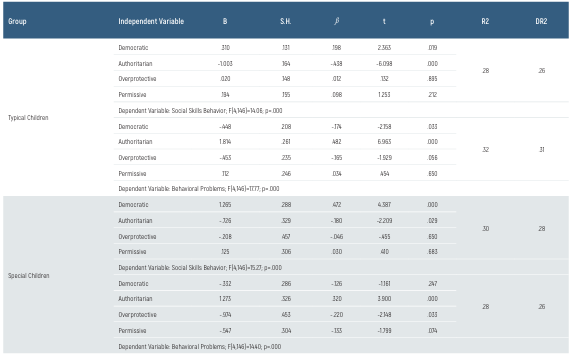
The Effect of Parental Attitudes on Children’s Behaviors in Typically Developing and Special Needs Children was shown in Table 3. For typically developing children, the model examining the effect of parental attitudes on social skills behavior was found to be statistically significant (p < .05). Accordingly, democratic and authoritarian parenting styles were significant predictors of social skills behavior (p < .05). However, overprotective and permissive parenting styles were not significant predictors (p > .05). Additionally, parental attitudes accounted for 26% of the variance in social skills behavior. The model examining the effect of parental attitudes on behavioral problems in typically developing children was also found to be statistically significant (p < .05). Democratic and authoritarian parenting styles were significant predictors of behavioral problems (p < .05), whereas overprotective and permissive parenting styles did not have a significant predictive effect (p > .05). Parental attitudes explained 31% of the variance in behavioral problems.
For children with special needs, the model examining the effect of parental attitudes on social skills behavior was found to be statistically significant (p < .05). In this model, democratic and authoritarian parenting styles were identified as significant predictors of social skills behavior (p < .05), whereas overprotective and permissive parenting styles were not significant predictors (p > .05). Parental attitudes accounted for 28% of the variance in social skills behavior. Similarly, the model examining the effect of parental attitudes on behavioral problems in children with special needs was found to be statistically significant (p < .05). However, in this group, authoritarian and overprotective parenting styles were significant predictors of behavioral problems (p < .05), while democratic and permissive parenting styles did not have a significant predictive effect (p > .05). Parental attitudes explained 26% of the variance in behavioral problems (Table 3.).
Discussion
In this study, the first objective was to compare the parental attitudes of children with special needs and typically developing children. In this context, no significant differences were found in the democratic, authoritarian, and permissive attitude dimensions. However, it was found that children with special needs had significantly higher scores on overprotective parenting compared to typically developing children. This result may be attributed to the fact that children with special needs require more care and individual attention than their typically developing counterparts. The need for more caregiving and nurturing in children with special needs may lead to an overprotective parenting style. Indeed, a review of the literature indicates that similar studies have yielded results consistent with this conclusion. In a study, it was reported that overprotective parenting was more commonly found in families with children who have special needs, 14. Similar findings have also been reported in other studies, 15,16. Therefore, it can be stated that the results of this study align with the existing literature. Another key result from this study involved the comparison of children’s behaviors in both children with special needs and typically developing children aged 48-69 months. According to this analysis, typically developing children scored significantly higher in social skills behavior across all subdimensions, as compared to their typically developing peers. However, no significant differences were found in the behavioral problems scores or their subdimensions. The reason behind the results observed in social skills behavior may be that typically developing children engage in more social interactions with a greater number of people compared to children with special needs. When considering the studies in the literature, many of them also support the results found in this study, 17,18. Thus, it can be concluded that the findings of this study are consistent with the existing literature.
One of the main objectives of the study was to evaluate the effect of parental attitudes on children’s behaviors in typically developing children and children with special needs aged 48–69 months. In this regard, the correlation between parental attitudes and both social skills behaviors and behavioral problems was first examined. It was concluded that the relationships between parental attitudes and both social skills behaviors and behavioral problems were generally similar and consistent across both groups. Furthermore, both democratic and authoritarian parenting styles were found to significantly predict social skills behavior in both typically developing children and children with special needs. Additionally, it was found that democratic and authoritarian parenting styles significantly predicted behavioral problems in typically developing children, while authoritarian and overprotective parenting styles significantly predicted behavioral problems in children with special needs. A review of the literature reveals similar findings. Akosmanoğlu et al. reported that democratic parenting was associated with higher social skills in children, supporting the idea that positive, democratic parental attitudes foster better social competence 19. Sarac et al. found that authoritarian and overprotective parenting practices were linked to increased behavioral problems in early childhood, highlighting the adverse impact these styles can have on child behavior 20. These studies reinforce the present study’s conclusion that parental attitudes play a critical role in shaping both social skills and behavioral outcomes in children.
To the best of our knowledge, no previous studies have simultaneously compared the effects of parental attitudes on both typically developing children and children with special needs 21,22. This suggests that research in this particular area is currently insufficient in the literature. Consequently, the results obtained in this study contribute valuable insights for future researchers wishing to explore similar topics and can enrich the current literature on the subject. Additionally, the findings of this study provide important clues for understanding children aged 48- 69 months, making a significant contribution to the field.
Limitations
Despite its contributions, this study has several limitations. First, the sample was limited to children aged 48–69 months in a specific geographical region, which may restrict the generalizability of the findings. Future studies should include a more diverse and larger sample to enhance external validity. Second, the study relied on self- reported parental attitudes, which may introduce social desirability bias. Third, the cross-sectional design of the study limits the ability to draw causal inferences between parental attitudes and children’s behaviors.
Conclusion
This study provides important insights into the relationship between parental attitudes and children’s behaviors, specifically in typically developing children and children with special needs aged 48–69 months. The findings indicate that democratic and authoritarian parenting styles significantly influence social skills behavior, while authoritarian and overprotective parenting styles are key predictors of behavioral problems, particularly in children with special needs. These results highlight the importance of parental attitudes in shaping children’s social and behavioral development. The study also underscores the need for tailored parenting interventions to support both typically developing children and children with special needs, particularly by promoting positive parenting strategies and reducing overprotective and authoritarian tendencies. Given the limited research on the relationship between parenting styles and child behaviors in both typically developing and special needs children, this study serves as an important contribution to the field. This highlights the novelty of the current study and underscores its contribution to an underexplored area of early childhood development. This study fills an important gap in the literature and offers a foundation for future research on parenting influences in early childhood, particularly for special needs populations.
Declarations
Ethics Declarations
The study protocol was approved by the Ethics Committee of Istanbul Gelisim University Non-Interventional Clinical Research Ethics Committee (Date: 14 June 2024; Decision No: 2025/09). All procedures were conducted in accordance with the ethical standards of the institutional research committee and with the principles of the Declaration of Helsinki
Animal and Human Rights Statement
All procedures performed in this study were in accordance with the ethical standards of the institutional and/or national research committee and with the 1964 Helsinki Declaration and its later amendments or compareable ethical standards.
Informed Consent
Written informed consent was obtained from the parents of all participating children prior to inclusion in the study.
Data Availability
The datasets generated and analyzed during the current study are available from the corresponding author upon reasonable request.
Conflict of Interest
The authors declare that there is no conflict of interest.
Funding
None
Scientific Responsibility Statement
The authors declare that they are responsible for the article’s scientific content including study design, data collection, analysis and interpretation, writing, some of the main line, or all of the preparation and scientific review of the contents and approval of the final version of the article.
References
-
Huang J, Tan AP, Law E, Godfrey KM, Qiu A, Daniel LM, et al. Maternal preconception circulating blood biomarker mixtures, child behavioural symptom scores and the potential mediating role of neonatal brain microstructure: the S-PRESTO cohort. Transl Psychiatry. 2023;13(1):38-45.
-
Shen J, Zhu Y, Zhang G. The relationship between parental adverse childhood experiences and offspring preschool readiness: the mediating role of psychological resilience. BMC Psychol. 2025;13(1):136-140.
-
Xiao X. The effects of parental marital quality on preschool children’s social-emotional competence: The chain mediating model of parent-child and sibling relationships. Infant Ment Health J. 2025;46(1):15-29.
-
Kleyn LM, Hewstone M, Ward CL, Wolfer R. Using Longitudinal Social Network Analysis to Evaluate a Community-Wide Parenting Intervention. Prev Sci. 2021;22(1):130-143.
-
Urone C, Verdi C, Iacono CL, Miano P. Dealing with Overparenting: Developmental Outcomes in Emerging Adults Exposed to Overprotection and Overcontrol. Trends in Psychology. 2024;9(1):1-15.
-
Kwiatkowska MM, Strus W. Social Inhibition: Theoretical Review and Implications for a Dual Social Inhibition Model within the Circumplex of Personality Metatraits. Studia Psychologica. 2021;21(2):57-109.
-
Luo F, Jiang L, Tian X, Xiao M, Ma Y, Zhang S. Shyness prediction and language style model construction of elementary school students. Acta Psychologica Sinica. 2022;53(2):155-169.
-
Clemente-Suárez VJ, Beltrán-Velasco AI, Herrero-Roldán S, Rodriguez-Besteiro S, Martínez-Guardado I, Martín-Rodríguez A, et al. Digital Device Usage and Childhood Cognitive Development: Exploring Effects on Cognitive Abilities. Children. 2024;11(11):1-9.
-
Morency MM, Reynolds AJ, Loveman-Brown M, Kritzik R, Ou S-R. Structural Equality and Support Index in Early Childhood Education. JAMA Network Open. 2024;7(8):1-9.
-
Schulz ML, Fogarty A, Giallo R, Dudfield F, Wood CE. Early childhood educators’ perspectives of the social functioning and strengths of children exposed to intimate partner violence. Child Abuse & Neglect. 2025;161(1):1-9.
-
Guo S, Hu X, Wang X, Tie H, Zhang Q, Li C, et al. Development and validation of a scale for the assessment of the knowledge-attitude-practice of parents towards children snoring. BMC Primary Care. 2024;25(1):1-10.
-
Celik M, Altinel Acoglu E, Aydin B, Isiyel E, Yalcin SS. Caring Under Pressure: Investigating Parental Attitudes in Mother–Child Chronic Illness Dynamics. Children. 2024;11(11):1-8.
-
Yoldas Ors C, Demircioglu H. Investigation of the Predictive Effect of Parents’ Life Positions on Preschool Children’s Behavior Problems. Psychol Rep. 2023;3(1):1-9.
-
de Jong-Lenters M, Pasman B, Duijster D. The relationship between overprotective parenting, toothbrushing practices and children’s behaviour during dental treatments in 4 to 11-year-old Dutch children: a cross sectional study. Eur Arch Paediatr Dent. 2023;24(5):559- 567.
-
Van Petegem S, Albert Sznitman G, Darwiche J, Zimmermann G. Putting parental overprotection into a family systems context: Relations of overprotective parenting with perceived coparenting and adolescent anxiety. Fam Process. 2022;61(2):792-807
-
Meral BF, Wehmeyer ML, Palmer SB, Ruh AB, Yilmaz E. Parenting Styles and Practices in Enhancing Self-Determination of Children With Intellectual and Developmental Disabilities. Am J Intellect Dev Disabil. 2023;128(4):282-301.
-
Cooke JE, Deneault AA, Devereux C, Eirich R, Fearon RMP, Madigan S. Parental sensitivity and child behavioral problems: A meta-analytic review. Child Dev. 2022;93(5):1231-1248.
-
Schoemaker NK, Wentholt WGM, Goemans A, Vermeer HJ, Juffer F, Alink LRA. A meta- analytic review of parenting interventions in foster care and adoption. Dev Psychopathol. 2020;32(3):1149-1172.
-
Akosmanoğlu E, Bedel A. Investigation of the effect of family support education guidance (OBADER) integrated with preschool education program on mothers’ attitudes towards their children. Erken Çocukluk Çalişmalari Dergisi. 2021;5(1):44-65.
-
Sarac E. Impact of parenting styles on preschoolers’ behaviors. World Journal of Clinical Cases. 2024;12(23):5294-5298.
-
Yu S. What parents say about inclusion and disabilities: implications for young children’s attitude development toward peers with disabilities. Early Child Development and Care. 2019;191(11):1825-1837.
-
Bopota O, Loukovitis A, Barkoukis V, Tsorbatzoudis H. Differences in attitudes towards inclusion between parents of children with and without disabilities. European Review of Applied Psychology. 2020;70(4):1-6.
Tables
Table 1. Demographic Characteristics of Participant Children
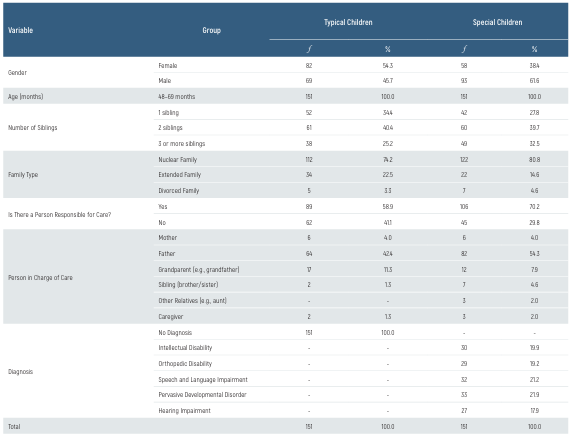
Table 2. Group comparison of parental attitudes and children’s behavioral outcomes
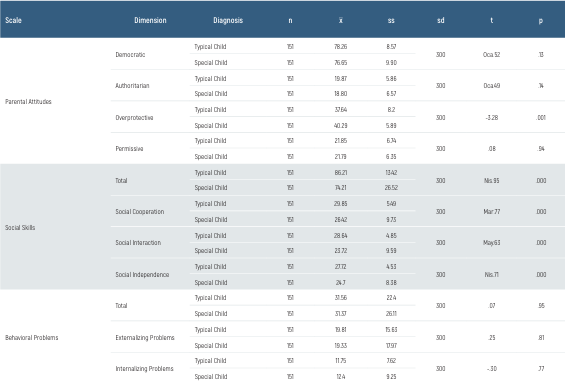
Table 3. The Effect of Parental Attitudes on Children’s Behaviors in Typically Developing and Special Needs Children
Additional Information
Publisher’s Note
Bayrakol MP remains neutral with regard to jurisdictional and institutional claims.
Rights and Permissions

This work is licensed under a Creative Commons Attribution-NonCommercial 4.0 International License (CC BY-NC 4.0). To view a copy of the license, visit https://creativecommons.org/licenses/by-nc/4.0/
About This Article
How to Cite This Article
Beril Bensu Dilekci, Oğuzhan Kilinçel. The effects of parental attitudes on the behavior of 48–69-month-old children: A comparison between typically developing children and children with special needs. Eu Clin Anal Med 2025;13(2):34-39
Publication History
- Received:
- March 16, 2025
- Accepted:
- April 30, 2025
- Published Online:
- April 30, 2025
- Printed:
- May 1, 2025