Evaluation of the e-Nabız application usage characteristics and e-health literacy levels of individuals applying to the hospital
Patient evaluation in family medicine centers
Authors
Abstract
Aim This study aimed to evaluate e-Nabız usage characteristics, e-health literacy levels, and influencing factors among individuals applying to the hospital.
Methods This descriptive, cross-sectional study included 410 individuals aged 18–70 who visited the outpatient clinics of Konya City Hospital. Data were collected using a 31-item questionnaire on sociodemographic characteristics and e-Nabız usage, along with a 10-item e-Health Literacy Scale (EHLS). Statistical analyses were performed using SPSS 22.0.
Results The mean age of participants was 39.43 ± 12.52 years. The mean EHLS score was 26.88 ± 7.35, and the mean e-Nabız knowledge score was 45.75 ± 8.8. Higher e-health literacy was observed among younger (p < 0.001), single (p < 0.001), employed (p < 0.001), and more educated individuals (p < 0.001). Participants aware of (p < 0.001) and using (p < 0.001) e-Nabız had significantly higher e-health literacy. E-Nabız usage was higher among younger (p < 0.001), more educated (p < 0.001), employed (p < 0.001), and chronically healthy individuals (p = 0.009). Those perceiving e-Nabız as secure were likelier to use it (p < 0.001). E-Nabız knowledge correlated positively with e-health literacy (r = 0.220, p < 0.001), while age showed a negative correlation with e-health literacy (r = -0.240, p < 0.001).
Conclusion With increasing digitalization in healthcare, proper e-Nabız usage and e-health literacy are vital. Higher e-health literacy was associated with greater e-Nabız usage, while older individuals and those doubting its security used it less. Promoting community awareness and developing user-friendly digital platforms for older adults could improve e-Nabız accessibility and comprehension.
Keywords
Introduction
In today’s information age, rapid information and communication technologies (ICT) developments have led to changes in people’s cultural, social, educational, and healthcare needs. These changes have also influenced healthcare systems, leading to the emergence of the concept of e-health.1 The World Health Organization (WHO) defines e-health as the cost-effective and secure use of ICT in health and health-related fields, including healthcare services, health surveillance, health literature, health education, information, and research. Another definition describes e-health as a fast, secure, and scalable information communication platform that collects electronic data in compliance with standards within healthcare institutions and organizations.
The use of e-health systems is becoming increasingly widespread, and every developed country has a national e-health strategy to benefit from this technology. In Turkey, major e-health services include the Centralized Hospital Appointment System (MHRS), e-Nabız, telemedicine, and the Medical Intermediary System (MEDULA).2 E-health applications provide 24/7 access to individuals, saving time and costs for healthcare service users and providers while contributing to efficient and effective healthcare delivery.3 Implemented in January 2015, e-Nabız is a system that allows individuals to manage all their health information and access their medical history from a single platform, thereby facilitating access to healthcare services.3
As in many areas, the use of the internet to access health-related information is increasing among the general population, further emphasizing the importance of health literacy. The World Health Organization defines health literacy as “the cognitive and social skills that determine the motivation and ability of individuals to access, understand, and use information in ways that promote and maintain health”.4 Studies have shown that individuals with higher e-health literacy levels better understand their health status and treatment processes, positively impacting health outcomes.5
This study aims to evaluate the e-health literacy levels and e-Nabız usage levels of individuals applying to the hospital and to raise awareness of these issues.
Materials and Methods
This study is a descriptive and cross-sectional study. It was conducted between September 1, 2023, and December 1, 2023, with individuals over 18 who applied to the Konya City Hospital outpatient clinics for various complaints.
The sample size was calculated using the OpenEpi v3.01 program based on the number of patients applying to the hospital’s outpatient clinics. With a 95% confidence interval, 5% margin of error, and 80% test power, it was determined that 384 participants would be required. Considering potential incomplete or incorrect survey responses, 15% of participants were included. A total of 274 participants completed the surveys through face-to-face interviews, while 167 participants completed them independently. Among these, 31 surveys were excluded due to missing or incorrect responses, and the study was finalized with 410 participants.
The study utilized a sociodemographic data form, a survey on e-Nabız usage characteristics, and the E-Health Literacy Scale (EHLS) developed based on a literature review.
Sociodemographic Data FormThis form was developed based on a literature review and similar studies to determine the participants’ sociodemographic characteristics. It comprises six questions regarding age, gender, marital status, education level, employment status, and chronic diseases.
E-Health Literacy Scale (EHLS)The study utilized the E-Health Literacy Scale, which has been validated and tested for Turkish reliability in two studies.6The scale consists of two items evaluating internet usage and eight assessing internet- related attitudes. It is a five-point Likert-type scale, where responses range from “strongly disagree” (1 point) to “strongly agree” (5 points). The eight items measuring internet attitudes are summed to obtain the total score. The minimum score obtainable is 8, while the maximum is
40. A higher score indicates a higher level of e-health literacy.
E-Nabız Usage Characteristics FormThe e-Nabız Usage Characteristics Form is a questionnaire consisting of three questions that assess individuals’ awareness of the e-Nabız personal health system, their perception of its security, and their usage status. Additionally, it includes 20 questions designed to determine the specific usage characteristics of e-Nabız. This form was developed based on the e-Nabız V.2.1 User Guide, published by the Ministry of Health in 2023, and structured according to the usage features of the e-Nabız personal health system. The usage characteristics were evaluated with three response options: “I know and use it,” “I know but do not use it,” and “I do not know it.” Statements related to e-Nabız were scored as follows: 3 points for “I know and use it,” 2 points for “I know but do not use it,” and 1 point for “I do not know it.” An “E-Nabız Knowledge Score” was obtained by summing these scores, with a maximum possible score of 60 and a minimum of 20. A higher score was interpreted as a higher rate of e-Nabız usage characteristics.
Ethical ApprovalThis study was approved by the Ethics Committee of the Hamidiye Scientific Research Ethics Committee of the University of Health Sciences (Date: 2023-08-23, No: 23/451).
Statistical AnalysisThe data was analyzed using the IBM Statistical Package for the Social Sciences for Windows Version 22.0 (IBM SPSS 22.0). In the evaluation of the data obtained from the study, descriptive statistical methods were used, including frequency (n) and percentage (%) for categorical data, mean standard error for normally distributed numerical data, and median values with 25%-75% interquartile ranges for non-normally distributed data.
The normality of the data was assessed using the Kolmogorov-Smirnov and Shapiro-Wilk normality tests, as well as histogram and skewness- kurtosis analyses. The chi-square test was used for statistical significance to compare qualitative variables, and the Mann-Whitney U test was applied for analyzing non-normally distributed continuous variables. Correlations between numerical data were evaluated using the Spearman correlation test. Regression analysis was conducted using the Stepwise and Forward methods. All analyses were performed within a 95% confidence interval, with a significance level of p<0.05 considered statistically significant.
Reporting GuidelinesThis study was reported in accordance with the STROBE guidelines.
Results
The mean age of the participants was 39.43 ± 12.52 years, with 68.3% (n = 280) being female and 31.7% (n = 130) male. Other sociodemographic characteristics were as follows: 53.2% (n = 218) of the participants were aged between 18 and 39 years, 70.7% (n = 290) were married, 47.8% (n = 196) were unemployed, 60% (n = 248) had an educational level of associate degree or higher, and 38.3% (n = 157) reported having a chronic illness. Among the participants, 95.9% (n = 393) were aware of the e-Nabız system, 88.3% (n = 362) perceived it as secure, and 76.6% (n = 314) actively used the system. The distribution of statements from the E-Health Literacy Scale and the levels of e-Nabız usage are shown in Table 1 and Table 2. The mean score obtained from the E-Health Literacy Scale was 26.88, while the mean e-Nabız Knowledge Score was 45.75. In the study, individuals aged 18–39 had significantly higher e-health literacy levels than those aged 40 years and above (p < 0.001). When examining the effect of other sociodemographic characteristics on e-health literacy, it was found that e-health literacy levels were higher among single participants compared to others (p < 0.001), individuals with an associate degree or higher compared to those with lower educational levels (p < 0.001), and employed participants compared to those who were unemployed (p < 0.001). No significant relationship was found between e-health literacy levels and gender or the presence of chronic diseases.
When examining the relationship between sociodemographic characteristics and e-Nabız usage characteristics, individuals aged 18–39 were more likely to be aware of e-Nabız than those aged 40 years and above (p = 0.003). Additionally, those with an associate degree or higher education level had a higher awareness of e-Nabız than those with lower education levels (p = 0.001). No significant difference was observed between sociodemographic characteristics and the perception of e-Nabız as secure. However, those who actively used e-Nabız were more likely to perceive the application as secure (p < 0.001).
When examining e-Nabız usage rates, it was found that participants aged 18–39 years had a higher usage rate compared to those aged 40 years and above (p < 0.001). Individuals with an associate degree or higher were more likely to use e-Nabız than those with a high school education or lower (p < 0.001). Employed participants had a higher e-Nabız usage rate than unemployed participants (p < 0.001). Additionally, individuals without chronic diseases were more likely to use e-Nabız than those with chronic diseases (p = 0.009). No differences were observed between males and females regarding e-Nabız awareness, perception of security, or usage rates.
The e-Nabız Knowledge Score was found to be significantly higher among individuals with higher education levels compared to those with lower education levels (p < 0.001), single individuals compared to married individuals (p = 0.008), and employed individuals compared to unemployed individuals (p < 0.001). No significant differences were observed in e-Nabız Knowledge Scores based on other sociodemographic characteristics.
When assessing the relationship between awareness and usage of the e-Nabız application and e-health literacy levels, it was found that participants who were aware of e-Nabız had significantly higher e-health literacy levels than those who were unaware (p < 0.001). Similarly, individuals who actively used e-Nabız had higher e-health literacy levels than those who did not (p < 0.001). Among participants, those who perceived the e-Nabız application as secure had a mean e-Health Literacy Scale score of 30, while those who did not perceive it as secure had a mean score of 27; however, the difference was not statistically significant.
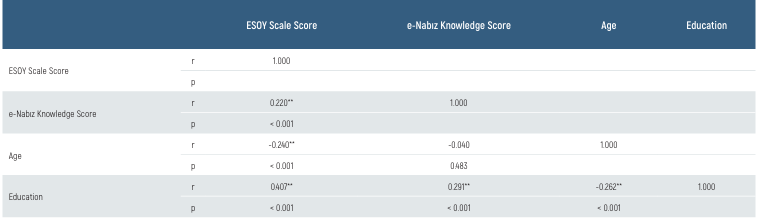
The correlation analysis examining the relationship between e-health literacy levels, e-Nabız Knowledge Scores, and other variables found a low but positive correlation between the e-Health Literacy Scale score and the e-Nabız Knowledge Score (p < 0.001). A low but negative correlation was found between e-health literacy levels and age (p < 0.001). A moderate positive correlation was observed between e-health literacy levels and education level (p < 0.001). A low positive correlation was also found between e-Nabız Knowledge Scores and education level (p < 0.001). Moreover, a low negative correlation was detected between age and education level (p < 0.001) (Table 3).
Responses to e-Nabız-related questions were summed to obtain an “e-Nabız Knowledge Score” shown in the Table 3. Spearman’s non- parametric correlation test was used.
Correlation is significant at the p < 0.01 level.
Discussion
In the present study, younger, single, employed individuals and those with higher education levels were found to have higher e-health literacy levels. Participants who were aware of and used the e-Nabız application also had higher e-health literacy levels. The rate of e-Nabız awareness was higher among younger individuals and those with higher education levels. Additionally, the rate of e-Nabız usage was higher among those with higher education levels, employed individuals, younger participants, and those without chronic diseases. A positive correlation was found between increasing e-Nabız knowledge levels and higher e-health literacy levels, while e-health literacy levels decreased with advancing age.
Previous studies conducted between 2018 and 2023 reported e-Nabız awareness rates ranging from 37.9% to 90% and e-Nabız usage rates between 17% and 68.9%.1,7,8,9 In the present study, 95.9% of participants were aware of the e-Nabız application, 88.3% perceived it as secure, and 76.6% actively used it. The high e-Nabız awareness and usage rates observed in this study may be attributed to the research being conducted among individuals seeking hospital services. Additionally, the increasing awareness of the e-Nabız application over the years may have contributed to the higher rates found in this study. E-health literacy was found to be higher among younger participants. While some studies in the literature have reported no significant association between age and e-health literacy levels,5,10,11,12 others, consistent with this study, have found higher e-health literacy levels among younger individuals.13,14,15 The greater adaptability of younger individuals to technological advancements may explain this finding.
No significant difference was observed between e-health literacy levels and gender in the present study. Similarly, several studies have reported no gender differences in e-health literacy levels,5,9,10 while others have found higher e-health literacy among women,12,16 or men.11,14,17
Regarding the impact of marital status on e-health literacy, some studies have found that married individuals have higher e-health literacy levels than single individuals,5,9,15,17 whereas others have reported higher levels among single individuals.16 or no significant difference between the two groups.11,12,18 In the present study, single participants had higher e-health literacy levels. This may be because single individuals tend to be younger, which could have contributed to their higher e-health literacy levels.
Several studies have reported that individuals with higher education levels have greater e-health literacy,5,9,10,14,16,17,19,20 which is consistent with the findings of this study. The early adoption of technological innovations, faster adaptation to new information, and greater motivation to seek health-related information among individuals with higher education levels may explain this result.
Studies in the literature have reported conflicting findings regarding the relationship between employment status and e-health literacy. Some studies have found no significant association,12,15 while others have reported higher e-health literacy levels among employed individuals.9 In the present study, employed participants had higher e-health literacy levels than unemployed individuals. This may be due to the increased exposure to information exchange and technological updates in workplace environments.
Consistent with previous research, no significant difference was found between e-health literacy levels and the presence of chronic diseases in this study,5,9,11
Participants who were aware of and used the e-Nabız application had higher e-health literacy levels. Similar studies have reported higher e-health literacy levels among individuals using mobile health applications such as e-Nabız.21 Mobile health applications may encourage users to seek more health-related information, improving e-health literacy.
Regarding e-Nabız awareness and usage, previous studies have reported mixed findings. Some studies have found higher e-Nabız usage rates among men, while others have found higher rates among women.9 Another study, consistent with the present findings, reported no significant gender differences in e-Nabız awareness and usage.1
Similarly, no significant association was found between marital status and e-Nabız awareness or usage in the present study, which aligns with findings from previous research.1,9 Participants with higher education levels had greater awareness and usage of the e-Nabız application.
This finding is consistent with similar studies,1,7,9 although one study reported no significant relationship between education level and e-health literacy.8 Individuals with higher education levels may be more likely to stay informed about new developments and be exposed to new information, which could explain their higher e-Nabız awareness and usage.
Consistent with some studies, no significant difference was found between e-Nabız usage and the presence of chronic diseases in this study.1,9 However, another study reported higher e-Nabız usage among individuals with chronic diseases.8 Since individuals with chronic conditions frequently visit healthcare institutions, they are expected to use mobile health applications more often. However, the fact that individuals with chronic diseases tend to be older may have influenced this outcome.
This study found that as age increased, e-health literacy levels decreased. The literature supports this finding, with several studies reporting similar results.15,19 The rapid adaptation of younger individuals to technological advancements, compared to the challenges faced by older individuals, may explain this result.
In line with previous research, the present study also found a positive correlation between e-Nabız knowledge scores and e-health literacy levels.5,10,14 Mobile health applications may encourage users to seek more health-related information, thereby contributing to improved e-health literacy levels.
Limitations
One of the strengths of this study is that it is the first to evaluate e-health literacy and e-Nabız knowledge levels together. However, the study has some limitations. The validity and reliability of the scale used to assess e-Nabız usage have not been established, and individuals who were unaware of or did not use the e-Nabız application were less likely to participate in the study.
Conclusion
This study demonstrated that individuals who are younger, single, employed, and have higher educational attainment tend to have higher levels of e-health literacy. A positive correlation was found between knowledge and use of the e-Nabız application and higher e-health literacy scores. As individuals’ e-Nabız knowledge scores increased, their e-health literacy levels also improved. The findings highlight the growing importance of e-health literacy and suggest that familiarity with personal health technologies such as e-Nabız can contribute to individuals’ ability to access, understand, and utilize health information effectively. These results underscore the need for strategies that promote e-health awareness and usage, particularly among older adults and individuals with lower educational backgrounds.
Declarations
Ethics Declarations
The authors declare that this study was conducted in accordance with ethical principles and international research standards. Ethical approval was obtained from the relevant institutional ethics committee prior to the initiation of the study.
Animal and Human Rights Statement
All procedures performed in this study were in accordance with the ethical standards of the institutional and/or national research committee and with the 1964 Helsinki Declaration and its later amendments or compareable ethical standards.
Informed Consent
Written informed consent was obtained from all participants included in the study.
Data Availability
The datasets generated and/or analyzed during the current study are available from the corresponding author on reasonable request.
Conflict of Interest
The authors declare that there is no conflict of interest.
Funding
None.
Scientific Responsibility Statement
The authors declare that they are responsible for the article’s scientific content including study design, data collection, analysis and interpretation, writing, some of the main line, or all of the preparation and scientific review of the contents and approval of the final version of the article.
Abbreviations
EHLS: e-Health Literacy Scale
ICT: Information and Communication Technologies
MHRS: Centralized Hospital Appointment System
SPSS: Statistical Package for the Social Sciences
WHO: World Health Organization
References
-
Yeşiltaş A. E-Nabız uygulamasının kullanımını etkileyen faktörler [Determinants of e-Nabız application usage among patients]. Sağ Aka Derg. 2018;5(4):290-295.
-
Şengül Y. Türkiye’de sağlık bilişimi altyapısının kamusal alandaki gelişimi ve e-sağlık hizmetleri [Public sector advancement in health informatics infrastructure and e-health services in Turkey]. SARAD. 2019;1(2):14-20.
-
Eke E, Uysal M, Uğurluoğlu D. Bireyler e-sağlık farkındalığına yönelik bir araştırma [An investigation into public awareness of e-health applications]. MAKUİİBF Derg. 2019;6(2):510-522.
-
Yalman F, Öcel Y. Sağlık okuryazarlığı ile e-sağlık hizmet tüketimi arasındaki ilişkinin irdelenmesi e-Nabız kullanımı üzerine bir araştırma [Examining the link between health literacy and e-health service utilization: A focus on e-nabız use]. ESOSDER. 2021;20(77):240-254.
-
Uslu D, İpek K. Bireylerin e-sağlık okuryazarlık düzeyinin e-Nabız sisteminin kullanımına yönelik algısına etkisi [Influence of e-health literacy on individuals’ perception of e-nabız utilization]. HSİD. 2022;25(1):69-86.
-
Uskun E, Doğan E, Önal Ö, Kişioğlu AN. E-sağlık okuryazarlığı ölçeği: 45 yaş üstü yetişkinlerde Türkçe geçerlik ve güvenirlik çalışması [Validation and reliability of the e-health literacy scale in turkish for adults aged 45 and above]. Turk Hij Den Biyol Derg. 2022;79(4):674-689.
-
Yorulmaz M, Odacı Ş, Akkan M. Dijital sağlık ve e-Nabız farkındalık düzeyi belirleme çalışması [Assessment of awareness levels regarding digital health and the e-nabız application]. Selçuk Univ Sos Tek Araş Derg. 2018;(16):1-11.
-
Selçuk GD. Kamu işletmelerinde yapılan sosyal inovasyonlara karşı tüketicinin tutumunun incelenmesi ve bir vaka analizi [Investigating Consumer Attitudes Toward Social Innovation in Public Institutions: A Case Study]. GJEB. 2022;8(3):533-547.
-
İlgar Y, Bilgili N. Yaşlı bireylerde e-sağlık okuryazarlık düzeyi ve dijital sağlık hizmetlerinin kullanımı [E-health literacy and utilization of digital health services in the elderly population]. Euroasia J Soc Sci Humanit. 2023;10(32):126-135.
-
Kaya E, Eke E. Bireylerin mobil sağlık uygulaması kullanım durumu ve e-sağlık okuryazarlığı ilişkisi [Association between mobile health application use and e-health literacy among individuals]. J Occup Belief Syst. 2023;11(1):1-15.
-
Salehi L, Keikavoosi-Arani L. Investigation of e-health literacy and correlates factors among Alborz medical sciences students: A cross-sectional study. Int J Adolesc Med Health. 2021;33(6):409-414.
-
Deniz S. Bireylerin e-sağlık okuryazarlığı ve siberkondri düzeylerinin incelenmesi [Examining the relationship between e-health literacy and cyberchondria in individuals]. İnsan ve İnsan. 2020;7(24):84-96.
-
Liu C, Wang D, Liu H, Jiang J, Wang X, Chen H, et al. What is the meaning of health literacy? A systematic review and qualitative synthesis. Fam Med Community Health. 2020;8(2):e000351.
-
Cho J, Park D, Lee HE. Cognitive factors of using health apps: Systematic analysis of relationships among health consciousness, health information orientation, eHealth literacy, and health app use efficacy. J Med Internet Res. 2014;16(5):e125.
-
Aktürk Ü. Bir aile sağlığı bölgesindeki 18-49 yaş arası kadınların e-sağlık okur yazarlık düzeylerinin ve bunu etkileyen faktörlerin belirlenmesi. [E-Health Literacy and Its Determinants Among Women Aged 18–49 in a Primary Care Setting] Journal of Human Rhythm. 2018;4(1):52-58.
-
Rezakhani Moghaddam H, Ranjbaran S, Babazadeh T. The role of e-health literacy and some cognitive factors in adopting protective behaviors of COVID-19 in Khalkhal residents. Front Public Health. 2022;10:916362.
-
Shi Y, Ma D, Zhang J, Chen B. In the digital age: A systematic literature review of the e-health literacy and influencing factors among Chinese older adults. J Public Health. 2023;31(5): 679-687.
-
Lee J, Tak SH. Factors associated with ehealth literacy focusing on digital literacy components: a cross-sectional study of middle-aged adults in South Korea. Digital Health. 2022;8:20552076221102765.
-
Wang C, Wu X, Qi H. A comprehensive analysis of e-health literacy research focuses and trends. Healthcare. 2021;10(19):66.
-
Bergman L, Nilsson U, Dahlberg K, Jaensson M, Wångdahl J. Health literacy and e-health literacy among Arabic-speaking migrants in Sweden: A cross-sectional study. BMC Public Health. 2021;21:1-12.
-
Üstün G, Söylemez SL, Uçar N, Sancar M, Okuyan B. Assessment of the pharmacy students’ e-health literacy and mobile health application utilization. J Res Pharm. 2020;24(1):23-29.
Tables
Table 1. Distribution of participants’ e-health literacy scale statements
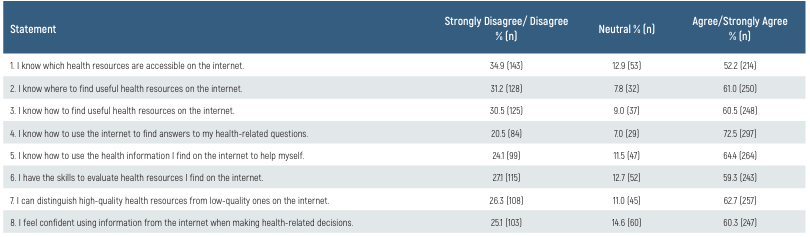
Table 2. Distribution of participants’ e-nabız usage levels
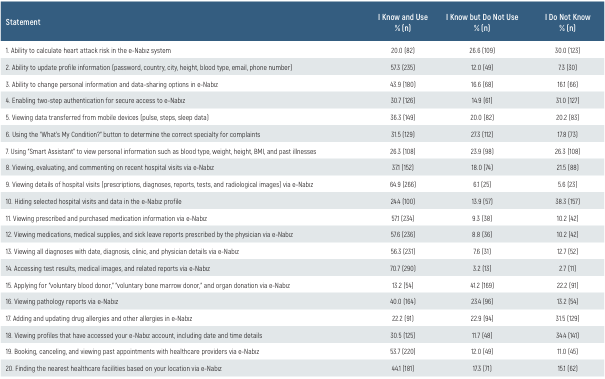
Table 3. Correlation analysis between e-health literacy, e-nabız knowledge score, and variables
Additional Information
Publisher’s Note
Bayrakol MP remains neutral with regard to jurisdictional and institutional claims.
Rights and Permissions

This work is licensed under a Creative Commons Attribution-NonCommercial 4.0 International License (CC BY-NC 4.0). To view a copy of the license, visit https://creativecommons.org/licenses/by-nc/4.0/
About This Article
How to Cite This Article
Seda Kahraman, Selma Pekgör, Hayriye Şentürk. Evaluation of the e-nabız application usage characteristics and e-health literacy levels of individuals applying to the hospital. Eu Clin Anal Med 2025;13(2):45-49
- Received:
- April 1, 2025
- Accepted:
- April 24, 2025
- Published Online:
- April 30, 2025
- Printed:
- May 1, 2025