Public exposure to sensitive forensic topics on YouTube: an evaluation of most viewed videos on sexual abuse, suicide, and autopsy
Sensitive forensic narratives on YouTube
Authors
Abstract
AimThe aim of this study is to assess and evaluate the content quality of the most widely viewed YouTube videos addressing sensitive forensic medicine topics with direct societal impact, such as sexual abuse, suicide, and autopsy.
MethodsWithin the scope of the study, YouTube searches were conducted using the keywords “sexual abuse,” “suicide,” and “autopsy.” The reliability of the retrieved videos was assessed using a modified 5-item DISCERN instrument, while overall information quality was evaluated using the Global Quality Scale (GQS). Based on the scores obtained from these instruments, the videos were classified into three categories: good/excellent, moderate, and low quality.
ResultsOf the analyzed videos, 12.2% were classified as good/excellent quality, 28.6% as moderate quality, and 59.2% as low quality. Videos in the good/excellent quality group had significantly higher median DISCERN scores compared with those of moderate- and low-quality videos (p<0.001). In contrast, mean GQS and DISCERN scores demonstrated a strong and statistically significant positive correlation with each other (p<0.001, r=0.866). Additionally, total likes showed strong positive correlations with both total number of comments and total view counts (p<0.001, r=0.811 and p<0.001, r=0.813, respectively).
ConclusionA considerable proportion of videos available on the YouTube platform contain inaccurate, misleading, or suboptimal-quality information. These findings highlight the variability in the quality and reliability of forensic-related content shared on digital platforms and underscore the need for improved dissemination and visibility of scientifically reliable/credible information.
Keywords
Introduction
The century in which we live is commonly referred to as the age of information technology. With the advent of this new era, uncertainty has progressively increased, and individuals have begun to seek information through a wide range of channels. Among these, digital platforms have emerged as one of the most prominent and influential sources of information.1
Advances in digital technology have substantially transformed access to health-related information, with digital platforms increasingly replacing traditional media sources. In this context, YouTube has emerged as a prominent video-based information platform, extending its influence beyond entertainment to sensitive domains such as health, forensic medicine, and psychology.2,3
Forensic medicine encompasses ethically complex and socially sensitive topics that concern society as a whole, such as sexual abuse, suicide, and autopsy.4 How content related to these subjects is represented on publicly accessible digital platforms such as YouTube, and how it is utilized by users, is of considerable importance from both academic and societal perspectives.
The effects of digital media content on society have been frequently addressed in the literature.5,6 However, insufficient attention appears to have been paid to the potential risks arising from the unregulated presentation of such sensitive content. Moreover, to the best of our knowledge, there is limited research directly addressing the present research. Therefore, the aim of this study is to systematically examine the most widely viewed YouTube videos on sexual abuse, suicide, and autopsy as an electronic information source and to evaluate their content characteristics, ethical appropriateness, informational accuracy, and overall quality.
Materials and Methods
This study was designed as a descriptive and analytical investigation. Search keywords were determined based on a preliminary review of relevant YouTube videos and commonly used topic-related terms. The keywords “sexual abuse,” “suicide,” and “autopsy” were used for video searches on YouTube (www.youtube.com). The videos were screened on 11 December 2025 and ranked in descending order according to view counts. Following a review of previous studies in the literature, the number of videos to be evaluated was determined.7 These studies reported that approximately 90% of the analyzed content was captured within the first 60 videos. Therefore, the first 60 videos for each keyword were included in the analysis.8,9,10 Repetitive videos, videos in languages other than Turkish, forensic medicine–unrelated content, videos containing commercial advertisements, and videos exhibiting substantial content duplication were excluded based on predefined exclusion criteria.
Video quality was assessed using the Global Quality Scale (GQS), a widely used 5-point scoring system for evaluating digital media content. Videos scoring 4–5 points were classified as good/excellent, 3 points as moderate, and 1–2 points as low quality.2,8,9,10 The scoring system applied in the present study is described below:
Videos were scored using the GQS, where scores of 1–2 indicate low-quality content with poor flow and predominantly inaccurate or misleading information, 3 indicates moderate quality with a mix of accurate and inaccurate content, and scores of 4–5 represent high to excellent quality, characterized by fluent presentation and largely or entirely accurate, evidence-based information.11
All videos included in the study were independently evaluated by two physicians experienced in commonly encountered forensic issues in primary care. Inter-rater agreement was assessed using the kappa coefficient (0.882). Cohen’s kappa values between 0.81 and 1.00 were interpreted as almost perfect agreement.12 In cases of disagreement during the evaluations, the videos were re-reviewed by a third expert physician, and a final consensus decision was reached to complete the assessment process.
The reliability of the videos was evaluated using the DISCERN instrument, originally developed by Charnock et al. and applied in its subsequently updated form. The original structure of the scale consists of 16 items, with the first eight items focusing on the reliability of information presentation and the following seven items addressing content quality. The final item provides a holistic assessment of the overall quality level of the video.13
Video reliability was evaluated based on clarity of presentation, use of valid and up-to-date scientific sources, objectivity of information, provision of additional references, and adequate discussion of uncertainty or controversial aspects.
These items were scored in a dichotomous manner as “yes” or “no,” with a “yes” response assigned 1 point and a “no” response assigned 0 points. Accordingly, the total score obtainable from the scale ranges from 0 to 5, with higher scores indicating greater video reliability. Similar measurement approaches have been reported in the literature for studies assessing the reliability of video-based content.13
For all videos, the upload date, total duration, number of views, number of likes, and number of comments were recorded. View, comment, and like metrics were additionally calculated as daily averages and evaluated alongside the total values.
The sources of the videos were classified into six distinct categories: academic/university (1), physician (2), non-physician healthcare professionals (3), TV/journalists (investigators) (4), independent users (5), and lawyer/court staff (6).
As this study analyzed only openly accessible videos on the YouTube platform, no participant data were collected, and therefore, informed consent was not required.
Ethical ApprovalThis study did not require ethical approval according to the relevant guidelines.
Statistical AnalysisStatistical analyses were performed using the SPSS 22.0 software package. Descriptive analyses included frequency and percentage distributions, as well as minimum, maximum, and median values. Data distribution characteristics were examined using the Shapiro–Wilk test. The non-parametric Kruskal–Wallis test was employed to assess differences between groups. Post hoc tests were applied for subgroup analyses. Correlations between groups were evaluated using Pearson correlation analysis. Inter-rater agreement was determined using the kappa statistic. In all analyses, a p-value of <0.05 was considered statistically significant.
Reporting GuidelinesThis study is reported in accordance with the STROBE guidelines.
Results
A total of 180 videos were initially reviewed; however, 82 videos were excluded from the analysis in accordance with the predefined exclusion criteria. Of the excluded videos, 67 were unrelated to the study topic, 13 were repetitive videos, and 2 contained advertising content. Within the subgroup of the 67 unrelated videos, 27 were identified as music (song) videos and 6 as news-related content. The remaining 34 videos belonged to social media/series/films/individual users. Following this screening process, a total of 98 videos were included in the final analysis.
The median duration of the videos included in the study was calculated as 476.5 seconds (min–max: 10–5,501). The median number of views was 337,777.5 (749–64,333,673), and the median number of comments was 277 (0–29,463). The descriptive characteristics of the videos are presented in detail in Figure 1.
According to the GQS assessment, the videos exhibited a heterogeneous distribution in terms of quality level; 12.2% (n = 12) were classified as high quality, 28.6% (n = 28) as moderate quality, and 59.2% (n = 58) as low quality. A kappa coefficient of 0.882 indicated a high level of inter-rater reliability, demonstrating the robustness of the measurement process.
In the analysis based on upload source, all videos produced by academics/universities (n = 6) were classified within the high-quality group. The majority of videos created by physicians and by lawyers/court staff were found to fall within the moderate-to-high quality categories (90.9%, n = 10; and 100%, n = 5, respectively). In contrast, a substantial proportion of videos uploaded by TV/journalists (investigative) and independent users were classified as low quality (86.5%, n = 32; and 93.7%, n = 15, respectively). These findings suggest that the quality of video content may vary significantly according to the source of upload. The distribution of GQS scores according to upload sources is presented in detail in Figure 2.
When GQS results were analyzed according to uploader categories, videos produced by academic/university sources, physicians, and lawyers/judicial personnel received significantly higher scores, indicating a statistically significant difference between groups (p<0.001). According to the modified DISCERN scale, videos uploaded by television journalists and independent users received lower scores, also demonstrating a statistically significant difference (p<0.001). With respect to daily likes, the academic/university and independent user groups showed higher values, with a statistically significant difference between groups (p=0.004). In contrast, no statistically significant differences were observed among uploader categories in terms of daily view rates or daily comment rates (p=0.089 and p =0.170, respectively). The detailed data are provided in Supplementary Table 1.
As video quality increased, modified DISCERN scores also increased, with statistically significant differences observed between quality groups (p<0.001). In contrast, no statistically significant differences were found among video quality categories in terms of daily view rates, daily comment rates, or total number of likes (p=0.163, p=0.536, and p=0.597, respectively). These findings are presented in Table 1.
Intergroup correlations between video popularity metrics (total number of views, likes, and comments) and GQS and DISCERN scale scores were examined. Accordingly, no correlation was identified between video popularity and GQS or DISCERN scores. In contrast, mean GQS and DISCERN scores demonstrated a strong and statistically significant positive correlation with each other (p<0.001, r = 0.866). A strong and statistically significant positive correlation was also observed between total likes and both total number of comments and total number of views (p<0.001, r = 0.811; and p<0.001, r = 0.813, respectively). Additionally, the total number of comments and the total number of views were strongly and positively correlated (p<0.001, r = 0.848).
Discussion
The twenty-first century is characterized as a period in which digital technologies have become an integral part of daily life, and internet use has expanded on a global scale. Owing to its free accessibility and capacity to reach broad user audiences, YouTube ranks among the most widely used video-sharing platforms in the digital environment. Particularly during and after the pandemic period marked by the emergence of life-threatening diseases affecting populations worldwide, individuals have increasingly turned to digital media to meet their need for rapid and convenient access to information. In parallel with the rise in internet use during this period, it is anticipated that YouTube’s role as a resource for accessing medical information has increased substantially.
The presence of medical content on the YouTube platform does not imply that all available videos are of high quality or provide reliable information. Alongside useful and scientifically grounded material, the platform simultaneously hosts videos of low quality or containing misleading information. The widespread availability of low-quality or misleading content may facilitate the dissemination of misinformation within society, adversely affecting health literacy and potentially increasing levels of anxiety and panic. Our findings are expected to provide guidance for clinicians, academic institutions, and content creators regarding the overall quality and reliability of widely viewed videos addressing sensitive forensic medicine topics.
The findings of our study revealed that a substantial proportion of videos addressing sexual abuse, suicide, and autopsy were of low quality. In contrast, the limited number of high-quality videos predominantly originated from academic/university sources and physicians. Videos produced by television journalists and independent users were found to be predominantly classified within the low-quality category.
According to the GQS assessment, 12.2% (n = 12) of the videos were classified as high quality, 28.6% (n = 28) as moderate quality, and 59.2% (n = 58) as low quality. Although the literature on this topic is limited, Nicholas et al. reported that only 16% of the videos analyzed in their study were categorized as high quality.14 Similarly, Villafañe et al. found that the vast majority of videos exhibited a low level of evidence.15 In addition, a study conducted by Erdoğan et al. during the pandemic period revealed that more than half of the videos were of low or moderate quality.16 The quality distribution observed in the present study is consistent with these previously reported findings and demonstrates that the majority of forensic medicine–related content on YouTube is of low to moderate quality. Taken together, the available evidence presents a consistent pattern indicating that high-quality, evidence-based videos are limited in number.
In the present study, high-quality videos were primarily produced by academics/universities and physicians, whereas low-quality content was predominantly generated by television journalists and independent users. Similarly, Bora et al. reported that universities constituted the main source of high-quality videos, while low-quality content was largely produced by independent users. However, in that study, television- and journalist-generated videos were reported to fall within the high-quality category, a finding that differs from the results of the present study.17 Conversely, the identification of independent users as a source of low-quality videos in the study by Şahin et al. is consistent with our findings.
Overall, this study demonstrates that when YouTube is used as a source of medical information, the characteristics of the content creator represent a decisive factor in determining video quality. According to our findings, academic/university and physicians are among the principal sources of high-quality video content, while videos produced by lawyers/court staff generally fall within the moderate-to-high quality range. Nevertheless, although all videos uploaded by academic/university institutions in our study were classified as high quality, their number was limited. This highlights the importance of encouraging and supporting academic institutions, physicians, and forensic professionals to produce and disseminate evidence-based, objective, and high-quality medical video content.
Another important issue addressed in this study is the quantitatively higher prevalence of misleading or low-quality videos and their corresponding potential to reach broader audiences. Although our findings do not directly confirm this assumption, studies in the literature have demonstrated that low-quality content may achieve greater visibility and higher view counts.17,18 Moreover, in our study, the number of videos produced by non-physician healthcare personnel, TV/journalists, and independent users was greater than that produced by academic/university sources, physicians, and lawyer/court staff, indirectly supporting this interpretation.
Engagement metrics such as view counts, likes, and comments should be interpreted with caution and should not be considered indicators of informational quality. In our study, popularity measures did not demonstrate a consistent association with quality or reliability scores. These findings underscore the importance for users and healthcare professionals to prioritize source credibility and evidence-based content rather than engagement rates.
Limitations
This study has limitations. Although videos were independently evaluated by multiple physicians, some subjectivity was unavoidable. Limiting the sample to the top 60 videos based on view count may have led to an overrepresentation of popular content, potentially resulting in the underrepresentation of newer or less-viewed high-quality videos. The restriction to Turkish-language content and the limited sample size reduce generalizability, while algorithmic bias cannot be entirely excluded despite cleared search histories.
Conclusion
The data obtained indicate that a substantial proportion of YouTube content addressing socially sensitive topics such as sexual abuse, suicide, and autopsy lacks adequate quality and has low quality and low reliability scores, whereas the number of high-quality videos remains limited. When interpreted within the scope of our study, the findings indicate a limitation in the reliability of highly viewed Turkish-language YouTube videos addressing sensitive forensic medicine topics. In particular, they underscore the importance of increasing the availability of scientifically grounded, verifiable content produced by academic institutions and clinical experts in forensic medicine topics that attract substantial public attention and involve high societal sensitivity.
Declarations
Ethics Declarations
This study was conducted using publicly available data and did not involve human participants, patient records, or animal subjects. Therefore, formal ethical approval was not required according to institutional and national research guidelines. The authors adhered to ethical standards in the collection, analysis, and reporting of data. Nevertheless, the study was performed in accordance with general ethical principles and the Declaration of Helsinki.
Animal and Human Rights Statement
This study did not involve any human participants or animals. All analyzed materials consisted of publicly available YouTube videos. Therefore, no procedures requiring compliance with human or animal research ethical standards were conducted.
Informed Consent
Informed consent was not required for this study, as no human participants, patient data, or identifiable personal information were included. The analysis was based solely on publicly accessible content.
Data Availability
The datasets used and/or analyzed during the current study are not publicly available due to patient privacy reasons but are available from the corresponding author on reasonable request.
Conflict of Interest
The authors declare that there is no conflict of interest.
Funding
None.
Author Contributions (CRediT Taxonomy)
Conceptualization: E.B., M.M.B.
Methodology: E.B., M.M.B.
Software: E.B., M.M.B.
Validation: E.B., M.M.B.
Formal analysis: E.B., M.M.B.
Investigation: E.B.
Resources: E.B., M.M.B.
Data curation: E.B., M.M.B.
Writing – original draft: E.B., M.M.B.
Writing – review & editing: E.B., M.M.B.
Visualization: E.B., M.M.B.
Supervision: E.B., M.M.B.
Project administration: E.B., M.M.B.
Funding acquisition: E.B., M.M.B.
Scientific Responsibility Statement
The authors declare that they are responsible for the article’s scientific content, including study design, data collection, analysis and interpretation, writing, and some of the main line, or all of the preparation and scientific review of the contents, and approval of the final version of the article.
Abbreviations
DISCERN: Quality Criteria for Consumer Health Information
DS: The modified DISCERN scale
GQS: Global Quality Scale
IQR: Interquartile range
SPSS: Statistical Package for the Social Sciences
STROBE: Strengthening the Reporting of Observational Studies in Epidemiology
References
-
Kocyigit BF, Akaltun MS. Does YouTube provide high quality information? Assessment of secukinumab videos. Rheumatol Int. 2019;39(7):1263-1268. doi:10.1007/s00296-019-04322-8
-
Kocyigit BF, Akaltun MS, Sahin AR. YouTube as a source of information on COVID-19 and rheumatic disease link. Clin Rheumatol. 2020;39(7):2049-2054. doi:10.1007/s10067-020-05176-3
-
Duğan Ö. Violence in health: an analysis based on the emotions of YouTube viewers. Cyprus Turk J Psychiatry Psychol. 2024;6(3):249-254. doi:10.35365/ctjpp.24.3.06
-
Uytun MÇ, Yılmaz R, Öztop DB, et al. Cinsel istismara uğrayan çocuk ve ergenlerin kendine zarar verme, intihar davranışı ve psikiyatrik bozukluklar açısından değerlendirilmesi [Assessment of sociodemographic data, self-mutilation, suicide attempt and psychiatric disorders in children and adolescents who were sexually abused]. Bull Leg Med. 2016;21(3):137-143. doi:10.17986/blm.2016323746
-
Kaşıkcı MT, Yıldırım S. Alzheimer hastalığı bilgilendirmesinde kaynak olarak YouTube videolarının incelenmesi [Analysing YouTube videos as a source for Alzheimer’s disease information]. Med J Mugla Sitki Kocman Univ. 2021;8(3):215-219.
-
İlhan E, Aydoğdu AG. YouTube kullanıcılarının kullanım motivasyonlarının incelenmesi [Investigation of YouTube users’ usage motivations]. Gumushane Univ Fac Commun Electron J. 2019;7(2):1130-1153. doi:10.19145/e-gifder.570677
-
Sampson M, Cumber J, Li C, et al. A systematic review of methods for studying consumer health YouTube videos, with implications for systematic reviews. PeerJ. 2013;1:e147. doi:10.7717/peerj.147
-
Beyoğlu MM, Beyoğlu E. YouTube as a digital source: an evaluation of the most viewed videos on visual screenings, visual impairment, and red eye. Genel Tıp Derg. 2026;36:1-7. doi:10.54005/geneltip.1733142
-
Rittberg R, Dissanayake T, Katz SJ. A qualitative analysis of methotrexate self-injection education videos on YouTube. Clin Rheumatol. 2016;35(5):1329-1333. doi:10.1007/s10067-015-2910-5
-
Pons-Fuster E, Ruiz Roca J, Tvarijonaviciute A, et al. YouTube information about diabetes and oral healthcare. Odontology. 2020;108(1):84-90. doi:10.1007/s10266-019-00445-3
-
Tolu S, Yurdakul OV, Basaran B, et al. English language videos on YouTube as a source of information on self-administer subcutaneous anti-tumour necrosis factor agent injections. Rheumatol Int. 2018;38(7):1285-1292. doi:10.1007/s00296-018-4047-8
-
McHugh ML. Interrater reliability: the kappa statistic. Biochem Med (Zagreb). 2012;22(3):276-282. doi:10.11613/bm.2012.031
-
Bernard A, Langille M, Hughes S, et al. A systematic review of patient inflammatory bowel disease information resources on the World Wide Web. Am J Gastroenterol. 2007;102(9):2070-2077. doi:10.1111/j.1572-0241.2007.01325.x
-
Nicholas S, Sean PH, Carole RB, et al. Quality of YouTube videos on prostate cancer screening for black men. J Am Board Fam Med. 2021;34(4):724-731.
-
Villafañe JH, Cantero-Tellez R, Valdes K, et al. Educational quality of YouTube videos in thumb exercises for carpometacarpal osteoarthritis: a search on current practice. Hand (N Y). 2018;13(6):715-719. doi:10.1177/1558944717726139
-
Erdoğan A, Beyoğlu MM, Çevik L, et al. Digital source YouTube; evaluation of COVID-19 vaccine rejection videos. Gevher Nesibe J Med Health Sci. 2022;7(17):1-6. doi:10.46648/gnj.358
-
Bora K, Das D, Barman B, et al. Are internet videos useful sources of information during global public health emergencies? A case study of YouTube videos during the 2015-16 Zika virus pandemic. Pathog Glob Health. 2018;112(6):320-328. doi:10.1080/20477724.2018.1507784
-
Pandey PN, Singh M, Sood A, et al. YouTube as a source of information on the H1N1 influenza pandemic. Am J Prev Med. 2010;38(3):e1-e3. doi:10.1016/j.amepre.2009.11.007
Figures
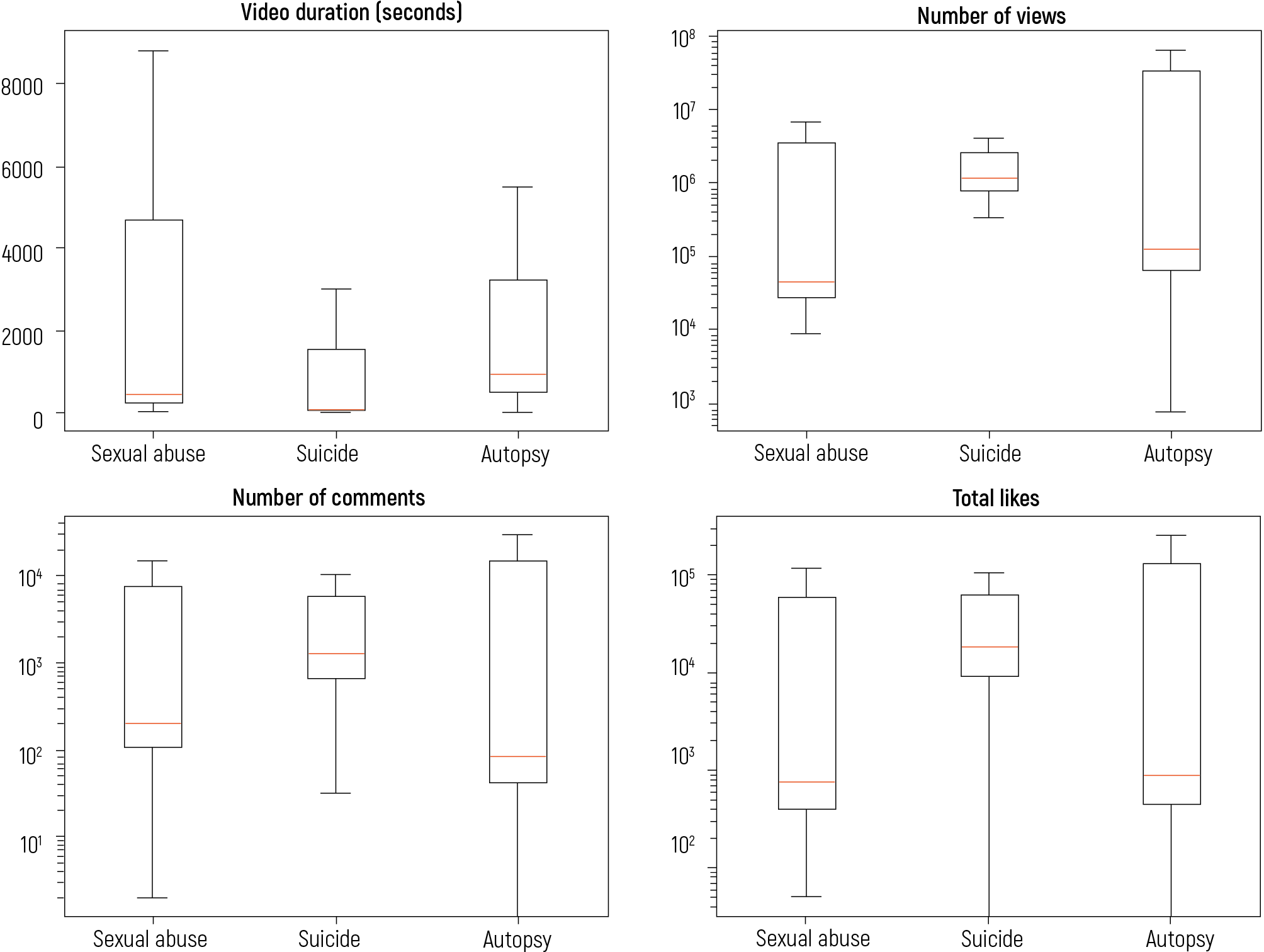
Figure 1. Distribution of video characteristics according to content category
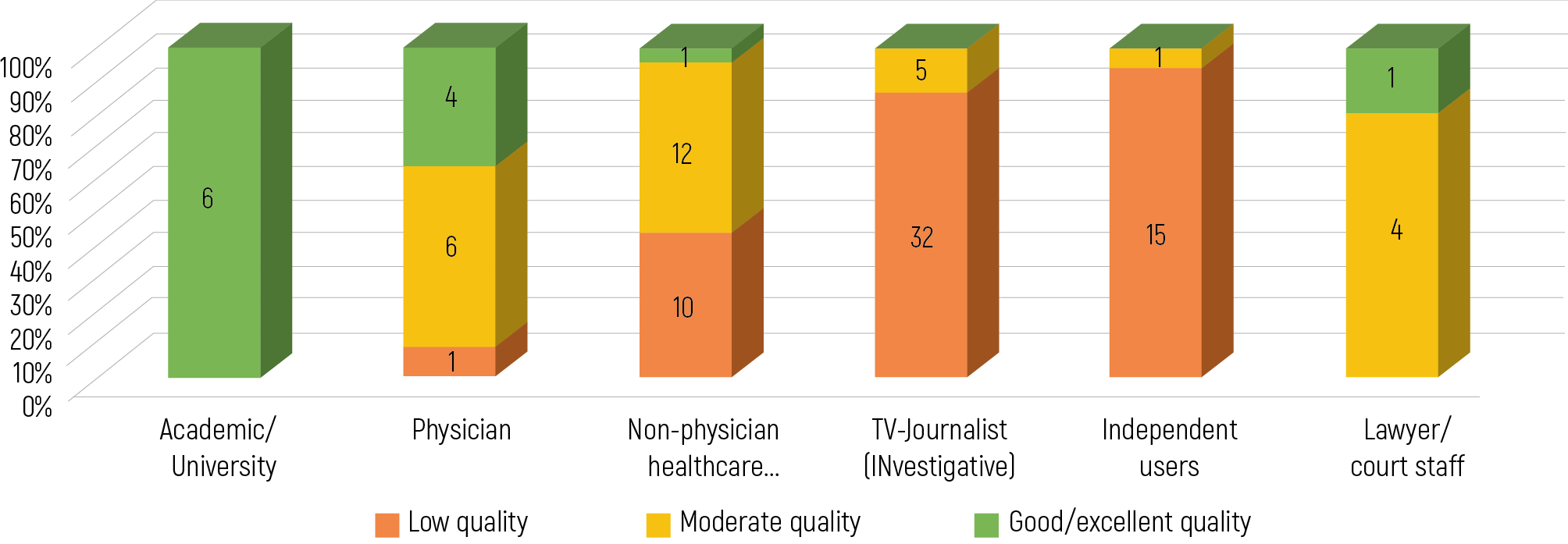
Figure 2. Distribution of video quality across video sources
Tables
Table 1. DISCERN score, total views, total comments, and like counts by video quality.

*Kruskal-Wallis Test ap < 0.001, bp = 0.163, cp = 0.536, dp = 0.597 Abbreviations: min = minimum; max = maximum; DS = The modified DISCERN scale.
Additional Information
Publisher’s Note
Bayrakol MP remains neutral with regard to jurisdictional and institutional claims.
Rights and Permissions

This work is licensed under a Creative Commons Attribution-NonCommercial 4.0 International License (CC BY-NC 4.0). To view a copy of the license, visit https://creativecommons.org/licenses/by-nc/4.0/
About This Article
How to Cite This Article
Elif Beyoğlu, Muhammed Mustafa Beyoğlu. Public exposure to sensitive forensic topics on YouTube: an evaluation of most viewed videos on sexual abuse, suicide, and autopsy. Eu Clin Anal Med 2026;14(2):24-29. doi:10.4328/ECAM.25001
- Received:
- January 28, 2026
- Accepted:
- April 19, 2026
- Published Online:
- April 23, 2026
- Printed:
- May 1, 2026