
Abstract
AimSuicide is when a person intentionally ends his or her own life. Today, it is considered a global concern. It is important to address the underlying causes leading to suicides. In this study, we aimed to investigate the relationship between the lunar cycle and suicide attempts.MethodsThis multicenter study was done retrospectively between January 1, 2012 and December 31, 2012. The records of patients who presented to emergency departments (EDs) with attempted suicide at nine different hospitals across the country were evaluated retrospectively. The lunar phases of the days when patients presented to the hospitals were also evaluated.ResultsAs determined by an investigation of the days of presentation of the 5,647 patients who were investigated, 25.28% of the patients presented during the first quarter, 25.71% during the full moon, 25.03% during the last quarter, and 23.68% during the new moon. There is, therefore, no significant difference observed between the lunar phases and suicidal attempts (P <0.05).ConclusionThe results of the present study and the literature findings do not support the hypothesis of the lunar cycle having any effect on suicide attempts.
Keywords
Introduction
Suicide is defined as the intentional taking of one’s own life. A suicide attempt is not a random and purposeless action, but instead, it is an act of attempting to free oneself of an overwhelming problem or crisis, which cannot otherwise be corrected.1 Suicide attempts are on the rise in many nations, and they are considered a global problem today.2 According to the World Health Organization (WHO) statistics, more than 800,000 people commit suicide around the world every year.3 Because of this, it is important to address the issue and prevent the causes of suicide.
The lunar cycle is characterized by a periodic change in the visible side of the moon from the earth and is typically 29.53 days long.4 The cycle has four distinct phases: first quarter, full moon, last quarter, and new moon.4-6 The first quarter is seen one week after the new moon and happens when the moon is at a 90- degree angle with respect to the earth and sun. At a full moon, the earth, moon, and sun are in approximate alignment and the moon is observed as a complete, brightly illuminated globe. During the last quarter, we again see half of the illuminated part of the moon, which is again at a 90- degree angle with respect to the earth and sun. Finally, during the new moon, the moon is roughly placed between the earth and the sun, making only its dark side visible from the earth.
The term “lunatic” which is used synonymously with the term “insane”, is derived from the Latin word “lunar” which also has roots in the name of the Roman moon goddess “Luna”. Lunatic has been used to refer to insanity related to the lunar cycle since the 13th century. Throughout history, sleepwalking, insanity, and epilepsy have all been connected with lunar effects.4-6
In relevant literature, significant seasonal impacts on panic and anxiety disorders were reported.7 However, no seasonal effects could be observed on mood disorders and suicidal ideation. With respect to the effects of lunar cycles, a lesser probability was detected to encounter panic during the last quarter of the moon.7 Seasonal patterns are reported for panic and anxiety disorders.8 In accordance with previous publications, no significant effect of lunar cycles on psychological symptoms could be confirmed, with the exception of less often anxiety disorders other than panic disorder during the last quarter.7,9
There is a strong historical belief in a connection between human behavior, psychiatric diseases, and violence and the lunar cycle. The purpose of the present study is to investigate the relationship between suicide attempts and the lunar cycle.
Materials and Methods
This retrospective study was conducted on nine different hospitals between January 1, 2012 and December 31, 2012. Six of the hospitals were research and training hospitals, two were state hospitals, and one was a university hospital (Sisli Hamidiye Etfal Research and Training Hospital, Bagcilar Research and Training Hospital, Okmeydani Research and Training Hospital, Dr. Lütfi Kirdar Kartal Research and Training Hospital, Ankara Numune Research and Training Hospital, Izmir Katip Celebi University Ataturk Research and Training Hospital, Isparta State Hospital, Kirikkale Postgraduate Hospital and Bezmialem Foundation University Hospital,).
The patient databases in those nine hospitals were retrospectively searched for those who presented to the emergency department (ED) for suicide attempts and other related incidents. The search used ICD-10 codes for the following diagnoses: T36 - T65, X60 - X84, and Y10 - Y30. Forensic files regarding these initial diagnoses were evaluated, and patients determined to present to the EDs following a suicide attempt were enrolled in the study.
Those with incorrect ICD-10 codes, those under 18 years of age, and those with no signs of suicide attempt were excluded from the study. A total of 5,647 patients were identified to be enrolled in the study, and their demographic information, including age, sex, as well as the date of their ED visits, was recorded.
The “2012 Celestial Events Yearbook,” published by the Turkish Scientific and Technological Research Council (TUBITAK), was evaluated, and the dates of the first and last quarters as well as full moons and new moons were recorded (Figure 1). The patients were then grouped based on the day of the week, the month of the year, the season of the year, as well as the lunar phase during their ED visit.Statistical AnalysisAll data were analyzed using statistical software (SPSS Version 20.0). Chi-Square tests were used to assess differences between categorical variables, and the student’s t-test was used for continuous variables. A P-value of less than 0.05 was considered to be statistically significant.
Results
Out of 14,769,863 patients who presented to the EDs of the nine hospitals during the study period, 5,647 were determined to have attempted suicide. Of those, 33.8% were male and 66.2% were female. The most frequently encountered age of the patients who attempted to commit suicide was 19. While suicide attempts were seen more commonly in the younger age groups, the frequency dropped in the later stages of life (Figure 2).
Patients attempted to commit suicide most commonly during the summer months (Figure 3) and, particularly, in August (Figure 4). The winter months were the least common months of suicide attempt (Figure 3), with December having the least frequent number (Figure 4).
When the days of the week were considered, Sundays were the most common days for suicide attempts, while Thursdays were the least common (Figure 5). No statistical difference was found between the seasons and months of the year or the days of the week and the number of ED visits following a suicide attempt (P <0.05).
One hundred and eighty-nine patients presented to the EDs during the first quarter, 190 during the full moon, 185 during the last quarter, and 175 during the new moon. There was no statistically significant difference noted between the lunar phases and ED visits following a suicide attempt (P <0.05).
Discussion
Suicide attempts which have preventable mortality and cause severe emotional distress for victims and their families, are among the major public health problems in many nations. Furthermore, suicide attempts place an enormous burden on both primary and secondary health care services. The lowest rates for suicide attempts in Europe were found in Turkey (35/100,000 people), while the highest rates were observed in Finland (327/100,000 people).10 Our study results showed that the rate is 38.23/100,000 people.
In the 19 countries that are involved in the “WHO/EURO Multicentre Study on Suicidal Behaviour”, the number of suicide attempts by females was found to be greater than that of males in 15 countries. In the study by Flavio et al. a female to male ratio of attempted suicides was found to be 2:1. Similarly, Schimidke et al. stated that based on the WHO/EURO study, suicide attempts are more prevalent among females.10 Ateşçi et al. reported the ratio as 1.3:1 favoring females.1 In the present study, we found this ratio to be 2:1, which was consistent with the literature findings.
The most frequent age range for those who attempted to commit suicide was 20 - 29 for females and 20 - 34 for males. This finding is consistent with the generally accepted fact that suicide is more common in young adults. The rate of suicide attempts for those 55 years of age and older is generally the lowest, and this is consistent with the findings reported in the WHO/EURO study. Another result that is expected is the second peak in rates between 80 and 89 years of age in males and 60 and 64 years of age in females. Murphy et al. reported that adults older than 75 years of age have a higher risk of committing suicide after they intentionally hurt themselves.10 The results of our study were also consistent with the literature findings. We found that suicide attempts were more frequent during early adulthood, while there was also a secondary peak noted for patients between 64 and 73 years of age.
Law et al. found that suicide attempts were observed more frequently during the summer months and on Mondays.11 Similarly, Miller et al. reported Mondays and Tuesdays as the most common days for suicide attempts, while Fridays and Saturdays were the least common days. Furthermore, they stated that suicide attempts most frequently occurred in April and May, while in December they observed the lowest rates.12 We found that in the summer months, particularly August, ED visits related to suicide attempts were observed most frequently, while the winter months had a low frequency of this problem. These findings were consistent with the literature. However, we were not able to establish a statistically significant relationship between the months and seasons of the year and the frequency of suicide attempts.
From early times to today, there has been a common belief that lunar phases have an influence on human psychology and health. The potential relationship between lunar phases and human behavior has been an attractive topic for many researchers.4 Around 40% of healthcare professionals believe that lunar phases have effects on human behavior.5 In a survey conducted by Vance et al., 43% of the 325 participants in New Orleans stated that lunar phases can change personal behavior. This rate is found to be higher especially among those working in mental health professions (social workers, clinical psychologists, nurses, and nurse assistants).13 Similarly, Danzle et al. reported that 80% of emergency nurses and 64% of emergency physicians believed that lunar cycles had an influence on the course of diseases.14
Eisenburger et al. evaluated the development of myocardial infarction (MI) and cardiac arrest during lunar phases and found that there was no relationship between MI and cardiac arrest and the lunar cycle.15 Similarly, Schuldark et al. investigated the relationship between surgical intraoperative blood loss and lunar phases but failed to establish any significant relationship.5 Furthermore, Rööslive et al. studied the relationship between lunar cycles and sleep patterns in humans. They reported that even though there are many environmental and personal factors that affect sleep patterns, lunar phases were not one of them.6
The lunar cycle has not only been an attractive topic for medicine, but it has also been a topic of interest for the investment sector. Behavioral finance is an area of study that investigates the effects of human psychology on investors’ behavior and markets. Even though there are existing beliefs on the effects of lunar cycle on investment decisions in the financial world, most of the studies failed to reveal a significant effect of lunar phases on investors’ decisions. For example, Küçüksille investigated the relationship between the lunar phases and the Istanbul Stock Exchange 100 index earnings/trade volumes between January 1, 1988 and December 31, 2011. However, the study failed to demonstrate an effect of lunar cycle on investors’ behavior.16
In a crime-related study conducted in India, a strong relationship between crime impulse and the lunar cycle was reported. They proposed that geophysical variables such as changes in the earth’s magnetic field exerted by the moon and solar particle radiation cause hypothetical “human tides,” which eventually result in physiological and biochemical changes in humans.4 In the study by Biermann et al., in which they evaluated 3,054 suicide cases, they found no significant relationship between lunar phases and suicide attempts.17 Similarly, Gutiérrez-García et al. evaluated 897 suicide incidents in which the victims died and found no relationship between lunar phases and suicides.18
Another large-scale study was conducted by Voracek et al. in Austria. They evaluated 65,206 suicide attempts between 1970 and 2006 and found no relationship between lunar phases and suicide attempts.19 In the present study, we also did not find any significant relationship between suicide attempts and lunar phases. Moreover, it must be kept in mind that meteorological circumstances including season and climate may possess certain effects on psychology and solution of the impact of the lunar phase cannot be always feasible.
Belleville et al. reported that anxiety disorders were encountered more often during summer and panic during spring in patients with unexplained chest pain. Patterns of birth, death, suicide, and disease may display seasonal changes. In contrast to other vertebrates with endogenous annual timing mechanisms predicting seasonal change, mechanisms that control seasonality are still vague in humans. The question whether we use an endogenous timer or simply respond to seasonal change is under debate.9
Our findings support health professionals and physicians to discontinue their judgments on the impact of lunar cycles on the mental health of patients. These unfounded ideas may blur cloud their clinical judgment in critical situations and should not be omitted in a Professional backgrounds such as an emergency department. Beliefs on the impact of lunar cycles on patients are mostly preserved by self-fulfilling prophecies such as expectations about events that affect a person’s behavior in a manner that causes those expectations to be fulfilled.7
Limitations
The present study has several limitations. The first one is that the patient files were evaluated retrospectively. This created apotential for incorrect ICD code identification of patients, which meant that they were not included in the study even though they could have actually presented to the ED for suicide attempts. The second limitation is that we were not able to determine the number of patients who died before reaching the hospital following suicide attempts and therefore were not able to include them in the study. Thirdly, days between 4 lunar cycles have not been involved in the analysis of data in the present study. Fourth, the lack of enrollment of patients from 2 major mental health hospitals in Istanbul constitutes another remarkable restriction. On the other hand, the main strength of our study is that it is a multi-center study with a large sample size.
Conclusion
The findings from the relevant literature 12-14 on lunar cycles as well as the results of our study show that the belief that lunar cycles affect human behavior is nothing but a myth. There are numerous social and cultural factors, beliefs, and conditions, such as financial hardship, that influence suicidal ideation. However, there is no relationship between the lunar cycle and suicide attempts.
Declarations
Animal and Human Rights Statement
All procedures performed in this study involving human participants were in accordance with the ethical standards of the institutional and national research committee and with the Declaration of Helsinki and its later amendments.
Informed Consent
Due to the retrospective design of the study, informed consent was waived by the ethics committee.
Conflict of Interest
The authors declare no conflict of interest.
Funding
None.
References
- Ateşci FC, Kuloğlu M, Tezcan E, Yıldız M. İntihar girişimi olan bireylerde birinci ve ikinci eksen tanıları. Klin Psikiyatri. 2002;5:22-27.
- Aslan Ş, Emet M, Çakır Z, Aköz A, Akgöl Gür ST. Suicide attempts with amitriptyline in adults: a prospective, demographic, clinical study. Turk J Med Sci. 2011;41:243-249. doi:10.3906/sag-0908-227
- Batıgün AD. İntihar olasılığı ve cinsiyet: iletişim becerileri, yaşamı sürdürme nedenleri, yalnızlık ve umutsuzluk açısından bir inceleme. Turk Psikol Derg. 2008;23:65-67.
- Biermann T, Asemann R, McAuliffe C, et al. Relationship between lunar phases and serious crimes of battery: a population-based study. Compr Psychiatry. 2009;50:573-577. doi:10.1016/j.comppsych.2009.01.002
- Schuld J, Slotta JE, Schuld S, et al. Popular belief meets surgical reality: impact of lunar phases, Friday the 13th, and zodiac signs on emergency operations and intraoperative blood loss. World J Surg. 2011;35:1945-1949. doi:10.1007/s00268-011-1166-8
- Röösli M, Jüni P, Braun-Fahrländer C, et al. Sleepless night, the moon is bright: longitudinal study of lunar phase and sleep. J Sleep Res. 2006;15:149-153.
- Belleville G, Foldes-Busque G, Dixon M, et al. Impact of seasonal and lunar cycles on psychological symptoms in the ED: an empirical investigation of widely spread beliefs. Gen Hosp Psychiatry. 2013;35:192-194. doi:10.1016/j.genhosppsych.2012.10.002
- de Graaf R, van Dorsselaer S, ten Have M, Schoemaker C, Vollebergh WA. Seasonal variations in mental disorders in the general population of a country with a maritime climate: findings from the Netherlands mental health survey and incidence study. Am J Epidemiol. 2005;162:654-661. doi:10.1093/aje/kwi264
- Foster RG, Roenneberg T. Human responses to the geophysical daily, annual and lunar cycles. Curr Biol. 2008;18. doi:10.1016/j.cub.2008.07.003
- Flavio M, Martin E, Pascal B, et al. Suicide attempts in the county of Basel: results from the WHO/EURO Multicentre Study on Suicidal Behaviour. Swiss Med Wkly. 2013;143:13759-13773.
- Law CK, De Leo D. Seasonal differences in the day-of-the-week pattern of suicide in Queensland, Australia. Int J Environ Res Public Health. 2013;10:2825-2833. doi:10.3390/ijerph10072825
- Miller TR, Furr-Holden CD, Lawrence BA, Weiss HB. Suicide deaths and nonfatal hospital admissions for deliberate self-harm in the United States: temporality by day of week and month of year. Crisis. 2012;33:169-177. doi:10.1027/0227-5910/a000126
- Vance DE. Belief in lunar effect on human behavior. Psychol Rep. 1995;76:32-34. doi:10.2466/pr0.1995.76.1.32
- Danzl DF. Lunacy. J Emerg Med. 1987;5:91-95. doi:10.1016/0736-4679(87)90070-9
- Eisenburger P, Schreiber W, Vergeiner G, et al. Lunar phases are not related to the occurrence of acute myocardial infarction and sudden cardiac death. Resuscitation. 2003;56:187-189. doi:10.1016/s0300-9572(02)00298-8
- Küçüksille E. Ayın evresi etkisi ve İMKB’de bir uygulama. Muhasebe ve Finansman Derg. 2013;15:187-194.
- Biermann T, Estel D, Sperling W, et al. Influence of lunar phases on suicide: the end of a myth? A population-based study. Chronobiol Int. 2005;22:1137-1143. doi:10.1080/07420520500398114
- Gutiérrez-García JM, Tusell F. Suicides and the lunar cycle. Psychol Rep. 1997;80:243-250. doi:10.2466/pr0.1997.80.1.243
- Voracek M, Loibl LM, Kapusta ND, et al. Not carried away by a moonlight shadow: no evidence for associations between suicide occurrence and lunar phase among more than 65,000 suicide cases in Austria, 1970-2006. Wien Klin Wochenschr. 2008;120:343-349. doi:10.1007/s00508-008-0985-6
Figures

Figure 1. Lunar phases
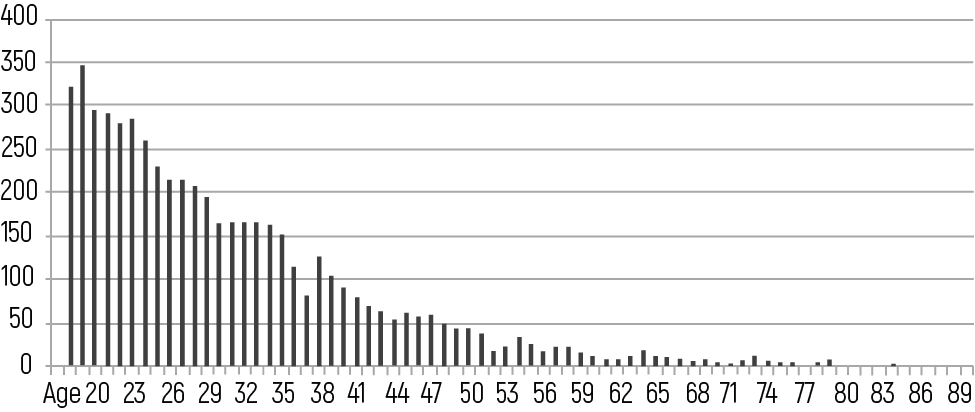
Figure 2. Age distribution of the patients who attempted to commit suicide
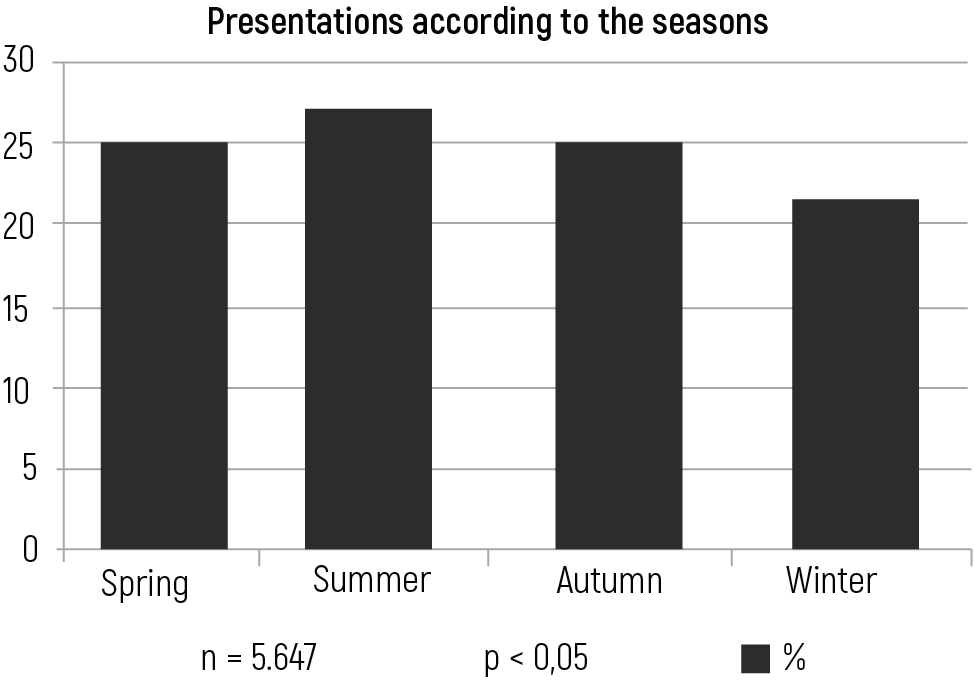
Figure 3. Distribution of patients based on the season of the year
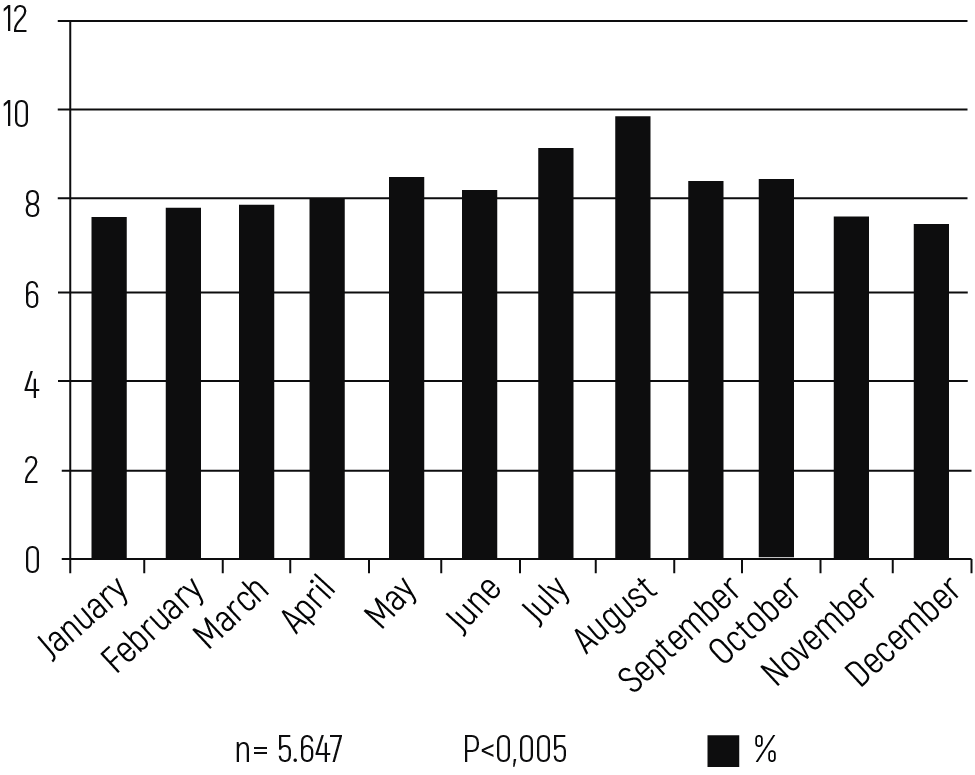
Figure 4. Distribution of patients based on the months of the year of a suicide attempt
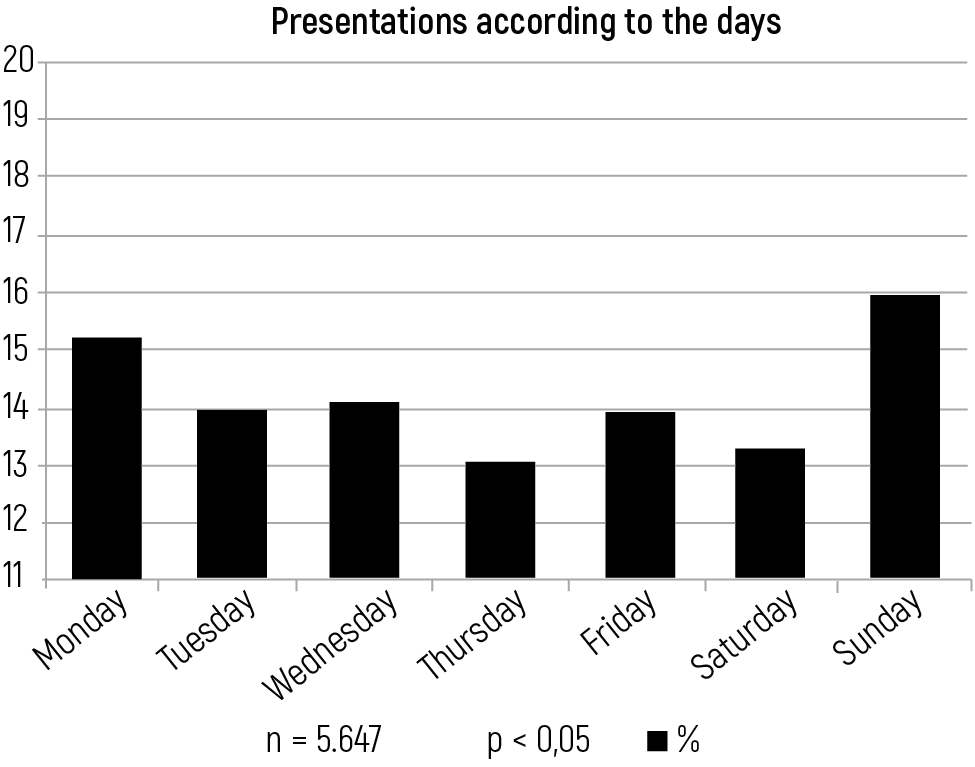
Figure 5. Distribution of patients based on the day of the week of a suicide attempt
Additional Information
Publisher’s Note
Bayrakol MP remains neutral with regard to jurisdictional and institutional claims.
Rights and Permissions

This work is licensed under a Creative Commons Attribution-NonCommercial 4.0 International License (CC BY-NC 4.0). To view a copy of the license, visit https://creativecommons.org/licenses/by-nc/4.0/
About This Article
How to Cite This Article
Murat Koyuncu, Ali Duman, Derya Ozturk, Guleser Akpinar, Bedia Gulen, Hatice Topcu, Serap Biberoglu, Hilal Hocagil, Fatih Esad Topal, Bedriye Müge Sonmez. Does lunar cycle influence suicide attempts?. Eu Clin Anal Med 2026;7(1):5-8. doi:10.4328/ECAM.148
- Received:
- 19.11.2018
- Accepted:
- 17.12.2018
- Published Online:
- 31.12.2018
- Printed:
- 01.01.2019